Showing posts with label young adult. Show all posts

Thursday, January 21, 2021

An Interview with Emily Colin and Madeline Dyer, editors of UNBOUND--Stories of Transformation, Love and Monsters

www.karissalaurel.com
A few years ago I had the great fortune to be invited to contribute to a YA anthology called Wicked South: Secrets and Lies.  Emily Colin was one of the editors of that anthology, and I enjoyed working with her immensely. Luckily, she remembered me several years later and invited me to participate in her newest project, a YA anthology called Unbound, Stories of Transformation, Love, and Monsters, from Five Points Press.

I'm here today with New York Times bestselling author, Emily Colin and her SIBA Award Winning co-editor, Madeline Dyer, to get the details on this forthcoming anthology and find out more about their work on the book. Welcome Emily and Madeline!


When Emily approached me about the anthology, she said the stories should all be based on a theme of "transformation." But before she reached out, there had obviously been a lot of plotting and scheming going on behind the scenes. So, where did the idea to do a group anthology come from, and how did y'all settle on a theme?

 MD: I can’t specifically remember the occasion that we first thought of creating an anthology—it just seemed to be one of those ideas that had been bouncing around our group-chat for a little while—but it was during lockdown in 2020 when we really began to seriously think about it. The five of us in the group-chat (Emily, Lisa Amowitz, Sarah Anderson, Heidi Ayarbe, and I) thought that if we each wrote a novella/long short story, we’d have quite a good-sized anthology between us and also have all the skills we need to bring it to life, as while we’re all authors, between us we also have experience in all the other parts of publication—editing, cover design, interior art, marketing, etc. So, that’s where it started.

 And we settled on the theme of transformation pretty quickly really. We knew right away that we needed a theme that was flexible and could be adapted to a lot of different stories. That was really important as we didn’t want to be too prescriptive or controlling in what we were asking our writers to produce, and so themes that can be interpreted in many different ways (and across different genres too) are great.

Once we had the theme, we drew up a list of authors that we knew who we wanted to personally invite to submit work to our anthology before we put out general calls for submissions too.

EC: I feel like Madeline really said it all! I’ll add that the transformation theme also came from how challenging 2020 (and now, 2021) has been for all of us—that it’s changed every person I know in some ways, both big and small. We wanted to take that transformative energy and direct it into something creative. Our group has been a tremendous safe haven for us—even though between the five of us, we’re located in four different countries (the US, the UK, France, and Colombia), we chat multiple times every day—and we wanted to put some of that positive energy out into the world, during a time that we all need something to look forward to.

For me, there isn't a word better than "transformation" to exemplify the young adult experience, both in life and in literature. Young adulthood is literally the period of transformation between childhood and adulthood. There's so much change during that time, spawning so many experiences, and this anthology seems like a great expression of those various experiences. But having to choose just a few of those myriad stories seems like an overwhelming task! Can you tell me a little about what the process of putting together this anthology has been like from the Editors' point of view?

EC: Oh my gosh. It’s been fun, it’s been challenging, it’s been an adventure. We decided that out of the five of us, Lisa and Sarah would concentrate on design, Heidi would brainstorm marketing ideas, and Madeline and I—since we edit professionally—would take on that side of things. I’m in the US and Madeline’s in the UK, so sometimes coordinating stuff that we had to do in real time—such as having conversations with contributing authors—created a logistical quandary, but we figured it out!

Madeline talks a bit about how the details of the process worked, below, so I won’t go into that too much—but I will say that when you’re working with a diverse group of contributors, in terms of geography, background, styles, interests, experience, etc., it’s important to find a flow with each author. Madeline and I each worked with a select group of the contributors, but sometimes we’d collaborate to figure out the best approach for a given story. I loved this—editing can be a lonely process sometimes. It was lovely to have another editor to bounce ideas and thoughts off, and Madeline is brilliant. I felt spoiled!

MD: It’s been a lot of work! I definitely under-estimated how much work it would be. I write and edit full-time, and I thought at first that this would just be a nice, little side project! How wrong was I! Turns out co-editing an anthology is hard work and so, so time-consuming.

As stories came in, Emily and I read each one and voted on whether to include it (as well as getting Lisa, Heidi, and Sarah to vote too). We marked stories ‘yes’ or ‘no’ and began to think about how we’d work editorially on each story while also preserving individual voices and making the anthology into a cohesive whole. 

When we’d finalised which stories we wanted, Emily and I divided them between us, and we each worked with the authors on developmental, line, and copyedits. And of course Emily and I were each writing our own stories too—we were each other’s editors for those, so that was super fun.

How many stories will the anthology have and what kind of genres can readers expect to see?

MD: We’ve got 12 pieces in this YA anthology, including a thought-provoking contemporary story with an unreliable narrator, a beautifully poignant narrative poem, epic fantasy stories, and some dark and chilling speculative fiction. We’ve also got a number of #ownvoices stories in this collection too.

EC: Well, the anthology’s subtitle is Transformation, Love, and Monsters, so…I feel like that kind of says it all! One of the things I really adored about editing UNBOUND is that the theme ties all the stories together—but within that, there’s so much variety. As Madeline said, there are contemporary stories grounded in our reality, urban fantasy, dystopian fiction, love stories with a twist…the central theme is change, and that’s something that all of the characters in these stories do—for good or for ill! 

Among those 12 stories are the 3 that we've individually contributed as authors. I describe my story, "Of Marshmallows and Monsters", as a slightly fantastical, YA version of Pitbulls and Parolees--a girl seeks redemption for her gruesome past by rehabilitating monsters. Can you both give us a little hint of what your stories will be about?


MD: Sure! So, mine is called “Inside the Night,” and it’s a dark YA fantasy with a contemporary setting. It’s about a mysterious Power in the sky that turns people to stone, and it draws heavily on Greek mythology and the Medusa story, as well as taking a very feminist angle. It’s also #ownvoices for ace rep and chronic illness rep. 

EC: Oooh, yes! Mine is called “Smooth the Descent,” based on the quote, “Smooth the descent, easy is the way.” If you’re familiar with Virgil’s Aeneid, you might recognize that this references the descent into hell. ;) My short story is set in the universe of my YA trilogy, where people live—and die—by the laws of the Seven Deadly Sins. In it, a teenage librarian whose passionate curiosity far exceeds her restrictive society’s limits, and a medic whose desire to heal sends him in pursuit of forbidden knowledge, collide—and, despite the fact that lust is punishable by death, they fall in love. Hijinks ensue.

A little Easter egg—if you’ve read the first book or prequel novella in my Seven Sins series, you’ll recognize that the librarian and the medic in question are none other than my main character Ari’s parents. 

I've read both of the full-length novels in Emily's Seven Sins series (one of which is the soon-to-be-released sequel, Final Siege of the Seven Sins. It's awesome having connections and getting to read advanced copies!) and I'm super thrilled to get to read more set in that world. Along with introducing readers to your writing, what do you hope readers will get from this anthology?

MD: When I was editing the stories in this anthology, my favourite thing was the escapism it offered. These stories are all so different, and we’re covering many different genres while also examining the idea of transformation from so many different angles—the characters are engaging, the stories exciting, the plots surprising. One moment I’m on the moors of Scotland learning about folklore and monsters, the next I’m in an American museum where there’s a mummy on the loose. These stories really just grab you—and so I think (and hope) that escapism will be one of the big things that readers get. Especially in the current climate—escapism is what so many of us need.

EC: I couldn’t agree more! We created this anthology to give ourselves an escape from the crushing reality of recent events—and for me, at least, it delivered! I hope that readers will find that same sense of freedom in its pages—the sense of being transported to a world that exists alongside our own, where each story is a universe unto itself. 

Also, we were intentional, as Madeline mentions, about including a diverse group of authors. The writers in UNBOUND hail from Colombia, the UK, France, Cyprus, and the United States, and their stories represent their perspectives—including LGBTQIA+, chronic illness, and BIPOC representation. I hope that readers see themselves reflected in our characters, and find themselves spending time with kindred spirits as they read.

When, where, and how will the anthology be available to readers?

 Unbound releases on the 15th February, and it’ll be available as a free ebook download on Amazon and other ebook retailers. There will also be hard copies available to purchase from the usual sites and stores too.


Thank you so much for taking the time to talk to me about Unbound and give us a glimpse at the hard behind-the-scenes work the editors have to put into such an undertaking. I'm so proud to be a part of this project, and can't wait to share it with our readers. Find out more about Emily and Madeline here:

Emily Colin's debut novel, The Memory Thief, was a New York Times bestseller and a Target Emerging Authors Pick. She is also the author of The Dream Keeper’s Daughter (Ballantine Books). Her young adult titles include the anthology Wicked South: Secrets and Lies and the Seven Sins series, including the upcoming Shadows of the Seven Sins (June 2021) and Siege of the Seven Sins (August 2021), from Blue Crow Publishing.

Emily's diverse life experience includes organizing a Coney Island tattoo and piercing show, hauling fish at a dolphin research center, roaming New York City as an itinerant teenage violinist, helping launch two small publishing companies, and working to facilitate community engagement in the arts. Originally from Brooklyn, Emily lives in coastal North Carolina with her family. She loves chocolate, is addicted to tiramisu, and dislikes anything containing beans.

Emily is represented by Felicia Eth Literary. You can find her at www.emilycolin.com.

Madeline Dyer is a SIBA-award winning author. She lives on a farm in the southwest of England, where she hangs out with her Shetland ponies and writes dark and twisty young adult books. She is pursuing her MA in Creative Writing from Kingston University, having obtained a BA honors degree in English from the University of Exeter. Madeline has a strong love for anything dystopian or ghostly, and she can frequently be found exploring wild places. At least one notebook is known to follow her wherever she goes.

 Her books include the Untamed series, the Dangerous Ones series, and Captive: A Poetry Collection on OCD, Psychosis, and Brain Inflammation.

Madeline is represented by Erin Clyburn at the Jennifer De Chiara Literary Agency. You can find her at www.madelinedyer.co.uk.

Monday, October 8, 2018

In Defense of Insta-Love in YA Books

A post by Mary Fan
Many YA novels include a healthy dose of romance. It’s a staple of the genre, practically woven into its DNA. Even books that aren’t specifically written to be teen romances – that is, if you take out the romance, the bulk of the storyline still exists – often have fun, dramatic, tumultuous, and thoroughly entertaining subplots about two people in a romantic relationship of some kind. Of course, not every YA main character has to have a love interest, and it’s not an absolute requirement, but suffice it to say that romance thrives in books about teens for teens.

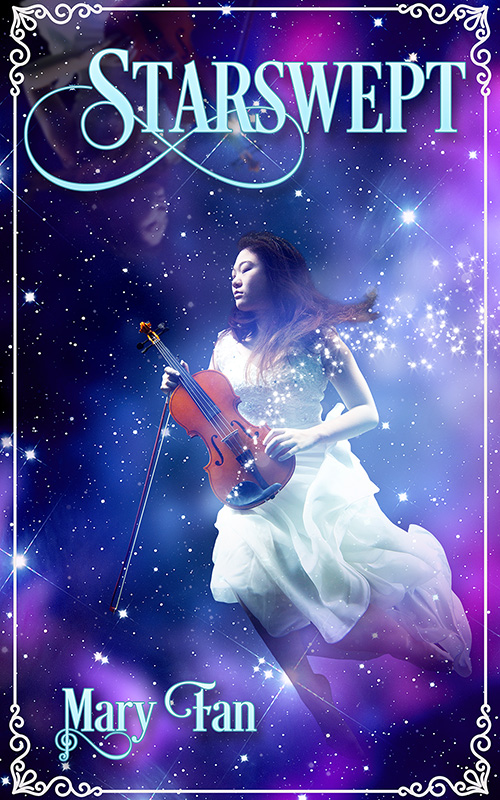
Personally, I love it – both as a reader and a writer of YA fiction. In fact, the first full-length YA novel I published, Starswept, is an unabashedly fairytale-esque romance. And whenever I pick up a new YA book to read and there’s a romantic subplot, I know I’m going to enjoy it that much more for all the heightened passions and emotions teen relationships—“Will they or won’t they? Of course they will, but how?”

I'll use any excuse to show
off my book cover again ;-)
But like I said, not everyone enjoys romance in YA books, and even those who do often have critiques of how particular ones are written. Which is all fair, of course. One of the most common complaints about teen romance is the trope of “insta-love” – that is, the main character and the love interest falling in love pretty much as soon as they meet.

What counts as insta-love? It’s hard to say. For Starswept, I’ve had some people call it insta-love and some people call it a slow burn… which are pretty much on opposite ends of the romantic speed spectrum.

It’s become almost a knee-jerk reaction to criticize teens falling in love quickly as bad writing. But I think that’s oversimplifying things – kind of like how some people have a knee-jerk reaction to adverbs simply because so much writing advice calls them bad (everything in moderation, folks!).  In my reading, I’ve come across some egregious examples of insta-love, where two characters who just met and have barely interacted are magically in love… and some cases where the two characters fall in love really fast, but it works. Really, it comes down to the quality of the writing, and to claim that ALL insta-love is bad is like claiming that you should never, ever, in a million years use an adverb for any reason whatsoever. That kind of scorch-the-earth criticism ignores nuance and, frankly, has started to irritate me a great deal.

I’ve thought about doing a post in defense of YA insta-love for some time now, but this tweet from last week was the kick in the pants I needed to actually write it:


That was a post that had me like


Here are some reasons why insta-love in YA deserves a little love of its own:


1. In the real world, a lot of teens DO fall in love fast

Really, they do. I remember going to week-long summer programs back in high school and watching my fellow teens meet on Day 1, start dating on Day 2, and by the time it was time to pack up and go home on Day 7, be so infatuated with each other and so distressed by their parting that you’d think they were Romeo and Juliet. Who, by the way, were insta-love teens themselves (more on that in a bit).

Teens tend to be wonderfully passionate, energetic, and impulsive in everything they do. They aren’t hampered by a lot of the cautions and filters we adopt as time and experience wears us down. So why shouldn’t that apply to romance as well? Plus, time passes slower when you’re a teen… A month can feel like a lifetime. What may feel “instant” to adults could feel like a slow burn to younger folks.

William Shakespeare,
author of teen romances
with lots of insta-love
2. Sometimes, you need it for the plot

In some books, the main character and the love interest meet early on, spend a good chunk of the book together, and finally get together at the end – and that’s how the plot’s structured. But in others, the plot needs the romantic pair to get together FAST for the rest of it to work. For instance, maybe the conflict isn’t “will they or won’t they,” but “they ARE, but the world keeps trying to tear them apart.” I again point to Romeo and Juliet. The bulk of the story is about these star-crossed lovers trying to find a way to be together and failing. Which means for the pacing to work, they’ve got to get together right away so they can spend the rest of the story agonizing over how this is going to work (or not work). Or how about stories where the love interest is taken away – kidnapped by the villain, vanished into the wilderness, etc. – and the plot is about the main character trying to get them back? Or where the drama is that they desperately want to be together but can’t – because one’s promised to someone else, or the families object, or they’re on opposite sides of an intergalactic war? (Lost Stars, I’m still waiting for my heart to heal!)

Some books get around this by having the main pair already be together at the beginning of the book, depriving us of the meet-cute. That can work, but personally, I always feel a little cheated.

3. It’s cute… and it’s classic

I think it’s human nature for many of us to want to see two people get together. It’s why real-time stalker-ish social media posts about two strangers who seem to have chemistry go viral so easily. And it’s why our oldest stories often feature love at first sight. Fairytales, myths, legends… and, of course, Shakespeare. So many enduring narratives involve insta-love.

And why not? It’s cute. It’s fun. It’s entrancing. There’s something special about watching two characters on a stage lock eyes for the first time, then start reciting beautifully poetic monologues, or singing a devastatingly passionate duets, or spilling their emotions into intimately personal paragraphs.


So let’s dial back the knee-jerk criticism and embrace insta-love for what it is: a trope that, like, any trope, can be done well or not depending on the strength of the writing.

Wednesday, January 10, 2018

Author Interview: Edwin Peng

A post by Mary Fan
Hey everyone! Sorry my post this month is a few days late! I'm interviewing author Edwin Peng, who recently released his debut novel, Star City. It's a YA sci-fi novel (first of a planned trilogy) about alien first contact... what might happen if a race of enlightened, peace-loving extraterrestrials showed up tomorrow asking to share knowledge? You'd think that would be a good thing, but never underestimate humanity's foolishness...

The book's two main characters are Emma Smith, a college freshman chosen to be a student liaison to the aliens, and her counterpart on the alien side, Sepporinen. I read Star City a few weeks back, and I loved it! It's a fun YA sci-fi read, but it also has some interesting social commentary. And the world-building for the alien culture is magnificent.

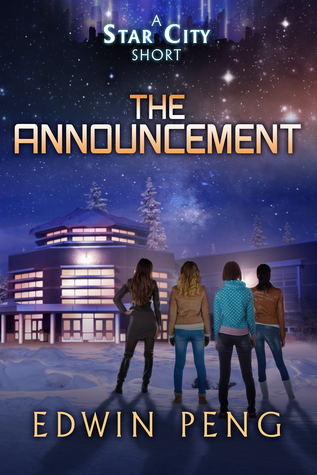
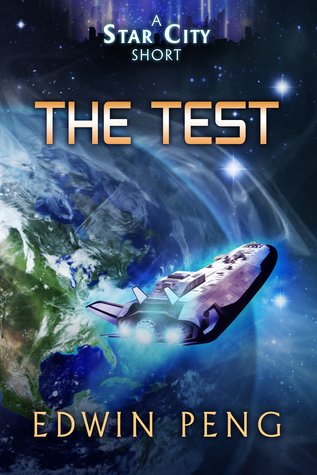
Star City is preceded by three prequel short stories, "The Announcement," "The Test," and "The Meeting," which provide some cool background on the characters (though you don't need to read them to read Star City -- they're like bonus scenes).

I was thrilled to be able to ask Edwin a few questions about his book and his writing life.
Edwin Peng

Hi Edwin! Welcome to Across the Board! Can you tell us a bit about your background as an author? What got you into writing?

Thank you for having me!

I’m originally from Monterey Park, CA – a suburb of Los Angeles. I credit my parents with instilling in me the love for reading and writing. The Monterey Park Bruggemeyer Library became my second home when I was a kid. I’m sure I’m not the only child who dreamed of writing a book that would be on the library and bookstore shelves.

I continued to write stories and novels, but it was hard to find the time to be a productive author as I was paying the bills and working day jobs. It wasn’t until four years ago that I got serious as an author. I began my PhD studies at the University of Lincoln-Nebraska, which gave me quite a lot of inspiration to write science fiction (I’m doing high power laser research).

Star City was my second novel that I completed and the first that I felt confident enough to pitch to agents and publishers. After a year, I finally found a publisher, Evolved Publishing, who was willing to give me the chance to share my stories with the world.

36461157
Cover of Star City
You recently released your debut, Star City, a YA sci-fi novel about alien first contact. What was the first idea you had for your book, and how did the story grow from there?

I was inspired to write Star City because I want to tell an exciting and funny, but at the same time realistic and socially conscious, first contact young adult story.

As an avid young adult reader, I felt that there weren’t many novels about aliens and/or first contact scenarios. There’s certainly a lot of science fiction YA, but since The Hunger Games craze a decade ago, this subgenre is overwhelming dystopian. There are many paranormal romance novels, but alien love interests are few compared with vampires and werewolves.

Like many science fiction fans, I love a great first contact story. I fear I may sound like a pretentious MFA, but I really think that a “first contact scenario” is the most fascinating and thought-provoking of the common science fiction plots. Unlike time travel or space opera stories, the discovery of alien life (whether that be a microbe in a Mars asteroid or a SETI signal) is something that can actually happen within our lifetimes. First contact stories not only prepare us for encountering real extraterrestrial life, but are also great for discussion of many historical and current issues.

36262855
One of Star City's three
prequel short stories
Star City features some amazing alien world-building. How did you go about creating the Ba’ren culture?

Thank you for your compliments!

When I world-build for Star City, I consciously sought to avoid the “Planet of Hats” trope. Making the Ba’ren a full-fledged, realistic alien species ironically meant making them more “human”. A technologically advanced, spacefaring species will have many different cultures, multiple worlds that they inhabit, and a long, complex history.

I also think it’s important for science fiction/fantasy authors to not only create a rich world, but to consider how that world influences their characters and plots. For instance, each alien character in Star City has at least one culture that he/she/they identify with and which influences what they do in the story.

Among your characters, who's your favorite? Could you please describe him/her?

I hate to play favorites among the many characters in the Star City series. If I’ve to choose, my favorite human character is Liam Smith and favorite Ba’ren character is Arnbejoerg.

Liam is the coolest big brother who parlayed his nerdy love for science fiction into an awesome job working with real-life aliens. He may crack a joke during inappropriate time, but his heart is in the right place.

Arnbejoerg is the rebellious pilot/smuggler who proves that not all Ba’ren Juveniles are well-behaved, rule-abiding teenagers. She is a great foil to Sepporinen.
36359842
The second of Star City's
three prequel short stories

What's your favorite scene from your novel? Could you please describe it?

Obviously, I can’t describe scenes which would spoil Star City too much. From non-spoilery scenes, I’ll have to say the part where Sepporinen visits the university’s dining hall with Emma as my favorite scene. I’m sure all of us who grew up in American schools have experienced eating at a school cafeteria at some point, so it’s fascinating to see such a scene with literal alien eyes (or, since they are Ba’ren, smell such a scene with literal alien noses).

What's your favorite part of writing? Plotting? Describing scenes? Dialogue?

World-building is my favorite part of writing. I enjoy imagining a different world than ours – and the challenge of making that world full-fledged and internally consistent.

For example, the Ba’ren sent eight spaceships to Earth. Like many science fiction authors, I’d fun imagining these spacecrafts: what they look like, how are they powered, and where can they travel to. But I also enjoyed brainstorming about social science aspects: Who will the Ba’ren send to make contact with humans? How is the Ba’ren on their starships governed? What do the Ba’ren do to relax after a hard day’s work?

How long does it take you to write a book? Do you have a writing process, or do you wing it?

Too long!

Star City took me two years to write – one year of writing an OK draft and one year of editing.

I’m always improving my writing process. My goal is to write the sequels to Star City at a pace of one novel a year.

I basically have 2 rules that I follow when writing: 1. Plan the scene before writing it and 2. Keep writing – even a few words a day is better than none.
36134832
The third of Star City's
three prequel short stories

What drew you to sci-fi?

Science fiction to me is the premier genre of our time. We live in a world that, for the last few hundred years, have changed dramatically and quickly due to scientific and technological changes. Good science fiction can prepare us for future changes as well as provide important commentary on our current social conditions.

Are there any books or writers that have had particular influence on you?

Instead of actual young adult/science fiction books, the two pieces of media that influenced Star City the most are a pair of CW television shows: Roswell and Star-Crossed. Considering that the CW is basically the YA channel, it’s not surprising that they experimented with two first contact/paranormal alien romance shows. The good – and the bad – of these two series are important parts of the research I did for Star City.

Did you ever surprise yourself when you were writing your book? Characters who took on lives of their own? Plot elements that took unexpected turns?

I think what surprised me the most when writing Star City is how my characters can sometimes write the plot by themselves.

Thanks for stopping by!


ABOUT THE BOOK

36461157An alien race, the Ba’ren, makes contact with Earth. To jumpstart diplomacy with humans, the Ba’ren offer their advanced medical technology, prompting the United States government to create a joint research project, and to call for the best of the best.

Eighteen-year-old Emma Smith, ready to capitalize on this historic opportunity, beats thousands of applicants for the position of student ambassador. She knows helping the Ba’ren cure osteosarcoma will kick-start her biomedical engineering career, not to mention give her a front-row seat to learn more about the mysterious aliens.

Sepporinen, a young Ba’ren asteroid miner, cares little about meeting humans. He seeks only riches and glory in prospecting the solar system’s asteroids, but the Ba’ren government inexplicably sends him to Earth to assist with the research project, and to work with a young Earth girl.

Emma and Sepporinen draw closer as they work together, and discover far more is at stake than what their respective governments have let on. As political struggles intensify between feuding human and Ba’ren factions, anti-alien sentiment on Earth reaches a lethal pitch. The unlikely pair, determined not to be pawns in this complicated game of life and death, must risk everything to help maintain the fragile peace between their two species.

ABOUT THE AUTHOR
Edwin Peng lives in beautiful Lincoln, Nebraska with his beloved Pokémon buddy, Eevee. During the day, he indulges in super-villainy by performing high-power laser research at the University of Nebraska-Lincoln. At night, his secret identity is that of a literary superhero fighting to make the Young Adult Science Fiction genre less clichéd and more inclusive.

Edwin is the author of the Star City series, which features badass heroines and space aliens who love blueberry pies. The first novel is released by Evolved Publishing on December 4, 2017.

FIND EDWIN ONLINE

Edwin Peng's official website: http://www.edwinpeng.com/

Where readers can learn more and get Star City:

Here are my social media links:

Emma Smith’s character Twitter: https://twitter.com/emmahusker402

Monday, November 13, 2017

INTERVIEW: Karissa Laurel (author of the Stormbourne Chronicles)

Hi everyone! Mary here, and I today, I’m interviewing Karissa Laurel. She’s the author of the 
A post by Mary Fan
Stormbourne Chronicles, a YA steampunk fantasy trilogy about Evelyn “Evie” Stormbourne, a princess with powers over thunder who’s forced to go on the run after dark forces take over her kingdom. The first book, Heir of Thunder, was released last fall from Evolved Publishing. The sequel, Quest of Thunder, is releasing on December 4. I’ve read both (I got an advance copy of Quest of Thunder), and they’re fantastic! Adventures across a fantasyland inspired by 19th century Europe, magic powers and steampunk wonders… all narrated by an amazing protagonist who grows from damsel-in-distress to kickass heroine over the course of the books.

Karissa, welcome to Across the Board! What inspired you to write the Stormbourne Chronicles?

Hi Mary. Thanks for having me. So, the Stormbourne Chronicles were inspired by a song. When Coldplay's “Viva la Vida” came out years ago, I loved it right away. It gave me instant ideas about a character who once had a kingdom, but lost it. I asked myself: Who is this character and what could have happened to make her loose her kingdom? And what is she doing about it, now? Those questions eventually evolved into Heir of Thunder.

Evie is a fantastic protagonist who gets to develop significantly over the course of her journey. What inspired her character?

It was almost always my intent, from the start, to write a coming-of-age story. The goal was to create a young woman who has the capacity to be strong and independent, but she would have to grow and change a lot to get there. I think the teenage years are all about leaving behind childish things and discovering the kind of person you want to be as an adult, and that's one of the main themes throughout the trilogy and in Evie's character development.

The Stormbourne Chronicles takes the reader on a vast international journey along with Evie. How did you tackle the world-building?

Sort of like the multiverse theory, I've always imagined Evie's world is one that started out the same as ours, but somewhere along the way, reality branched off into a new dimension--one allowing for Magic. So, her world has many similarities to ours, including languages, technology, and geographical locations. I debated whether to make up languages or use ones that existed in our world. Ultimately, I decided that, at the point where Evie's world would have branched off from ours, that many of the same languages already existed. Over time, place names might have evolved as they often do in the real world (Is it St. Petersburg or Leningrad? Is it Istanbul or Constantinople?) or they'd be different based on where you come from (Is it Deutschland or Germany? Japan or Nippon?) So, what would the map of a one-off world evolve into? Something different, yes, but not that much different.

Let’s talk about boys. What can you tell us about Evie’s love interest, Gideon? How does he contrast the other boy in her life, Jackie? Were either inspired by the guys in your life?

Gideon and Jackie were not inspired by any guys in my real life, although, when I look back on my
dating history, it appears I tended to lean toward guys who embodied a pretty standard idea of masculinity. They've been soldiers or blue-collar workers and outdoors-men who like hunting and fishing and such. Maybe that was because my dad was a "man's man": A Vietnam vet, a police officer, and a backpacker who retired into the mountains of Virginia to get closer to nature. Gideon is definitely that kind of guy. But he's also a bit secretive and mysterious and he hates personal questions. Jackie, on the other hand, is a bit more cultured. He's got money, and he's careful about the way he dresses. His manners are elegant and refined. He's charming and chatty. He's almost too charming, if you know what I mean. Gideon needed a foil, and Jackie is his opposite in many ways. But to be clear, this story does not have a love triangle. It doesn't take Evie long to figure out which guy has her best interests at heart.

Steampunk is an interesting category, in that it’s more of an aesthetic than a true genre. You can have steampunk fantasies, steampunk sci-fi, steampunk mystery… What does steampunk mean to you, and how did you tackle incorporating it into the Stormbourne Chronicles?

To me, steampunk is what happens when magic and technology combine. Evie's world is just starting to explore those possibilities, so in the first book, the steampunk element is more like seasoning rather than the meat in the story--it hovers in the periphery with elements like the Fantazike's airships. However, that element increases throughout the series and becomes more prominent by the end of the trilogy. For example, book 2 includes some alchemy (magic combined with chemistry), which I tend to think goes hand-in-hand with steampunk, and there's also a mechanical circus. Why did I choose to include the steampunk? Mainly because I think the steampunk aesthetic just looks really, really cool. I also wanted to do something other than "medieval" which tends to be the standard default in epic fantasy stories.

What was it like narrating the story from the point of view of a teenager?

I often have a hard time remembering how old I am, and maybe I still have some teen living inside me. I also have a teen in my household, too, so I have a lot of reference points to work with. One thing that helped was that Evie is young, but not contemporary so I could put aside worrying about things like current fashion or fads and focus on things that are universal with teens (and with all people), such as friendship, love, a need for independence, and discovering one's passions and purpose in life.

You’re also the author of the Norse Chronicles, an urban fantasy trilogy. How is it different writing young adult versus grown-up fiction?

To be fair, the main character in the Norse Chronicles, Solina, is barely an adult herself. She's still on that path of self-discovery that most YA characters are travelling. She's lived a sheltered, naive life similar to Evie's. The biggest difference is that Evie is usually surrounded by other young people while Solina has to try to hold her own among a group of ancient demi-gods. In truth, the more I try to find differences between Evie and Solina, the more I realize they're a lot alike.

What’s your writing process like? Does it differ depending on which project you’re working on?

You and I have teased each other lots of times about our panting versus outlining differences. I tend to be a pantser. I don't like knowing too much before going into a story because I like the wonder of discovering the plots and characters as I work. However, I think this tends to make me a slower writer because often I hit walls where I have to stop and figure out what happens next. Yet, I still prefer to work that way. Too much fore-planning means risking that I'll lose interest in a project. I also write a lot of short stories and the process isn't much different for that. Generally, I start a story with a big idea-- a "What if?" question. I also like to have idea about what the main conflict will be, who the main character is, and I'll probably try to figure out the ending, but I don't try to hard to plot much more than that before I begin.

What’s it like working with Evolved Publishing?

My first book series (the Norse Chronicles) was published by a full-service small press, which means I gave them the book and they did the rest. Evolved Publishing is a slightly different model in that the publisher requires a little more involvement, investment, and input from it's authors. We work more as a collective than a standard full-service press. Even thought he business model differs, it's a professional publisher with a really strong support team. I've been able to grow and learn from other EP authors who've been doing this a lot longer than me and are great about sharing experience and advice.

What was your favorite scene to write in the Stormbourne Chronicles? What was the most challenging part?

I wrote the first Stormbourne book a long time ago, relatively speaking, before I wrote my adult urban fantasy series. I think it was easier then because I didn't know what I was doing. I just charged ahead, not worrying about rules or style or marketability. The second book, Quest of Thunder, I wrote last year, and it was much harder because I was a lot more self aware as a writer. I think it's a better book because of it, but I was more critical and careful, writing with less free-wheeling abandon, if that makes any sense. As far as a favorite scene goes,I knew book 2 was going to have a circus with some mechanical animals. I thought they would be background, world-building wallpaper, mostly. Then my cover artist came up with the cover design that prominently featured a big, mechanical lion, and I knew it would have to become a more integral character. So, I don't necessarily have a favorite scene, but anytime Sher-sah (the mechanical lion) shows up in the book, you know I was having fun writing him. He's my favorite part of Quest of Thunder.

Anything else you’d like to tell us, either about yourself or about the Stormbourne Chronicles?

I'm working on Book 3 right now, called Crown of Thunder. It's scheduled to come out next year some time, probably late in 2018. That book will conclude the series and hopefully see Evie living happily ever after because, to be honest, those are the kinds of stories I like to write. Will she be queen or won't she: that will be the question answered in Book 3.

ABOUT KARISSA LAUREL

Karissa lives in North Carolina with her kid, her husband, the occasional in-law, and a very hairy husky. Some of her favorite things are coffee, chocolate, and super heroes. She can quote Princess Bride verbatim. She loves to read and has a sweet tooth for fantasy, sci-fi, and anything in between. Sometimes her husband convinces her to put down the books and take the motorcycles out for a spin. When it snows, you'll find her on the slopes.


Find her online: http://www.karissalaurel.com/

ABOUT HEIR OF THUNDER (THE STORMBOURNE CHRONICLES, #1)


The Lord of Thunder has passed, leaving daughter Evelyn Stormbourne to overcome her kingdom’s greatest enemies, but first she must embrace her dominion over the sky.

The Lord of Thunder’s sudden death leaves his daughter, Evelyn Stormbourne, unprepared to rule Inselgrau in his place. Weeks before Evie’s ascension to the throne, revolutionaries attack and destroy her home. She conceals her identity and escapes under the protection of her father’s young horse master, Gideon Faust. Together they flee Inselgrau and set sail for the Continent, but they’re separated when a brutal storm washes Evie overboard.

In her efforts to reunite with her protector and reach allies on the Continent, Evie befriends a band of nomads who roam the world in airships fueled by lightning. She also confronts a cabal of dark Magicians plotting to use her powers to create a new divine being, and she clashes with an ancient family who insists her birthright belongs to them.

If she’s to prevail and defeat her enemies, Evie must claim her heritage, embrace her dominion over the sky, and define what it means to be Heir of Thunder.
Find it on Amazon

ABOUT QUEST OF THUNDER (THE STORMBOURNE CHRONICLES, #2)


Evie must restore her divine abilities, or be enslaved by her enemy’s dark Magic.

Evelyn Stormbourne has overcome revolutionaries, pirates, devious relatives, and powerful Magicians to claim her birthright as Lady of Thunder, but before she can embrace her dominion over the skies, her powers falter, leaving her impotent and adrift. Under the protection of her stalwart companion, Gideon Faust, Evie hides in anonymity and searches for news of the Fantazikes who had once promised to help her master her divine abilities.

Without her capacity to control the storms, Evie wonders how she’ll ever reclaim her throne—a legacy she’s not convinced she deserves. But when a fearsome nemesis from her past reemerges, she embarks on desperate quest to find the Fantazikes and restore her powers. If she fails, her enemy’s dark Magic will enslave her, forcing her to destroy everything and everyone she loves.
Preorder on Amazon

Monday, June 26, 2017

How the Starswept Cover Came To Be

A post by Mary Fan
Hey everyone! As some of you might recall, I had a cover reveal for my YA sci-fi novel, , here a few weeks back. Today, I'm gonna take y'all behind the scenes of how it came to be.
STARSWEPT

STARSWEPT is, at its core, a romance. It's the story of a teen viola player, Iris, who's grown up surrounded by classical music and dance, who's been so immersed in the glittering dramas and fairy tales of the stage that she wants nothing more to be a part of it all. Though she lives in a sci-fi future--the story takes place about 200 years in Earth's future--she's an old-fashioned romantic. And she soon finds herself lost in the kind of hopeless love she depicts in her music after an unexpected encounter with a mysterious alien boy... who ends up revealing information that shatters everything she thought she knew about the world she lives in. Her journey eventually takes her to an alien planet lightyears away.

So I needed the cover to convey both the romantic tone of the story and Iris's voice and something that spoke of galaxy-spanning sci-fi. Also, something that fit in the young adult category. In addition, it was super important to me that Iris herself be pictured on the cover. Even though there's been a trend lately of YA covers not depicting people. But here's the thing: Iris is Asian American. There are not a lot of Asian Americans (or Asians in general) on book covers. Especially in sci-fi/fantasy.

Anyone who says they don't like seeing characters on book covers likely hasn't grown up feeling invisible because they've never seen anyone who looks like them on book covers. I remember wandering the rows of bookstores and libraries, seeing white face after white face depicted as the heroines of countless stories, be it contemporary or speculative. This is beautiful, they said. This is normal. This is what a heroine looks like.

This is not you.

Unless it was a specifically Asian-centric story focusing specifically on Asian-ness--think Joy Luck Club or Dragonwings--Asians were literally invisible in fiction. They were not pictured. They weren't intrepid warriors or quirky sleuths or determined underdogs. Or romance novel heroines. They didn't get to wear the pretty ball gown under the swirly title, didn't get to narrate the story, didn't get to catch the eye of the handsome stranger.

Asian girls can be heroines too.
With Iris, I was determined to take one step more toward changing all that. She was going to be front-and-center on the cover of a sci-fi romance, telling young Asian girls that yes, you are beautiful. You are normal--and you are more than just your Asian-ness. You are what a heroine looks like.

Anyway, those of you who read a lot of YA may have noticed that girls in ball gowns is a common theme on covers, and the concept fit Iris's story perfectly. Not only does it scream "romance"--signaling to romance readers that this is their kind of book--but it brings in that old-fashioned romanticism that's so integral to Iris's character. Plus, she literally attends a ball at one point.

To add in the element of sci-fi, I decided she'd be pictured against a space background--a galaxy or nebula. And holding her instrument, since it's such a core part of both her character and the story.

I briefly considered going the old-fashioned route and searching stock photo libraries for a suitable model, but quickly abandoned the idea. First of all, stock photo libraries are overwhelmingly white... there just weren't a lot of options. And secondly, I've been around stock photo libraries and book covers long enough to have seen the same faces on different covers multiple times. Not that there's anything inherently wrong with this, but it began to bug me a bit (I've seen the characters on my other covers on several other books, and it weirds me out a bit every time).

Angel Fan, about to dive in for the shoot
Next, I went about arranging a photo shoot... and decided it should be underwater. I've always loved underwater photography for the otherworldly, ethereal look it gives its subjects. And it was perfect for my pretty little romance novel. Also, the weightlessness of being underwater translated perfectly to the weightlessness of being in outer space.

Finding a model was easy: my kid sister, Angel, was eager to volunteer. And it just so happened that she was uniquely qualified for the gig. Not only did she have the right look, but she's a dancer and an experienced swimmer (a trained diver, in fact!) who wasn't afraid of spending long periods of time in the water. And she actually plays viola. As a string player myself (violinist), it always bothered the heck out of me to see unqualified models atrociously clutching and
One of Roberto's gorgeous photos.
clawing at their instruments. Even when they weren't "playing," the way they held the instruments made it obvious that they didn't know what they were doing. Even if Iris wasn't going to be playing her viola on the cover, whoever portrayed her sure as heck had to know how to handle one. And Angel did.

So I had the concept, and I had the model. Next thing I needed: A photographer experienced in underwater photography. Lucky for me, I live in the NYC area, and finding one was a simple matter of Googling. I came across Roberto Falck's website and immediately fell in love with his portfolio. This was my guy.

Next task: obtaining props and wardrobe. Since I wanted a viola to be depicted in the shoot and knew that whatever unfortunate instrument I used would be totally ruined, I went online and sought out the cheapest instrument I could find. Thank goodness for eBay. I also had to find a suitable ball gown for Angel to wear. I ended up finding two that I liked. The first one was a slender pink dress with butterfly sleeves I absolutely adored. However, one of the best things about underwater photography is the floaty-ness it adds to fabric, and I was hoping to find something with a lot of skirt. So I found a
Angel doing her make-up before the shoot
second dress--a white one--that had a train. I loved everything about it, but was worried it might be too heavy and pose a safety risk. So I obtained both dresses and decided to see the day of which one worked.

Then there are all the little things that pop up. For instance: what to do about hair and makeup? Well, hair, I decided, was easy: She'd just wear her natural long hair down and let the water play with it. For makeup, I went online to mermaid forums (as in, forums for professional underwater performers) to gather tips. Still, I wanted Iris's look to be as natural as possible... "no make-up make-up," if you will. Essentially, I wanted Iris to be all about natural beauty. So I ended up finding a waterproof tattoo cover-up recommended by several professional mermaids that would serve as foundation (and cover Angel's wrist tattoo). And that was the only make-up we ended up using. Also, it occurred to me to obtain a two-piece swimsuit to serve as underwear and pack some towels and Angel's bathrobe so she wouldn't have to wander around in a soaking dress when she got out of the water. Finally, Roberto suggested trying a few shots of Angel seated, so I found a short stool that would be heavy enough to sink (in other words, no wood).

We rented out the pool at a Long Island diving school for the shoot. Roberto and his crew arrived the evening before to set up--the lights, the backdrop, etc.--and conduct a few test shots on a different model (an acquaintance on his).

Angel, Roberto, and Frank in the pool
Angel and I arrived the next morning. Besides Roberto, there were six other crewmembers: Ed (the producer), Frank (underwater support), Jeff, Jesse, and Maha (the latter three performed miscellaneous support tasks... adjusting the equipment, previewing the photos on a computer, running errands, etc.)

The pool room was super hot and humid, since the water had to be kept pretty warm (no hypothermia!). We started with the pink dress, since it was lighter and would be easier for Angel. Roberto and Frank were in the pool with her--Roberto in his wetsuit photographing her, and Frank providing miscellaneous underwater support, which included fluffing up Angel's hair and skirt to give it more movement. I spent the whole time crouched by the pool's edge, watching everything from above.

Roberto would tell Angel what poses to try, and Angel would oblige (as a dancer with ballet training, she's really good at posing). Each time, he'd give a count, and then they'd submerge (one... two... three... hold your breath and go down!). They'd stay down for about a minute, then come up. Roberto would review a few shots and give Angel feedback. I also got to get a peek at some of them in case I wanted to give feedback, but I really didn't have anything to say other than, "That's beautiful!"

Le broken viola. I ended up using this shot for a chapter spread.
Of course, something had to go wrong. About an hour into the shoot, the viola broke. The neck
snapped clean off the body. Apparently it was because the waterlogged wood expanded and softened, and the tension of the strings pulled it apart. We'd barely begun... we were scheduled to go all through the afternoon.

Fortunately, Frank was super handy, and I know a thing or two about string instruments. He pointed out that he could screw the neck back on if we could get the strings off. So I unstrung the instrument, and Maha ran out to the nearest hardware store to get some screws. It was a good time for Angel to take a break, too (and she was really glad that bathrobe was there!). After Frank got the neck back on, I restrung the instrument, being mindful to keep the strings looser this time (the hardest part was getting the bridge to stay up, since that's held up by the string tension alone, without letting the strings get too tight).

After that, fortunately, it was pretty much smooth sailing. After another hour of shooting, Angel changed into the white dress. And, it turned out, it wasn't too heavy at all! And the train looked fantastic underwater... the skirt was a lot more dynamic than the pink one was. Angel tried a bunch of different poses... in the end, we ended up with more than 400 shots.

Here's a behind-the-scenes video Roberto made...


Now, I had been in contact with a cover artist since before the photo shoot, and when I last heard from her, she was ready and eager to do the design, just waiting on the photos. Once the photos were available, I contacted her again, and... crickets. For more than a month.

So I contacted Streetlight Graphics (whom I'd worked with in the past and totally love--the only reason I was trying a different artist this time was for variety) in a panic, since I had to have the cover done by a certain date if I was to have hardcovers printed in time for Gen Con, a huge convention I exhibit at every year. Thankfully, Glendon (owner/artist extraordinaire) was able to accommodate the hastened timeframe.

From a graphic design standpoint, I only had two instructions, really: That the background be some kind of pretty galaxy/nebula, and that there be some kind of frame. Because I was determined to have silver foil for this cover and thought it'd be cool to have a silver frame (as well as the title and author name being in foil). I was thrilled with the end result... it's everything I wanted. Some have pointed out that it's a little old-fashioned looking. Considering it's about a classical musician, I say that's all the better.

When I finally got my hardback production sample in my hands, with that photo and those shiny foil letters... well, let's just say I needed a tissue ;-)


Clockwise from top left: Shot as seen from above the water, un-retouched shot, cover as hardback, cover as e-book
STARSWEPT will be released on August 29 from Snowy Wings Publishing!

PREORDER:

Hardback
Kindle
Nook
Kobo
iBooks


Starswept

Monday, June 27, 2016

Magic, unicorns, and fire nymphs, oh my!

A post by Mary Fan
My turn on the blog again! And this time, I'm going to be a little self-indulgent. Actually, a lot self-indulgent. See, I've got a new story coming out shortly, and I'd like to share a bit about it.

LET ME FLY FREE is a YA high fantasy novella about a rebellious fire nymph named Elaia, who is forbidden from leaving the enchanted forest she lives in because of a centuries-old peace agreement between the enchanted creatures and the humans. Because of the magical border surrounding her homeland, Elaia's world is completely safe... too safe for her liking. Then one day, an invisible monster breaches the border, leaving a trail of death in its wake. Determined to fight back, Elaia soon realizes that the key to defeating this monster may lie outside the world she knows.

Also, there are unicorns.

I'm super excited/nervous about this release because it's my first time writing a f/f couple: Elaia and her girlfriend, air nymph Kiri. I think their relationship is also the most dysfunctional one I've written so far; it's pretty one-sided, and Elaia's not the nicest person in the world. But it was a lot of fun to write, and I hope people find it interesting :-)

Anyway, here's the cover:


And a few teasers I made for #TeaserTuesday on Instagram:


The original e-book release date was supposed to be tomorrow, June 28 (just in time to catch the end of Pride Month!), but that's a bit uncertain right now due to an issue with the distributor. More likely, it'll be out right after July 4 :-).  

And to further entice you, here's an excerpt from an advance reader review:

 "Elaia and Kiri are strong female characters, which Fan writes so well, with seemingly opposing personalities. One might be drawn to choosing a favorite—I liked Kiri—but, really, they are both identifiable and unique in their own right, so why chose one? In reality, the characters, the world, and the themes are so strong and descriptive, you can't help but feel that you are there ... in the Terrestrial Realm flying alongside enchanted creatures... You should read it. " - Jessica (on Goodreads)

Hope y'all will check it out! Click here to add it to your shelf on Goodreads.
 
Blogger Template by Designer Blogs