Showing posts with label #amwriting. Show all posts

Monday, December 5, 2022

Some books just want to be written

Happy December, everyone! For those who participated in National Novel Writing Month, officially or unofficially, congrats on no longer having to think about your unfinished manuscript every damn day. I have a feeling most of y'all are taking a well deserved break and don't want to think about writing until after the holidays.

Unless you're me.

So I'm not a traditional NaNo-er. I think I might have used the website, like, once or twice. But I do use it as motivation and a self-imposed deadline. Sometimes, the challenge is for me to write the first half of a novel since, as a regular writer of 100k-word tomes, the NaNo goal of 50k is just that. Sometimes, the challenge is to finish revising something. This year, it was to complete a manuscript I started in September.

It was a tall order, since I had a lot going on in November between performing in an aerial recital and traveling to Tucson for a convention... and getting knocked flat by con crud for a solid week. I wasn't sure I was going to make it, but I picked up steam toward the latter half of the month. Oh, the manuscript was a struggle bus for sure, but by golly I was going to get to that last chapter.

Then on Wednesday, November 23, around 1:20pm, something happened that nearly derailed it: I got home from a noon kickboxing class, hopped into the shower, and got a brilliant, brilliant, brilliant idea for a new book.

Okay, so it's not really that brilliant. But it is exciting.

Even though all I had was a concept, I was so excited, I immediately hopped onto Facebook chat and started going on about it to some writer friends. And as I was going on, ideas started tumbling out unprompted (thank you, very patient friends, for putting up with the torrent). I so, so wanted to just start clattering away at this shiny new project right away.

But I was one week away from my goal. I had a whole plan to reach it if I wrote a chapter a day, two on weekends, for my existing work-in-progress. And this was a literal shower thought... it seemed silly to throw aside months of work for something that might not pan out to anything.

So I made myself a deal: I would wait a week. Finish November and my existing manuscript. Then, if the idea still seemed as brilliant as it did in the shower, I'd write it.

Thanksgiving weekend rolled around and I ended up writing way, way faster than I anticipated. I finished the manuscript early, on Sunday. I thought I'd need a few days to recover from the mad dash to the finish line.

On Monday, the shower thought book kept banging at my skull, until finally I created a Scrivener file and started typing out the ideas.

On Tuesday, a whole outline and first chapter poured out.

It's now Monday again, exactly one week since I started brainstorming, 12 days since the fateful shower thought occurred. I have 21,500 words in the new manuscript - 9 out of 28 planned chapters. I never write this fast... Usually, it takes me weeks, if not months, to even figure out my outline. But this book just wants to be written.

Will this keep up? Who knows. Maybe I'll wake up tomorrow and go, "Well, that idea was silly. I should set it aside for a bit." But for now, I'm enjoying the ride.

What's the book, about? Still not ready to talk about it publicly (mostly because I'm afraid I'll decide suddenly that I hate it) but I'll give you a hint...


Monday, March 28, 2022

How I'd Write It vs. How It Actually Happened

Sometimes, you have to step back and appreciate the absurdity of what you do. 

There's a certain "writer voice" you adopt when you start composing fiction -- you know, that dramatic, flow-y narrator voice that no one actually talks in but that we all expect from the pages. As both readers and writers, we're so used to it that we don't realize how silly it would be if someone actually described what was going on around us in such a manner.

There's a scene in the TV show Community in which Abed narrates Pierce's life in real time, using "writer voice," that perfectly captures how wackadoo it sounds in life:


I was thinking about this scene recently because, as some of y'all might know, I practice circus arts as a hobby, and I've also written circus stories / scenes in my fiction. The interesting thing about actually doing something that you later write about is that you realize how different a tone you adopt for the sake of "writer voice," versus what was actually happening in the moment.

Last week, I performed an aerial silks routine at my studio's student showcase. I then promptly went home and wrote down what was going through my head as it was happening. Just for fun, as a case study, I present to you two versions of what happened during the performance: first, how I'd write about it in a novel, and second, a video that shows what actually happened (including captions of the actual thoughts going through my head). Enjoy!

How I'd Write It

As I clung to the two long red fabrics, waiting for the music that would accompany my routine to begin, a rush of excitement and anxiety hit me. This was it: the moment I'd been working toward since I first started taking classes three and a half years ago. I drew a deep breath as the opening drone wafted from the studio's speakers, warning myself not to let my racing heart take over.

I began my ascent up the silks, twisting and reaching as I'd practiced so many times. It seemed to go well at first, but then, as I moved to untwist, the fabric failed to come off as expected. A combination of rosin and perhaps humidity had made them stickier than when I'd practiced on them before. A quick kick freed me, and the entire moment probably lasted less than half a second, but I made a mental note to beware in future moves.

Perhaps because of that slight hiccup, or perhaps because adrenaline was causing my pulse to speed uncontrollably, I hit my first pose sooner than expected. I paused, waiting for the cue in my music, and released one hand to perform the first drop of the routine. I landed in a sideways position with one knee hooked on the fabrics and the other dangling free. Wrapping the fabrics for my next pose, which could best be described as a kneeling shape but sideways, always took longer than I would have liked during practice. But this time, somehow, I hit my pose early -- again.

Slow down, I warned myself. As I unwrapped and maneuvered over the silks for the next part, I swept each arm with deliberate viscosity to match the slow, mournful song, whose pace felt positively lethargic compared to my still-racing heart.

Despite my best efforts, I ended up completing my next wrap ahead of the music again -- a feat I'd never accomplished in practice. Posing upside down, I waiting for the song to catch up and hoped it looked deliberate. Finally, I heard my cue and released, whirling down the fabrics like thread unspooling.

The latter half of my routine would involve a high pose, another drop, and a final spin. Still aware of how much faster I was moving than in practice, I considered adding an extra move or two to my climb, but quickly decided against it when I recalled how sticky the fabrics had been previously. After reaching the top, I twisted and wrapped to set up for my next pose. Too late I realized I was lower than expected, but I had no choice but to continue on. Knowing where my next music cue would hit, I mentally forbade myself from moving ahead until I heard it. What felt like several minutes but in truth was probably about three seconds passed. 

My last high pose was one called a "coffin," where I lay across my wrapped fabrics, which I'd effectively twisted into a hammock, and released both hands. The audience applauded enthusiastically. I suppressed a grin. If they liked that pose, they would certainly enjoy what came next...

I dove out of the hammock, falling face-first toward the ground before catching on my wrapped fabrics. The audience cheered as I'd hoped. 

Only the spin remained. Oddly, it was the part I most often messed up during practice, probably because it came at the end when I was tired. I managed to move into the tucked position I'd need for the spin without any problems, but being so low meant I had to work harder to generate enough speed.

The effort paid off though - I hit the pace I wanted... and then some. Though I worried that my dizziness would cause me to slide off the fabrics, I managed to hang on through the end of the song.

The final note faded, and applause filled the studio. Relieved and weary, I climbed down and took a bow.

How It Actually Happened


Monday, November 1, 2021

The One Tool That Can Double Your Writing Output

P.T. Phronk
A post by P.T. Phronk,
of Forest City Pulp fame

Please forgive the clickbait headline and inevitably disappointing answer, but I have a point to make. So shut up.
 
I’ve discovered a device that can literally increase how many words you write if you use it enough. It’s something that’s commonly available, and you may already have one in your home.
 
The device that can double your writing output is: the bicycle.
 
An article has been making the rounds claiming that eating one hot dog subtracts 36 minutes from your life. While that’s likely oversimplified, it’s certainly true that people who engage in unhealthy activities like eating hot dogs, smoking, and sitting still all day die sooner than people who don’t. Who sits around all day? Writers. Yet, what is a basic requirement for typing words? Being alive.
 
When you’re on a bicycle, not only are you not sitting still, but you are burning off the calories from that hot dog you hurriedly shoved into your face so you could get back to writing.
 
Cycling on a regular basis adds years to your life. One article estimates an extra 5 years for people who cycle vigorously, though that estimate obviously depends on a lot of other things.
 
Perhaps more importantly, regular exercise gives you more years of productive life, free from effects of aging like dementia, physical pain, and dealing with disease. Even if you don’t live longer, you can be healthy longer, and that means more years of putting coherent words on a page. 


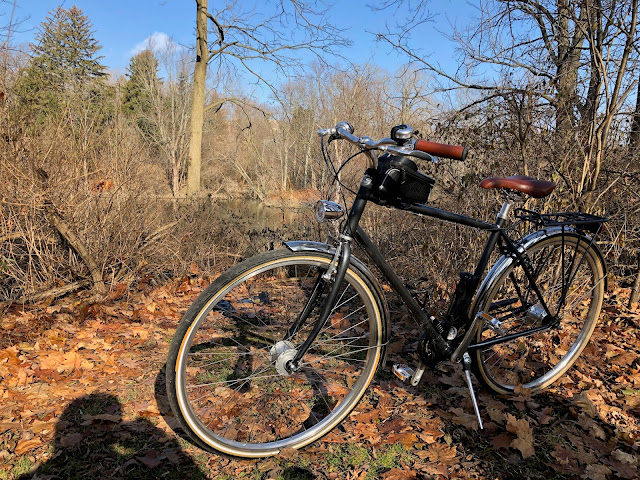
My bicycle. Getting on a bike and riding into the woods is the best thing you can do for your productivity. Optional: coming back.

Since I turned 40, I’ve been thinking about this a lot. I’m beginning to feel the effects of age, but I still have enough years ahead of me to fit in a lot of hot dogs—or bike rides. Habits I stick with now will affect how many things I can do each year, and how many years I have to do them. I’ve been using writing as an example, because it’s easy to quantify: 60 minutes of cycling a week can equate to an extra novel or two in my lifetime.
 
However, the less quantifiable and more immediate effects matter too. I feel great after a long bike ride, physically and mentally. Biking around for an hour or two is a rare chance to focus entirely on the present moment. Without the ability to check my phone or listen to a podcast or think about anything too complex, it’s like meditation, except the focus isn’t my breathing, but the path ahead. And if I must return to the capitalist habit of quantifying the benefits in terms of productivity: I’m way more inspired and motivated to make shit happen after I’ve had that chance to clear my mind.
 
It won't necessarily make me write better, so I'll probably just end up writing about zombies again, but at least I won't be one.

---
 
P.S. Autumn Christian wrote about some similar things in her newsletter recently. “I think we should bring back the weight lifting philosopher. The jacked intellectual. Lift weights in the morning. Write brilliant dissertations in the evening. Learn that everything we do is a circuit, a conjoined union, and we are our bodies as much as our brains.”


Monday, May 17, 2021

How Being a Writer Ruins Everything


P.T. Phronk
A post by P.T. Phronk,
of Forest City Pulp fame
It was Friday, I'd just finished work, and I had a whole weekend ahead with no plans. I laid down on the couch, and attempted to clear my mind. Finally, I could be free of the week's worries and just be, in the moment, no thought necessary.
 
Then I thought: is it "laid down on the couch," or should it have been "lay down on the couch"?
 
I subsequently thought: man, being a write ruins everything. I can't do anything without translating it into these stupid words. That would make a good blog post! That's when the phone came out and my notes app was open and I was no longer in a blissful state of care-free laying or lying or whatever.


Here are a few other things ruined by being a writer:


  • Thinking simple thoughts. It's never just "this sandwich tastes good." Instead, it's "how would I describe the taste of this sandwich, if I were to put it in a book, or tweet about it? Should I include details about how it smells? The feeling of incisors cleaving fresh bread? Ah shit, the sandwich is gone now." Do normal people even put their thoughts in words? Or do they just, like, taste things?

  • Watching TV. A plot twist is never just a plot twist for a writer. It's an opportunity to analyze what exactly led to the twist, what it says about the characters, how it fits into the overall structure of the story. Sometimes it's like I can't even let the intended emotions hit me, because they're wrapped up in analysis and logic, which ruins any good feels. I think I even miss literally seeing things. Sometimes my girlfriend will be like "haha that guy's hat is hilarious" and I didn't even know he had a hat because I was thinking about how that trope from three scenes ago is totally overused but I could totally do something different with it.

  • Engaging in normal relationships with humans. For a few different reasons. Being good at writing does not mean being good at talking, for one, so good luck getting a coherent string of words out of a writer's mouth unless they wrote it down beforehand. It's a beautiful thing when the writer's shell of introversion does manage to get cracked, though, because then they can mine the relationship for material. Some writers may keep a straight face, but deep down, a friend's heartfelt confessionary breakdown is being classified as "compelling dialogue."

tfw you finally have time for a relaxing vacation with the family.

  • Traveling. Oh cool, a new experience in an unfamiliar place? The writer must cram his head full of every detail and try to memorize what it feels like, because "write what you know" is awfully narrow when 99% of what you know is the beige walls of an apartment. Study up on that additional knowledge. It's not supposed to be fun.

  • Having biological functions. Writers don’t sleep, they just lie down and think about things that don't exist, then write those things down in a notebook beside the bed, repeat, and eventually pass out from the exhausting cycle. Writers don't poop, they just take breaks from their day jobs to do research and take notes in a private enclosed space. Even basic personal hygiene is a time for dreaming up ideas. Why do you think so many novels start with the main character looking in a mirror and end with them crying in a shower? 


There you have it, some slightly exaggerated reasons why writing ruins everything and you should never touch a keyboard. Am I even normal for a writer, or has something gone horribly wrong inside of me? Please let me know your perfectly-formed written thoughts. 

Monday, December 28, 2020

What Pretentious Scotch Reviews Taught Me About Writing

P.T. Phronk
A post by P.T. Phronk,
of Forest City Pulp fame
I have a few days off this holiday season, and that means I can get tipsy every night without having to worry about working with a hangover in the morning. My wonderful girlfriend also got me a bunch of scotch for Christmas, so that's been my drink of choice.

Have you ever read reviews for scotch? Google any random example and you'll see they're all pretentious as hell. Here are five egregious "tasting notes" about various drinks, from Whisky Shop Magazine:

“Absolutely filthy… like doing a bog swim without a snorkel.”
“The nose is a TNT banana, exploding bursts of fruit…”
“The hug of sherry is soporific”
“A pleasant dram, but lacks nerve and buoyancy.”
“Like putting Benny Lynch into the ring with Marciano.”


Ridiculous, right? I don't even know who those last people are.

Yet I find myself reading reviews for each scotch before I drink it. The more reasonable reviews may not mention TNT bananas, but they do include various fruits, spices, and inedible items like smoke and leather.


Wait ... meat?


And you know what? I enjoy the scotch more after reading these reviews.

Last night, after reading about Ardbeg's peaty nose and impression of a distant wildfire, I cleared my mind of the day's worries, watched the snow fall outside, took a sip, and was transported to a boggy landscape with a hint of smoke in the air. It was a nice experience. I could even compare it to a hug.

I don't know if that pleasant sip was a direct result of the chemicals in the scotch reacting with my tongue, nerves, and brain. I probably imagined half of what I thought I tasted. But it doesn't matter, does it? Taste is subjective anyway. If it can be enhanced by some pompous scotch blogger halfway around the world causing my brain to embellish a little, then I will continue reading flowery booze descriptions until I see the world through purple-coloured glasses.

Here's where I tie this back to writing. Writers sort of do the same thing as these scotch reviewers, except the embellishment is intentional, and we aren't constrained by the physical reality of liquid on the reader's tongue. If we're doing our jobs, we can make a person vividly hallucinate coastal air, a beach bonfire, and a soporific hug—no strong liquor necessary.

In a year when inspiration was badly needed, that's where I've most recently found mine. I hope you find yours too, and have a very happy new year!

Monday, November 2, 2020

Why Retirement is Easier for Writers

P.T. Phronk
A post by P.T. Phronk,
of Forest City Pulp fame
Hey, do you like money? Cool, cool, yeah, me too. I've been thinking about money a lot lately, maybe because I'm at the stage in my life when I've managed to pay off most of my debts to other people, and now have to start thinking about debts to my future self. Someday, I'd like to have enough money to "retire."

Why do I put retire in quotes? Because I think retirement means something different for writers than it does for people with normal brains. Some people picture the end goal as sitting on the beach drinking Cobra Kais or whatever (sorry, more of a whisky guy), or at least contributing to the statistics that portray retirement homes as endless orgies. Other people can't fathom not working. "What would I do with my time?" these people ask.

For writers, the answer is easy: we'll write! 
If you're not familiar with the life of a writer, here's a secret. Writing is almost never a full-time job. Even the writers you've heard of, and even the writers at the top of the Amazon charts, probably have a day job. But they wish they could write full time! So that's what retirement is for many writers. Retirement is having time to write.

That solves the "what will I do?" problem with retirement. Writers have another advantage when it comes to getting out of the rat race: we are used to living frugally. Our needs are simple, because we're generally pretty happy as long we have a laptop, an Internet connection, and a towering pile of unread books—all things we already have. So maybe more than other people, we only need enough money in retirement to pay the bills and not die.
Devil on your shoulder illustration from Die Muskete, 1916
Aaand another thing: most writers have this little voice on their shoulder that says "if only I could write full time, instead of during the exhausted scraps of time between other jobs, I could really do something great, and maybe even make a few bucks from it." That little voice is probably spewing fantasy, probably not healthy to have there, but it's there, and … maybe it's right sometimes?

I'm making some big assumptions here, like that young people today will ever be able to retire, that the world will be inhabitable by humans by the time retirement age hits, and that issues like healthcare won't keep everyone chained to a crappy job (I'm lucky enough to be Canadian so that's less of a worry, but if you're in the U.S., hey, remember to vote tomorrow). But we might as well try, right? Save a bit of money here, make a few investments there, and maybe we'll reach financial independence someday. I like to read early retirement and finance blogs for inspiration—there are lots out there, but I'll recommend Of Dollars and Data, which provides some nice numbers-driven advice.

Do you think it's a bit easier for writers to get to retirement, or am I out to lunch here?

Monday, July 27, 2020

INTERVIEW: Renee Miller

Happy fuckin' Monday, ya'll. I'm writing this on a Thursday, so you can imagine how upset I am to have to already be thinking about the M-word. 

But I have good news! Renee Miller, of the Tweed, Ontario Millers, devourer of chiseled men, puncher of noses, first of her name, has agreed to answer some questions. Read on!


You’ve written in damn-near every genre under the sun. Lately, though, you’ve been hovering in the black hole of horror. What draws you to that?

I was drawn toward darker themes all along, and when I settled into horror, it was because it allows me to continue to dabble in almost every genre. I mean, everything can be horrific. A love story can go dark. Science, no matter how amazing, can spiral into a nightmare. History, comedy, fantasy… you get the idea. There are also endless ways to unnerve or scare a reader. I like to have those options available.

Given, well, *gestures widely* it seems especially strange that horror and horror-crossover seems to be having a moment. Why do you think people want books to scare them when all they need to do is go to the grocery store?

Nothing makes us feel more alive than when we’re afraid. It’s one of the most intense emotions a person can feel. In horror fiction, you can be scared, but in a safe way. No one’s going to actually kill you or feed you your own testicles (well, almost no one). I think that’s what draws people in. Well, that and the fact that nothing is more terrifying than our reality right now, so maybe people who previously didn’t enjoy horror see it as a nice escape.

You have a new book that just came out, BLOOD LAKE MONSTER. The cover is EXCELLENT, by the way. Tell us a little about it.


I’m so in love with Unnerving’s covers. I don’t think I’ve ever been disappointed. For this book, when Eddie put out a call for the Rewind or Die series. When I saw “80’s/90’s slasher horror,” I knew I had to get in on it.

Blood Lake Monster is set in Tweed, where I live. It’s about a girl named Maribel, who is from a poor family in a very small town. She’s bullied right until her last breath but doesn’t let that stop her from getting revenge.

Also, I'm not great at the "tell me what your book is about" questions. 

If you wade through the blood lake that is Twitter, it seems a lot of writers are having a hard time making any creative headway in this pandemic environment. How has your writing routine changed, if at all?

Oh my god, my writing routine is shredded. I’ve been working as an assistant manager at our grocery store through it all, and it hasn’t been a good ride. Between the mental exhaustion caused by idiots who think they can act like assholes and get away with it, and the physical exhaustion caused by working more hours than I’m used to, it’s hard to find the motivation or the inspiration to write when I’m at home. I manage to get a bit in each day, but nothing like I used to. Before Covid, I could write a novella in two days. Now it takes a couple of weeks at least. I’m hoping that once things settle down, I’ll find my groove again. Until then, I’ll keep plugging away a few hundred words at a time.

What is the last great book you read? Do you find it harder or easier to fall into a story lately?

I just started reading THE ONLY GOOD INDIANS by Stephen Graham Jones, and I think it has the potential to be the last great book at this point. He is an amazing writer. I’m jealous.

For me it’s harder to fall into a story lately for the same reasons I’m struggling with writing. I have several unfinished books laying around. What I pick up to read and how much of it I get through depends on where my head is at. I find the days where I’ve been screamed at or threatened enough that I want to cut a bitch are the days I just turn on Netflix and let my brain recharge.

You write pretty regularly for Unnerving, an indie publisher. What do you like about the indie publishing world that the Big-5 and “traditional” publishing might not offer?

I like that it’s more personal. My success truly is their success, so we’re more of a team than I think I’d be in a larger publishing house. And indie publishers (or at least many of them) work their asses off. I know Eddie Generous (Unnerving) works harder than most authors I know, so when he takes on a project of mine (or anyone’s), I know he’s going to make sure it’s the best it can be or kill me in the process. (Just kidding. He’s really great and probably wouldn’t kill me.)

I’ve also worked with indie publishers like Aphotic Realm, Broadswords and Blasters, DarkFuse, Serial Magazine, and a few more. Next year, I have a novel coming out with Bloodshot Books. All these publishers are indie, and they’ve worked extremely hard on every book they put out. Sure, I’d love a big fat contract. Who wouldn’t? At the end of the day, though, if this is as high up the food chain as I get, I’m proud of what I have achieved and to have worked with these people.

If you could give one piece of advice to our readers, be they writers or not, what would it be?


I hate giving advice because we’ve all got something to learn. No one has all the answers. If you think you do, then you definitely don’t.  I guess the best advice I could give right now is less talking, more listening.

Renee Miller lives in Tweed, Ontario. She writes in multiple genres, but prefers dark fiction with strong elements of horror, erotica and/or comedy.


Monday, June 1, 2020

In Which I Tell You What To Do

Hello! Hola! Bonjour! Pree-vyeht!
This here is my first post with Across the Board and I couldn’t be more excited to force my wisdom (for better or worse) down your eye-holes. I’ve been writing seriously (and I mean seriously in the loosest way possible) for close to twelve years, and in that time I’ve come across buckets of advice, most of which isn’t any good. Below you’ll find some of the best and worst of the bunch. As with everything, take it with a grain of salt. In the end, only you know what’s good for you.

(Chocolate. Chocolate is what’s good for you.)

Best/Worst: Write what you know.
I KNOW. I’m groaning looking at this one too. And that Best/Worst thing? What am I trying to do? CONFUSE YOU?
Maybe a little.
Here’s the thing: the value of this advice depends on what you do with it. If you’re a cattle farmer in Idaho and all you ever write about is cow-pats and the way little pebbles always find a way into your boots, well, your writing isn’t going to have much range. You might find an audience, but it’ll be small. More importantly, after a while, even you will get bored with describing the smell of manure as it rushes over the hill.
So how do you fix it?
KNOW MORE STUFF. Learn to play the flute. Take a clogging class. Read about the great monarch butterfly migration.
Because it is important to write about familiar things. Familiarity means you can ignore the surface and scratch below it. Find meaning in the migration. Bridge the gap between music and grief. But you don’t have to, and shouldn’t, limit yourself to your current life experience.
Best: Why is more important than what.
Characters are assholes. There, I said it. We were all thinking it anyway.
You want them to go here to do this thing, but it’s like they’re rooted to the spot, arms crossed and putting. Petulant children, the lot of them.
Except, maybe they’re not.
Often, our plots demand our characters do things, be things, say things, in order to keep the events of the story moving. The problem comes when we want them to do a thing they don’t want to. If you’ve created a good, well-rounded character, you know how they will react to certain situations. Lengths they are willing to go. Their limits. Their fears. If you try to push them too far out of themselves, even the most meticulously plotted outline falls apart.
PLOT TWIST: The murderer was the best friend!
Yeah, but why?
Writing, like in murder, needs three things: Means, Opportunity, and Motive. I would argue motive is the most important. Sure, Johnny has a perfectly good kitchen knife and Karen is just sitting there looking all Karen-y, but unless he has a good reason to stick it in her ice-cold heart, he won’t.
Worst: You have to outline before you draft.
The key part of this one is have to.
Some people plot. Some people pants. Some people plants.
never outline.
WUT.
I know.
I journal. I dream. I answer questions I know will come up (see MOTIVE) so I don’t get stuck. I write snatches of dialogue to get a feel for each character’s voice. I know where it will start, where everything changes, the climax, and (sometimes) where it will end. Then I get writing.
I have never written a book that didn’t need at least 50% rewrites because I didn’t know what was really happening in the book until I reached the 30k word mark.
Would it be more efficient to plot? Maybe. Would it be more fun? Shut your mouth.
The point is that whatever works for you, works for you. There is no one way to write. Do it in the way you find the most satisfying because the writing is the easy part. Everything that comes after is hard.
Best/Worst: Show, don’t tell.
Oh, hell. Not another one of these.
YES.
Generally speaking, show don’t tell. Don’t tell me Frederico is angry; show him staring out the window at his cheating wife, eerily quiet, every muscle tense as a guitar string.
BUT –
Oh, yes. The big ol' booty.
But sometimes, less is more. If we’re writing about Frederico as a cuckolded husband and the events of his marriage that led up to this point, do we need to spend pages on his upbringing in a small house in Chile, describing his parents’ imperfect marriage, the fighting, the anger, only to stay together out of stubbornness? Probably not. In some cases, it’s more effective to tell with a line or two: Frederico, like his parents, didn’t believe in divorce. There was no argument too deep, no fight so vicious, that would justify breaking their vows to God and each other.
Worst: Writing is solitary.
This is SO the worst.
If you’re like me, and you have a significant other that not only doesn’t read fiction (GASP), but doesn’t read your work (GASP AGAIN), talking with them about the particular struggles (and successes) of writing and publishing can be like talking to a wall. Their eyes glaze over and they’re SO SUPPORTIVE but they don’t get it.
You don’t need a tribe, but you do need at least one person. They can be a cheerleader or a helpful critic or just another person on the other end of the phone or computer who understands how you feel. Who will squee right along with you when you finally figure out a way out of a plot hole, or you come up with the perfect title for your WIP.
Best: How do you eat an elephant?
One bite at a time.
No matter how small the bite, you’ll be slurping that trunk like spaghetti in no time.
(Yes, that metaphor got weird. No, I don’t regret it. Stop staring at me and go write something).


Thursday, April 4, 2019

Marie Kondo-ing Your Writing Career

I had a new release a couple of months ago and now I'm deep in the weeds of (re)writing my next book, so I've been thinking a lot about how I want the rest of the year to shape up. And I've decided there's one thing I'm looking for above all else.

Joy. 

It sounds hokey, right? This is my CAREER. I spend a lot of money on covers, editing and ads, and I'm not doing this because I have a trust fund somewhere for all of that. I've come a long way in redefining my version of success as it relates to money, but I still want/need to make some. But for the rest of 2019 - and maybe longer - I'm taking the Marie Kondo approach to my writing career, and I'm going to advocate that maybe you should, too.

If it doesn't bring you joy, rethink it.

Like...all that social media. 
Do you really need to be on Facebook, Instagram, Twitter and Pinterest? More importantly, do you like being all of those platforms? I'm going to go out on a limb and say probably not. I know I don't. Twitter, especially, does my head in, (although I'm keeping my account so I can follow We Rate Dogs and Thoughts of Dog). And so I can signal-boost my author friends when they have something to shout about. Otherwise, in my quest to Marie Kondo my social media, I've decided Twitter is a passive platform for me. Is it a missed opportunity? Maybe, but Facebook and Instagram are where I like to be.

But not too often
To the surprise of no one, I've discovered that I work best when I get my words in before I dive into Facebook or Instagram. But I've also discovered my overall mental health is better too. Less FOMO, less multi-tasking, less mindless scrolling means more productive time I actually feel good about. I've started not even logging into Facebook until late afternoon and, it kind of pains me to say it, but I'm not missing much that I can't catch up on.

And sometimes the highlight reel is enough
There's a lot of noise on the internet and it doesn't always come from social media. Author chat groups, blogs, Goodreads. Checking sales/page reads and rank. Yep. In my quest for more joy, I'm marking KDP as noise. 

Question for you: How many times a day do you log in to check your sales and/or rank? I used to keep my KDP tab open in my browser and would flip over to it at least hourly, even when I didn't have a big sale or a new release. I justified it to myself by saying I always had ads running but truthfully it was another thing sapping both my joy and productivity. On a normal day, a check in the morning and another check at night are enough for me. I can still adjust ads accordingly based on the result (and my ad spend isn't crazy enough that I'm losing tons of money if my sales slide for a day), and I'm off the roller coaster of emotions that come with both a really great sales day and/or a really bad sales day. It's liberating.

So is setting work hours
I used to work all the hours I could. If I wasn't writing, I was making graphics, scheduling social media posts, reading blogs, catching up on industry news. God, it was stressful - mostly because it always felt like I would never catch up. It was only when I realized that for me catching up equaled done - and that was never going to happen - that I stopped. The truth is, there is always something more to be done. See any of the above, then add things like: updating back matter, revamping your website, finally writing that YA fantasy you keep thinking about. Oh wait, that's me. But the truth is once I acknowledged that I could work twenty hours a day and still not be done, it became a lot easier to be done for the day at a reasonable hour, to sometimes watch TV and to seldom work weekends. Weekends are my reading time and that, my friends, sparks joy.

Tell me what about your writing career sparks joy and what could you Marie Kondo?


Blogger Template by Designer Blogs