Showing posts with label interview. Show all posts

Thursday, December 17, 2020

The Wisdom of Maryanne Pope

It gives me great pleasure to introduce to you Maryanne Pope, Founder, and CEO of Pink Gazelle Productions, an accomplished author, blogger, and grief expert.

In honor of Krista Tippett, I like to start my interviews by asking Maryanne if there were any significant childhood influences that had an effect on her writing. From early on Maryanne has had a deep concern for the treatment of animals. It was her Mom, a big animal-lover, who instilled in her the importance of treating animals kindly and caring about wildlife, conservation, nature, and the environment. An empathic view much needed in our world today.

Maryanne knew by the age of seven that she wanted to be a writer and ever since this has been her dream. It wasn’t until her beloved husband died suddenly at the age of thirty-two that Maryanne understood the difference between dreaming and doing. It was only two weeks after his death that she sat down at the computer and started writing. This writing that sprung from intense grief would become the raw material for her first book, “A Widow’s Awakening.”

She writes to understand what she is experiencing in life. Maryanne says, “I re-write and publish (or post, produce, etc) to share with others what I am learning. I have a passion for many things but because of my life experience, I have written a great deal about workplace safety, death & dying, grief, and the afterlife. At my core, I think I am a story-teller.”

Maryanne would describe her genre as creative non-fiction. Her writing is based on real-life experiences, either her own or historical figures. She is attracted to creative non-fiction because "she finds there is such richness in reality itself.” She uses real-life stories as the starting point for an imaginative retelling.

Her audience is diverse, for her book, “A Widow’s Awakening,” her primary audience is female readers who love engaging stories about strong women overcoming adversity, or women who are grieving the loss of a spouse or loved one.

Maryanne’s weekly blog, “Weekly Words of Wisdom,” attracts readers who are interested in the insights of a lifestyle blogger. This includes not only everyday experiences but movies, books, life lessons, and on occasion people who push her buttons! 

Maryanne also writes play scripts and screenplays that capture a very different audience but regardless of genre, platform, or project, her audience has a desire to be inspired, challenged, and empowered to make changes in their own lives and/or the world around them. 

Her engagement with other authors is casual and not necessarily intentional. If Maryanne reads a book that resonates with her, she will write a review, and tag the author. She says, "If something comes of it that’s great."

I asked how the current political climate and world-wide pandemic has affected her writing? She thought the question was an interesting one, for Maryanne, the pandemic has been a blessing. It has given her the time, space, and privacy to stay at home and write, and she adds, in peaceful and productive solitude.

Maryanne has written several blogs about the benefits of being a writer during this pandemic, she acknowledges some people resonate with this perspective more than others. It seems as if she is connecting more deeply with readers of her weekly blog during the pandemic because she has the time to communicate with her followers, especially since she is not traipsing about the planet!

Maryanne says, “I am fascinated with what a difference time and space is making in regards to my writing…including my ability to connect to my deeper self, my imagination, and my characters. This pandemic has taught me that even when the restrictions are lifted, I will continue to be far more protective of my time and sacred writing space. I will connect with fewer people…but develop deeper connections.”

When asked about the importance of research in regards to her work, Maryanne says it depends on the project. Her screenplay, “God’s Country,” for example was researched extensively because it is based on the life of a silent screen star, Nell Shipman. Her book, “A Widow’s Awakening,” didn’t require much research because it was based on her personal experience of coming to terms with the death of her husband, John.

She has written a playscript called, “Saviour,” based on the real-life circumstances that led to her husband John’s death, but the bulk of the story takes place in the afterlife and is very much about death, dying, including the journey and purpose of the soul…so that required some research. But much of that research isn’t exactly scientific or fact-based because it is spiritual and subjective in nature.

I love to learn about the writing rituals of authors so I asked Maryanne to share something of her routines. She says, “I am as predictable as they come! I wake up early every day, have coffee, think, and reflect. Then I do yoga, after which I write for 1 to 2 hours usually focusing on larger projects." Then she moves on to smaller writing tasks, such as blogs, e-mail, and administrative tasks.

She writes in the same place every day, on her laptop, sitting on her couch, surrounded by supportive pillows. I love this tip, she sets a timer for 53 minutes and takes a break when the timer goes off. Brilliant.

Maryanne chooses technically challenging projects that end up strengthening and stretching her skills as a writer. As an example, the “Saviour” playscript and subsequent scripts in that series are extremely challenging because she has to create an entire world…that of the afterlife. It took her 15 years to get the “Saviour” playscript where it needed to be. It was extremely challenging to write…emotional in the early years but then technically challenging in the subsequent rewrites.

When asked about her activity on social media Maryanne responded, “I am not personally that active on social media. I really don’t enjoy most social media very much. The exception is Instagram…I do enjoy that – probably because I can get in & out very quickly.” She does understand the importance of having a strong presence on social media, so she hired Sarah who helps her stay on top of social media demands. Sarah loves Twitter, for example, so this is where she shines. She says, "I am extremely grateful for Sarah because she ensures that I do have a social media presence."

Maryanne says, “I have been going hard, as a writer, for twenty years – and this much I have learned: we cannot do it all on our own. At least, I can’t. I cannot work at my peak creative capacity, writing large projects such as play scripts and screenplays, AND have a robust presence on social media. Sarah and I work really well together. I create the content (blogs etc) and she shares them on social media.”

How’s that for honesty 😊

Social media is a very important way of connecting with others, but there is still nothing like a good old-fashioned phone call, or well-crafted e-mail to move a writing project forward advises Maryanne. 

One of her favorite authors is Sarah Ban Breathnach. Her book, “Something More; Excavating Your Authentic Self” is one of her all-time favorite books. I also have a copy of this book and absolutely love it.

For Maryanne literary success is doing the work she is here to do…and loving it. She loves hearing back from readers when something she has written resonates with them or helps them in some way. Success is a very internal thing, as Maryanne loves nothing more than waking up each morning, and looking forward to working on whatever writing project she happens to be working on.

She says, “over the years, I have come to realize that learning to enjoy the process of taking an idea all the way through to the end product – blog, book, play, film – is where the success lies. I used to think it was the end product. NowI know better.”

Maryanne advises, “if you have been wanting to write but have never got around to it, my advice to you is this: just do it. Make a short-term commitment to yourself to write for even just ten minutes a day for one week. See how that feels. If you hate every moment, it may be time to let that dream go…make space to let in what you really want to do.”

If you do enjoy the experience of writing, then keep at it, perseverance is key, so is developing good habits.

Here is the link to buy “A Widow’s Awakening”: https://www.bhcpress.com/Books_Pope_A_Widows_Awakening.html Maryanne Pope is the author of A Widow’s Awakening. She is the Founder & CEO of Pink Gazelle Productions and a Director of the John Petropoulos Memorial Fund. To receive her weekly blog, Weekly Words of Wisdom, please sign up here. Have a visit to her Etsy store.

Monday, November 30, 2020

Interview: Being Very Mean to Leonard Delaney

P.T. Phronk
A post by P.T. Phronk,
of Forest City Pulp fame
Hi. I'm P.T. Phronk. It's my turn to do an interview here on ATB, so I thought I'd reach out to fellow Forest City Pulp author Leonard Delaney. Leonard is a close friend. In fact, he's as close as two different pen names can be.
 
Delaney achieved brief viral popularity a few years back, when he released Conquered by Clippy, an erotic short story about Microsoft's annoying digital helper who only old people remember now. He was interviewed by media from Vice to Men's Health, for some reason. Even today, academic examinations of Delaney's work help define the 21st century, as in this treatise from the future: A Literary Review of Sex and Technophobia in Leonard Delaney’s Digital Desires: Taken by the Tetris Blocks.
 
So it is an honour to speak with Leonard today, who joins us from rural Ontario, where he has been in quarantine since 2017.

You can find Leonard Delaney on Twitter by using this hyperlink.
 
 
P.T. Phronk: Okay, give us an intro.
 
Leonard Delaney: Oh, this is one of those interviews where I do all the work, cool. I'm Leonard, and I write technology-and-pop-culture-focused erotica. I've written about having sexual relations with everything from wrist watches to planets. 
 
 
It's Leonard Delaney.

 
PTP: What work would you say you're best known for?
 
LD: My novella Motherfucking Wizards is selling best these days, because people are still weirdly obsessed with Harry Potter, and it's kind of a parody of that. Maybe it's also because J.K. Rowling became dumb and anti-transgender, so people are looking for better alternatives to her stories, and Motherfucking Wizards is a lot better as long as you are an adult who can handle sexual wizardry.
 
Conquered by Clippy was the story that people really gravitated towards, though, so I'm best known for that.
 

PTP: I heard that the creator of Clippy is aware of the book.
 
LD: Kevan Atteberry, yeah. He was actually pretty mean about it in one of his interviews (he probably means this one —PTP), where he admitted to pirating a PDF of my book and thought the writing was bad so he didn't even finish reading the book he stole. He's wrong, though, because I Google almost every word I write and make sure it's spelled right, so my writing is really good. This guy can't even spell "Kevin" so what the crap does he know? And he liked artwork depicting a pregnant Clippy, so maybe the issue is that he's got very specific fetishes about his creation.


PTP: Why do you think people describe your books as "erotica by a virgin"?
 
LD: That's actually a really mean thing to say. First the creator of Clippy is mean to me, and now you are mean to me. The definitions of things like "virgin" and "sex" are very fluid in this year twenty twenty, so what would that even mean? I think if you read some papers about human intercourse you'd find that my writing is very realistic.


PTP: Fine, so, changing subject, you said you've been in quarantine since 2017, but the pandemic only started in 2019?
 
LD: My books have always been future-facing, so I suppose I am ahead of my time. I was already spending a lot of my hours inside, because it's warm in here and I have to feed my mom's cats, but the pandemic emphasized that it's actually important and selfless to stay inside. Heroic, even. So am I a hero? Many people are saying that, but as a man staying in my house all the time, I'm really only doing my duty, as a man, which also gives me more time to write.
 
 
PTP: But you haven't published anything since 2017 either.
 
LD: Look, fine, so I kind of went into hiding. People are mean to me, as you’ve seen first-hand. Plus, the whole novelty erotica thing was starting to feel like it was getting old. And it felt wasteful to write about topics ripped straight from the headlines, because the headlines change every day … even faster in the last few years. So I'd do something like My Racist Robot Lover, and a few days later nobody would even know what it's referring to. Do you remember Microsoft's problematic millennial chat bot, Tay? I barely do.
 
 
PTP: I have the same memories as you. But I'm surprised you didn't write anything about the coronavirus.
 
LD: That would be a bit tacky. I know COVID-19 erotica has been done, and authors like Chuck Tingle are still plugging away and doing a really good job of erotically covering current events without being too negative or exploitative. Maybe there's still a place for tech-focused erotica, though. I don't know.
 
 
PTP: Does that mean there's hope for a Leonard Delaney comeback?
 
LD: If the time was right to do something fresh again, sure, maybe. You said yourself that it's hard to put in the work to create something great during periods of difficulty, and that affects me too. But ... maybe. Follow me on Twitter dot com and other online hangouts in case I make any moves.
 
 
PTP: Where can people find you online?
 
LD: This question is unnecessary. Please Google my name and put links at the top of this interview, or you can go back and hyperlink all the stuff I've said in this interview before you post it. Don't you know about linking on websites? Websites are amazing.
 
 
PTP: Thank you for the advice about websites, and also for the interview. We'll keep an eye out for that comeback you're definitely staging.

Thursday, March 28, 2019

The joy of crime with Emily Ross: an interview

Readers and writers, I am so happy to present to you today an interview with Emily Ross. She is the author of Half In Love With Death (Simon Pulse 2015), a young adult thriller inspired by the Pied Piper of Tucson, a real serial killer who murdered three girls and buried them in the desert. The book was also an International Thriller Writer Thriller Awards finalist.

In this heart-pounding novel set in the 1960s, 15-year old Caroline is still mourning the loss of her older sister, Jess, who disappeared without a trace. The police have no answers and Caroline can't move on without knowing what happened to her sister. Jess's boyfriend, Tony, suggests that Jess ran off to California, and he asks Caroline to come with him to find her. But is she following a lead or being led into a trap?

This is a heart-in-your throat thriller--fast-paced and poetic in its creepiness. I highly recommend you pick this up asap.

I'm so glad that Emily is able to drop by our blog to give us her tips for writing criminally good fiction, and which authors you might to check out if you're a fan of suspense.

Your YA novel, Half In Love With Death, is inspired by the true crime of the Pied Piper of Tucson. Is there another true crime story that you are fascinated with? Or an unsolved mystery that haunts you?

I recently got sucked into the Black Dahlia rabbit hole by the book, Black Dahlia Avenger, by Steve Hodel. Hodel is a retired LAPD detective who believes he’s solved this decades-long unsolved crime and knows who killed Elizabeth Short (a.k.a. the Black Dahlia). He hasn’t entirely convinced me yet, but his book paints a chilling portrait of his disturbed, brilliant father, George Hodel, and of Los Angeles at a time when it was rife with corruption. 

Who Elizabeth Short—the beautiful woman with black curls, paper-white skin and green eyes—really was is also a mystery. Was she a sweet, innocent small-town girl who came to LA to pursue her dreams, or a liar who invented the life she didn’t have to impress people? Was she in the wrong place at the wrong time, or did she know her killer? We may never know. I suppose, like many people obsessed with true crime, I have just enough foolish hope to believe I could be the one who finally figures it out.

You're a contributor to Dead Darlings, a website dedicated to helping writers improve their craft. What advice would you give a novice crime fiction writer?

Read the crime fiction genres you like (thriller, suspense, cozy mystery, police procedural etc.) and write what you like to read.

Figure out as much as you can about the crime in your fiction ahead of time—who did it, how, where, when, and why. But it’s okay if you don’t know everything in the first draft. For example, if you’re not sure who the killer is you’re less likely to point a big red arrow at him or her and you will naturally create suspects who are red herrings. I’m often more imaginative outside my outline so in my first draft I work with a high-level roadmap and fill in the holes as I go along. I nail down the details and clues in later drafts. Whether it’s better to know everything up front or discover things along the way depends on what kind of writer you are. Either approach can work.

The various crime fiction genres follow certain conventions. The crime fiction audience is very aware of them and you should be too. For example, if you’re writing a mystery, the crime usually takes place early in the book and you’re expected to solve it eventually. If you’re going to break a rule you should have a good reason. Much as I resist being told what to do, I find the constraints of crime fiction can make your story stronger and help you to be more creative.

Above all, tell a good story. There are lots of great books out there on story structure. Acquaint yourself with them. Sentences can be polished and made beautiful, but if the story doesn’t work none of the rest will matter.

Setting is key in mystery and crime fiction. A book set in Los Angeles is going to have a very different vibe from a story set in Maine. If you could set a book anywhere, where would it be, and why?

I’ve always wanted to set a novel in my hometown of Quincy, MA. Quincy is an ethnically and economically diverse city with big city problems and a small-town feel. There are gritty neighborhoods and beautiful neighborhoods by the sea. There are dive bars where fights break out and trendy restaurants. There’s tension between the people who have lived here for generations and the folks who are just discovering it. Tension is good for fiction. Whitey Bulger buried some bodies here and it feels like everyone knows someone who knew Whitey and will tell you stories about it. I like the idea of setting a crime novel in this city where everyone knows everybody as they would in a small town, but also where dark secrets and danger lurk beneath the surface.

Recommend a few page-turning reads in the genre of your choosing.


I just finished The Silent Patient by Alex Michaelides, a page-turning psychological thriller that rewards with an ending you don’t see coming, but which makes perfect sense when you look back at it. I’d also recommend Final Girls by Riley Sager, Sharp Objects by Gillian Flynn, and You Will Know Me by Megan Abbott.

As for detective fiction I recently read Louise Penny’s How the Light Gets In and now I want to read everything she’s written and move to her fictional town of Three Pines.

What shows are you bingeing right now?

The Good Place which I absolutely adore. I NEED a Janet.

Also recently devoured the sharp, creative new comedy series Corporate. If, like me, you’ve ever worked in a corporate job that made your head explode on a daily basis, this one’s for you.

Just started watching I Am the Night which interestingly is from a memoir by Fauna Hodel, the niece of Steve Hodel who wrote Black Dahlia Avenger. I’m really curious to see how their two stories intersect.

What are you currently working on?

I’m working on a psychological thriller about a detective who must unravel a dark secret from her past to catch the serial killer who is targeting members of her daughter’s dance team. I think of it as sort of Mystic River meets Seven.

Thanks, Emily, for stopping by. To check out the history behind the Pied Piper of Tucson, to read more about Emily's work, or to follow Emily on Twitter, click on her social media links below.

Monday, February 25, 2019

Interview with Myself


All right, so I’m cashing in my ‘Get Out of Jail Free’ card on this post. I was sick all last week and I’m just now starting to feel human again. Needless to say, I didn’t have a post ready let alone an interview. But no worries - I won’t leave you completely hanging. 

My daughter is 12 (and a half) and I’ve been encouraging her to work on her communication skills. If you have a kid, especially a (pre)teen, then you know how difficult it is to get them to actually speak words to people. They’d rather text or post an update to their story. Or if you’re really lucky, you get to have streaks. Um, whatever. I want my kid to get a job some day so I’ve been encouraging her to at least once in a while use the phone for its original purpose. That’s right, I want her to actually TALK to her friends. Even her boyfriend. 

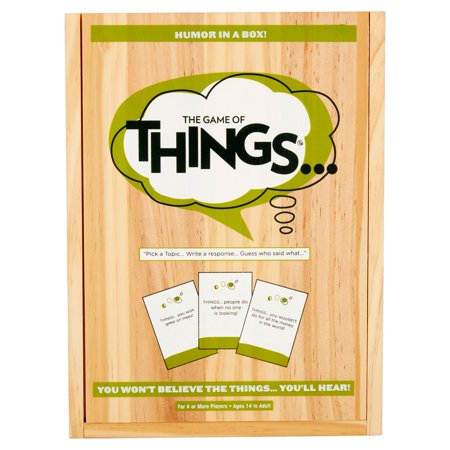
In addition to getting her to talk on the phone, I went so far as to purchase a couple of games that she could pull out when she had friends over. Games that encourage talking to each other. They haven’t been used yet, but I have hope. Anyway, I’ve pulled five cards from each of these games as my interview questions for myself for this post. Enjoy!

From: The Game of Things… Humor in a Box!


Q1: THINGS… you would have done differently if you were Harry Potter. 
A1: I think I’d go big if I were to do something different as Harry Potter—like beg the Sorting Hat for Slytherin rather than Gryffindor.

Q2: THINGS… you hope will never be done by robots.
A2: I’d hate to see robots write books. Publishing, editing—all that’d be fine. They just shouldn’t be allowed to create the stories.

Q3: THINGS… that were not your fault.
A3: Nothing is ever my fault.

Q4: THINGS… that won’t stop.
A4: Distractions. And apparently my cough.

Q5: THINGS… you would like to say to contestants on The Bachelor.
A5: I would tell them it’s all fake, but that would be completely pointless. I suppose I’d tell them that it’s called ugly crying for a reason.


From: Chat Pack for Kids


Q6: What is the most unusual thing you’ve ever found?
A6: A large candle in my backyard.

Q7: Where do you think would be the most fun spot to have a treasure hunt with all your friends?
A7: A bookstore. Duh.

Q8: If you had to describe your personality in terms of a sound, which sound would be best?
A8: I’m a true Gemini, so that means I’ve got many faces to my personality. Based on that, I’d have to say a violin. It has many different sounds depending on how it’s played to match my moods.

Q9: If you were a teacher, what are three rules you would insist that your students obey?
A9: (1) Say one kind thing to each classmate every day. (2) Say one kind thing about yourself every day. (3) Every assignment must be turned in with chocolate. 

Q10: What big ideas or dreams do you have right now that you would like to see come true someday?
A10: Right now it’s to get my forth book done and dusted. Yeah, it’s the same one I told you all last year I wanted done by May. Maybe I meant to say May of this year??

That’s all I’ve got for you today, folks. Sorry for the somewhat lame post, but it happens. 

Feel free to answer any of these questions yourself down in the comments!

~ Carrie

Thursday, August 23, 2018

Interview: Marie Landry, Bookstagrammer, Talks Creativity, Hashtags and Connecting with the Bookstagram Community as an Author

Who loves #bookstagram? *Raises hand.* I stalk a lot of bookstagrammers over on Instagram. Like, a lot. The bookish love. The bookish photos. The bookish community. It all makes my book-loving heart ridiculously happy. One of my favorites is Marie Landry, who's a romance author and a bookstagrammer, and if you're a romance lover and you're NOT following her, you absolutely should be.

Marie was kind enough to sit down and talk with Across the Board this week and talk all things #bookstagram, including hashtags and how authors can connect with this vibrant, book-loving community.


First of all - the photos! The set up is amazing. Do you actually have all of the things you use in your photos or do you use stock photos? What kind of equipment do you use to take your photos?


Everything you see in my pictures is mine; I collect props - regular household items, bookish merch like candles and bookmarks, flowers, FunkoPops, etc., and of course the books, both physical and ebooks - and arrange the setup myself. They’re all taken in my bedroom/office either on my bed or on a table. I do a variety of flatlays and ones that show my bookshelves in the background. Some bookstagrammers have fancy cameras and lighting (I’m envious!) but I just use the camera on my 3-year-old Samsung phone and make sure to take pictures when the natural light is good.


Has your process changed now that you've been bookstagramming for a few years? If so, how?


I’ve learned a lot through trial and error, and from other bookstagrammers. Last year, I discovered the mobile app version of Lightroom and started using it to edit all my photos. It was a complete game changer, especially in the winter when the natural light was terrible. Lightroom can take a poorly-lit or dull picture and turn it into something bright and vibrant. I’ve also started taking as many photos ahead as I can; I try to spend one morning a week taking a bunch of pictures so I have a stock for the week and don’t have to haul out all my books and props every day.

The bookstagram community seems really creative, but how do you keep coming up with new ideas?


I’m constantly inspired by my fellow bookstagrammers. I love to look at other people’s pictures and I save my favourites to refer to for inspiration. I also participate in monthly challenges (and even co-host one) that give you daily prompts. They’re great for helping you think outside the box and keep things varied.

Your posts always have a fox in them. Is that your signature?


It is! A friend made it for me last Christmas because I love foxes. I used him in a few photos, then realized he’d make a great signature prop and now he’s in all my photos. A lot of people have told me how much they love Foxy, especially when he’s peeking out from somewhere. Oddly enough, having him in all my photos has helped me get even more creative.


I always pay attention to bookish hashtags. Which ones are your favorites?


First, for those who don’t know, you can use up to 30 hashtags per post, and I always use the full 30 for maximum exposure. (If you don’t like how it looks, post the hashtags in your comments with 5 lines of dots first so the comment collapses and hides itself.) You want hashtags with under a million photos, otherwise yours gets lost quickly, and with more than a few thousand so people actually see them.

A few of my favourites are #booknerdigan #booktography #bookcommunity #coverlove and #bookgeek. I also use hashtags for genres and categories, like #contemporaryromance and #yalovin, plus sometimes the name of the author whose book I’m posting. I have a list that I copy and paste, and I try to mix in at least a few different ones each time because apparently Instagram can flag you for spam if you always use the exact same hashtags. Also, be sure you’re not using banned hashtags because they won’t show up in searches - oddly enough #books is banned, so don’t use that one!

To authors who are hoping to connect with the bookstagram community, what advice would you give?


Bookstagram is a great place for authors to connect to readers AS readers. Talk about other people’s books at least as much as your own. Nobody likes people who are all about self-promo and that applies to bookstagram as well. I talk about my own books sparingly; I find Instagram stories and highlights are a great place to share information about my writing and my books so it doesn’t feel like I’m filling my feed with self-promo. To me, bookstagram is about building connections, and that takes time, especially if you’re an indie, newbie, or unknown author. Build a rapport with people, like and comment on their pictures, ask questions in your captions that will engage people.

Unless you’re attempting an actual bookstagram account (which should be all books all the time; I learned this the hard way a couple years ago when I tried to add in non-bookish pictures and had a lot of unfollowers, so I started a separate account), be sure to post some personal things too. People want to feel connected and they want to know the person behind the keyboard/phone. Give them little snippets of your real life - hobbies, travel, fashion, writing updates, whatever - and they’ll come to care about you and be invested in your personal story, which will hopefully lead them to being invested in the stories you write as well.

I love all of this advice. Also, time to stop using #books in my IG posts. Are you part of the bookstagram community? Any tips to add or questions for Marie? Post them in the comments!

Thursday, May 3, 2018

Interviewing Your Characters and GMC

Show of hands - who here has filled out a character interview sheet before they start writing? I definitely have not - yet. But I've been reading Debra Dixon's GMC: Goals, Motivation and Conflict (which is brilliant, by the way - even for someone 10 books into this whole writing thing) and she talks a lot about building the character interview into your writing process. According to Dixon (and I agree), it helps to give you a firm grasp the characters' goals and motivations, and how they're going to respond to conflict -- all of which help you build a great story.

The foundation of every great novel, regardless of genre, is conflict. If you have a weak conflict, readers feel like they're being led along a path for no real reason. Even in romance with its guaranteed happily-ever-after, your main character (MC) must face conflict - whether it's accidentally falling for her brother's roommate or an off-limits office romance.

Ok, I see you nodding and thinking, "But how does knowing whether my MC likes dogs add to the potential for conflict within my story?" Well, let's just say you're writing science fiction and your MC had a dog back when he was kid, which was a very long time ago. He and his friends are being shot at by rebel forces and about to board their space ship to escape the hostile planet, when MC sees a dog limping into a cave twenty feet away. MC makes a split-second decision to grab the dog and take it with them, but doing so means he's under enemy fire. And the crew now have a dog onboard - who's limping along and definitely worse for the wear. Imagine the conflict this can create amongst the crew! Now, the dog isn't the central plot point or conflict (it could be, but in my imaginary story it's not), but it can be used as a plot device to help drive the main conflict - which in this case might be something along the lines of: MC is a rogue and his superiors expect him to fall in line b/c he's putting everyone in danger otherwise. Case in point? You guessed it. Dog.

Here are 25 more great character interview questions:


  1. It's Monday morning. Are you excited to go to work/school or sad?
  2. What do you normally eat for breakfast?
  3. Do you call your mother or text? How often?
  4. Do you iron your clothes? Who does your laundry?
  5. Do you exercise or are you happy to sit on the couch? If you exercise, what's your favorite way to exercise?
  6. Have you ever played a team sport? If you no longer play, why not?
  7. What is your favorite TV show?
  8. How do you typically spend your Friday night?
  9. What do you do when you're bored?
  10. How many hours/day do you work/go to school?
  11. What would you be embarrassed for people to know about you?
  12. If you go to a party, do you prefer to talk to people you already know or meet new people?
  13. What do you drink during the day? Water? Coffee? Ice Tea? Beer? Nothing?
  14. What kind of books do you read? If you don't read books, do you read magazines, newspapers, or online content?
  15. If a stranger rings your doorbell, do you answer it or do you wait in the kitchen until they leave?
  16. What is your favorite food?
  17. If you could meet anyone, living or dead, who would it be?
  18. How many siblings do you have? Are you close or estranged?
  19. Do you have a pet? If so, what kind?
  20. What would be your perfect gift to receive?
  21. What do you like best about yourself?
  22. What do you like least about yourself?
  23. How long have you known your best friend?
  24. You're stuck waiting in an unexpectedly long line. How do you react? What do you do while you're waiting?
  25. What is one color you think looks great on you and why?
These are only the tip of the iceberg of questions you can use to "interview" your characters, so I'm curious -- if you do a pre-writing character interview, what kinds of questions do you ask your characters?


Monday, September 11, 2017

Interview with Author Kathleen Grissom


I’m so excited to have had the opportunity to talk with Kathleen Grissom, author of THE KITCHEN HOUSE and GLORY OVER EVERYTHING: BEYOND THE KITCHEN HOUSE. I loved both books, and Kathleen immediately came to mind when I was thinking who I should approach for my first Across the Board interview. We had such a wonderful and inspiring talk. Her books are just as amazing as she is, so you should check them out if you haven’t already!

You can also You can follow Kathleen on the following sites:


CB: One part of your story that’s always resonated with me is how you’ve said that you never intended to write a book, but it was as though you were called to do so. I know from experience it can be difficult to take that kind of leap of faith. What would you say to someone who may be experiencing the same kind of calling but is afraid to listen?

KG: If people don’t listen to the calling, I believe it’s because they don’t think that they’re capable, or that they’re not qualified to write it, or there’s some sort of fear attached to it. And I think it’s just so important to walk through fear. So I would say sit down and do it. Put that self-editing voice to the back and sit down and write what’s coming to you. And be grateful for it. Just do it. You know—the old Nike expression.


CB: I agree that fear is at the root of it. Let’s say someone reading this takes your advice and walks through their fear. If you could give them one piece of advice of what not to do, what would it be?

KG: Don’t let your ego run wild—get it out of the way. The ego is the one sitting there saying you have to make yourself important, you have to look important, and all of that ‘you should.’ And it’s not about that. It’s about a gift. One that you’ve followed through on and one that you want to know if people are interested in helping you with. And if they are that’s good and if they aren’t that’s good too. It’s not personal. With THE KITCHEN HOUSE, I had to go present myself to bookstores and I was terrified. I was taking it personally and I was thinking, “Oh my God, they’re going to think I’m a fool.” All that thinking about myself—the ego was wrapped up in it.

Also, I’ve seen authors turn people off by talking about how great their book is. People want to know how you came to write the book. Stay real. Be honest. Let them know that you’re afraid. Let them know that you don’t know if you’re qualified or if you’re good enough. Let them know the real you, the vulnerable part of you. They don’t want to see the ego up there and the pretty pictures we post of our lives on social media. That turns people off.


CB: That’s great advice. Have you come across any unexpected challenges in your life as a published author?

KG: One of the things that surprised me was how hard it is to be in the public eye. I have a whole new appreciation for people who don’t necessarily seek it out but are thrown into it. It can be overwhelming. That’s something I hadn’t expected. Sometimes after I’ve been speaking to a large group someone might come up and tell me how I’ve personally affected them through my writing. Sometimes they might cry or hug me and I realize that this is so much bigger than me. It allows me to again appreciate that this was a gift.


CB: In some of your talks I’ve watched online, you’ve commented that if you ever tried to change the story you were seeing in your head the writing would stop. I love that and know exactly what you mean. Was there a time when you had to defend a part of your vision during the writing process to keep it from changing, for example in editing?

KG: I never had that happen. Both my agent and my publisher were sensitive to this process and the way it works. I thought I was unique, but what I discovered was that many writers write this way—where the story comes to you and you don’t necessarily have control over what the characters decide to do. I certainly don’t. But I have wanted to make changes. As an example, in THE KITCHEN HOUSE I wanted the captain to tell his wife who Belle was. And when I tried to change the story line, the characters all just dissipated and I was left with no story. So I learned early on that I was meant to write it as it came—it was a gift and I was not meant to insert my opinion.


CB: Does anyone ever look at you strangely when you say that? My writing experience is similar, and I worry people will look at me like I’m nuts if I tell them that. 
  
KG: You know, I thought that’s how people would look at me. When I was first told I was going to have to do book clubs, I didn’t know what I would talk about. My publisher told me to talk about how I wrote the book. I told her I couldn’t do that because they would think I was crazy. But she said, “Well, that’s what they’re going to want to know.” I wondered how I was going to do this. Then one day I picked up Alice Walker’s book THE COLOR PURPLE. For no reason. I wasn’t going to read it again—I just picked it up. I was paging through it and came to the very last page where she had thanked the souls for coming through and then she signed it “A.W.—author and medium.” And I thought then that if she can write that in her book then I’m not alone. And that was my first real indication that I needed to be completely honest about this and if people thought I was crazy then so be it.

Once I opened up, I was shocked by how many people then started to tell me about experiences they had. I’m often asked if I think I’m psychic and I say no because that’s a whole different phenomenon to me. But this is something I don’t pretend to understand. I just know that I’m very, very lucky to have been given this gift. But how people interpret me is none of my business. If I make it my business, then it’s the ego again. That ego always wants to get involved.


CB: Just hearing you talk about your experience creates an emotional reaction. I’ve found the same to be true in your writing. Both novels convey a strong emotional pull for the reader, which leads me to believe you were personally immersed in those emotions as you were writing. Was it difficult for you to let go of those feelings after you finished writing?

KG: You know it’s interesting—the way this comes to me is an interesting phenomenon because when I leave my writing room, it stays in there. While I’m writing it, I’m often pacing and crying. I’m feeling strong emotions. There’s this expression, I don’t remember where it came from, but it’s 'if it doesn’t come from the heart it won’t reach the heart.' And I believe that. So I let myself feel whatever my characters are feeling and I try to write that down. But after I’m finished for the day, that’s it. The feelings don’t follow me around, and when I finish the book we’re done. The characters don’t come back to let me know how they’re doing. That’s the gift. It’s presented in a certain package, and once that package is wrapped and sent out into the world it is no longer mine.


CB: You mentioned your writing room—can you tell me more about that?

KG: I’m lucky enough to have a writing room over my garage. At the beginning, when I first started writing THE KITCHEN HOUSE, I was writing in a corner of my dining room. I think it’s important to have a separate space. For me, I think it’s where the souls gather. So now I have my writing room, and in there I have a little alter. Right now I’m writing about a Native American woman Crow Mary, so I have a picture of Crow Mary and her daughter standing in front of a tipi. I also have a picture of my mother who’s passed away. Next to that, I have a little statue of Mary, a candle and a mixture of sage, cedar, and some other sacred herbs that the Crow used. Before I write, I smudge the room, and I ask for God’s direction. Then I sit down and write.


CB: I like the writing ritual you described.  I can see where that would help get you centered and get you into what you’re trying to achieve with your writing. I believe having things we can connect with is so powerful. Many readers often connect with specific quotes in books. I don’t tend to be one of those readers for some reason, but I did experience that connection with GLORY OVER EVERYTHING. The quote is from Jamie: “...how could I blame her for an inability to love the part of me that I, too, loathed?” That really resonated with me on a personal level. Is there a quote from a book that has had a strong impact on you?

KG: Oh, that’s such a good question in that I don’t know that I’ve ever really given it much thought. There was this book, THE MADNESS OF A SEDUCED WOMAN by Susan Fromberg Schaeffer, but I don’t remember the quote. However, there was some insight in that book about how a woman was treating her husband, and it had to do with fear and anger. She explained how fear was motivating the anger. And that was so powerful for me because that helped me to understand anger. That stayed with me for so many years and is still with me today. I think that when you are reading and something resonates it helps you understand something that’s deeply personal to you.


CB: Is there anything you can tell us about Crow Mary, the book that you’re working on now?

KG: Yes, I can tell you that I’m deeply committed. Crow Mary’s story is very challenging, in that it took place between 1850 to around 1900, which is a time when Natives were put onto reservations. There is so much research that I am doing, and it is ongoing, even as she speaks. She has so much to say—so much to tell us about her amazing life. You can imagine I’m burning a lot of that smoke at my little alter!


CB: I’m excited to read it. I loved your first two, I really did. They were great. Well, I have two more questions for you. They’re probably the most difficult questions, and they’re from my 11-year-old daughter. She likes to participate in my writing life as much as possible. Her first question—What’s your favorite color?

KG: I think my favorite color is purple. I think so. I would never have said that before, but I think it’s purple. I don’t know why, but it is. What’s her favorite color?


CB: If you can call cheetah print a color, then that’s it. She’s all over anything cheetah print. But if we’re not counting that, then her favorite color is aqua. The other thing she wants to know is if you like ice cream.

KG: I do like ice cream, but ice cream doesn’t necessarily like me.


CB: Ah, see that’s why she wanted me to first ask you if you liked ice cream. I told her we could just ask your favorite flavor, but she pointed out you might not be able to have dairy. 

KG: Well, she was right. Now I want to know her favorite flavor of ice cream.


CB: Mint chocolate chip.
KG: Oh, that’s my daughter’s favorite. And please tell your daughter thank you for those wonderful questions.


CB: I will—she was very excited about this interview. As was I. Thank you for taking the time to talk with me.

KG: It was no problem. Thank you—I enjoyed our conversation.


Monday, February 6, 2017

CHARACTER INTERVIEW: Chevonne Watson

A post by Mary Fan
Hey everyone! So apparently I was meant to post an interview today, and I completely forgot (it's
been a hectic couple of... weeks? months? years? Fine, I'm just forgetful). However, the blog schedule never specified what KIND of interview.

So here I am, interviewing a character of mine: Chevonne Watson! Chevonne is the protagonist of several shorts of mine: "The Adventure of the Silicon Beeches" (freebie on Wattpad, Barnes & Noble, and a few more online retailers... will be free for Kindle as soon as Amazon gets its act together), "The Note on the Blue Screen" (part of Crazy 8 Press's forthcoming Love, Murder, and Mayhem anthology), and "The Case of the Missing Sherlock" (part of the second Brave New Girls anthology, coming this summer!)

And without further ado, here's Chevonne!

Hi, Chevonne! Can you tell us a bit about yourself and the world you live in?

Sure, no problem. I live on Aryus, a planet in the Interstellar Confederation best known for hosting the headquarters of VH Labs, one of the galaxy's leading research and development firms. And also my employer. I'm a member of their Young Geniuses program, which means they plucked me out of school early with the promise of getting to work on real projects. I'm a biomedical engineer, and they gave me my own lab and let me work on whatever project I feel like. Basically, they put me in a sandbox hoping I'll discover or create something brilliant that the company can take credit for. That's fine with me, though it's a little weird having to go to work and pay for things and such like a real adult. But I like the freedom.

How did you meet your roommate, Sherlock?

I didn't so much meet Sherlock as stumble upon her. But let me back up. Several years before I joined VH Labs, they completed a years-long initiative called Project Sherlock, which was their attempt to create an artificial scientist. The technology to create humanoid AIs has been around for decades--and these AIs look so much like humans, you can't tell them from regular people by looking at them--but no one's quite figured out why some gain humanlike sentience while others remain mechanical. The engineers behind Project Sherlock were trying to create an mechanical being that would do science all day with the ingenuity of a human but without any pesky human traits. But they failed spectacularly... Sherlock did turn out to be a brilliant scientist, but she also ended up having a stubborn personality. She refused to obey orders and pretty much did whatever she want... sometimes with disastrous results.

So they shut her down and closed the book on the project. I accidentally stumbled into her in the Obsolete Equipment Storage Room shortly after I joined VH Labs. I felt bad for her, so I fixed her (it was really hard). And she's been my roommate ever since.

How much does your roommate have in common with the fictional detective she was named after?

Too much. Way, WAY too much. Though honestly, I think a lot of it's on purpose on Sherlock's part.

Project Sherlock was just meant to be a clever name that referenced the fact that the AI would be solving mysteries--albeit of the scientific sort. I have no idea why the people who ran the project decided to model their AI after a teenaged actress, but they did. Which is why I now live with an AI girl who looks my age but shares a name with a fictional man.

Anyway, after learning who she was named after, Sherlock decided to try her hand at being a private detective. I think it started out as a joke, but now, she's really into it. And she's really good. Unfortunately, she insists on boasting to me about this whenever she gets the chance.

Oh--and she likes to say "Elementary, my dear Watson" just to piss me off. It's not my fault I was born with the same last name as her namesake's fictional sidekick. And she keeps dragging me into her cases, though I refuse to be her sidekick. I've got my own life to deal with.

What are some cases you've been involved in?

One involved a boy with partial amnesia who came to us because his parents weren't acting like his parents anymore... Sherlock and I ended up going on a field trip to the private starship they lived on to get to the bottom of things. Oh, and once, Sherlock went missing, and I had to figure out where in space she went and why in space people started trying to kill me after she disappeared. That one was no fun at all.

Okay, maybe a little.

What do you do when you're not solving mysteries with Sherlock?

Like I said, I'm a biomedical engineer. The great thing about the Young Geniuses program is that I get to work on whatever I feel like. Lately, I've been specializing in bones... trying to figure out how to make them heal faster and such.

Anything else you'd like to tell us?

Just that I'm not as boring as Sherlock makes me seem... Unlike her, I'm actually sane. Well, most of the time.

Thursday, January 5, 2017

6 Questions with YA author Melinda Michaels

Melinda Michaels, my quasi-neighbor (we literally live in the same neck of the woods) and writing buddy, is the author of Golden, a YA retelling of Goldilocks and the Three Bears. She's currently working on Roses, the second standalone in the same universe. You like ABC's Once Upon A Time? You're going to love these books.

I thought it would be fun to do a quick Q&A with my girl. Six pithy questions.

Q: If your books were a food, what would they be?

A: Clementines. Not quite a meal, but you can binge on them and they aren't bad 😉


Q: What celebrity would you want to play your main protagonist(s)?

A: I always thought a young Carey Mulligan would fit well for Hanna, but there are so many up-and-coming actors that I think it would be nice to see an unknown in most of the roles. I like new faces.

Q: Biggest challenge to your writing....and go!


A: Fighting with myself about if my stories are good enough, thought provoking, interesting and just plain entertaining. I have a severe lack of confidence mixed with an extreme amount of arrogance, which leaves me stressed about my writing.

Q: A favorite line from your book(s).

A: One of my favorite lines is from Carly, Hanna's best friend in GOLDEN. 
"Who lives their life like that? Not living today because of what's going to happen tomorrow? It hasn't even happened yet."

Q: What are you currently reading?

A: I just finished re-reading A Christmas Carol as I read it every year.

Q: What TV show are you currently binge-watching?

A: The Crown on Netflix and Sherlock Holmes on PBS.

Thanks for stopping by, Melinda! See you for our weekly writing session.
 
*For the record, I too am enjoying The Crown.

Connect with Melinda on Twitter! And check out her books. She's good people.

Wednesday, May 4, 2016

Interview with Steve Vernon: Kindle Scout winner and Canadian

Today on the blog, we welcome Steve Vernon. Steve's novel, Kelpie Dreams, won a Kindle Scout contract! He's here to talk about his experience running, not one, but two Kindle Scout campaigns and what mythical creature he'd take on in a fight.
  
ATB: Congrats on Kelpie Dreams winning a Kindle Press contract. This book was your second novel submitted to Kindle Scout, but your first win. What advice would you give authors considering Kindle Scout as a means to publication?

Write a good book. An awful lot of fuss has been made about the way that Kindle Scout is kind of like American Idol for books - but at the end of the day the good folk at Kindle Scout are looking for a good book. That is the best way to think about it. Those gods of Kindle Scout, those folk who have the powers of life and death over every single Kindle Scout book campaign - at the end of the day they are nothing more than a room full of readers looking for a darn good book.

Find some characters that readers can relate to. Keep the pacing peppy. Don’t fart around having your main character take thirty-eight days to get up out of bed. Give them a problem that they need to solve. That is the heart of any story ever told. Get your character into a tree and then throw rocks at him.

ATB: Summarize Kelpie Dreams in one or two sentences?

Meet Lady Macbeth—a high school librarian, ex-assassin, and part-time kelpie, whose mother wanted to name her Hemorrhoid at birth. Now she has to take on a Sea Hag—eight legs of Godzilla-ugly poured into a bucket full of meanness—with the help of a one-woman army named Rhonda, a 200-year-old Sea Captain, and a hunky lighthouse keeper who won't admit that he's dead as well. KELPIE DREAMS is a funny, action-packed, shoot-em-up paranormal romance novel for folks who HATE to read romance novels.

ATB: What’s your favorite lines from Kelpie Dreams?

I hate picking favorites. That just feels way too much like picking kids out of a line-up back in public school for the baseball team - and I was always the last one picked which really hurt my feelings because I hated the idea that everyone thought that I was a total klutz and to make matters worse I totally KNEW that they were right about me being a total freaking klutz when it came to anything remotely athletic, unless you count me coming first place in that St. Patrick’s Day green pancake eating contest - so yes, I absolutely HATE picking favorites.

But here goes. Mild-mannered and easily-offended folks might want to close their eyes while they are reading this brief excerpt. This is a short scene from early on in the first chapter when Lady Macbeth (the main character) is in the middle of explaining just how she came to be NAMED Lady Macbeth.

“Hemorrhoid isn’t really any kind of a name,” the delivery doctor had argued with my mother, after she had quietly confided her choice of a name for her firstborn child to approximately half of the hospital’s five and a half floors’ worth of patients and staff in one long lungful of a screaming shout: “Jesus dying nail-palmed Christ almighty, Margaret Hemorrhoid Sally Anne Macbeth—will you just hurry the Hell up and get born!”

“Hemorrhoid really isn’t a name at all,” the delivery doctor told her. “It is more along the lines of a somewhat irritating medical manifestation.”

“I have an Aunt Hermione,” my mother tartly informed the delivery doctor. “That’s close enough to Hemorrhoid, isn’t it?”

Jazz hands, Mom, big-time jazz hands.

“I want to name the child Hemorrhoid,” my mother insisted. “I have the right to, if I want to do so.”

And yes, indeed—that was most definitely the single biggest jazz hands, hallelujah, and please-pass–the caramel-coated-popcorn moment in my entire lifetime.

(I would like to take a brief moment to apologize for my protagonist’s chronic potty mouth. She is a high school librarian when she isn’t busy wrestling Sea Hags - and there is just no telling at all what will come out of the mouth of a high school librarian.)

ATB: You have quite a backlist. How would you describe your writing/publishing career?

I guess that I would have to describe my writing career as a long rambling road trip through about forty years or so of writing experience - with a broken compass and a seriously out-of-date road map.

I got started back in the early 1980’s, peddling short genre fiction to the North American small press. One of my first short stories, “The Bridge” was sold to a biker magazine with more breasts, beards and bug-ridden grins than you could shake a Harley Davidson at. I also had the good fortune to place a short story in the pages of Cemetery Magazine, a well-established magazine of horror fiction that was just getting off the ground back when I was also getting started.

Over the years I sold poetry, book reviews, interviews and stories. I also sold a dozen or so novels and novellas to various small press publishers. Then, in 2006 I took part in a local pitch session - the first of its kind here in Halifax - and sold a collection of Nova Scotia ghost stories (HAUNTED HARBOURS) that was picked up and published by a local regional publisher (Nimbus Publishing). Since then I have published seven books through Nimbus - including a young children’s picture book (MARITIME MONSTERS) and a young adult novel (SINKING DEEPER: MY QUESTIONABLE AND SOMETIMES HEROIC DECISION TO INVENT A SEA MONSTER).

About three years ago I was approached by the folks at Crossroads Press who asked me if I had ever considered releasing some of my back catalogue in e-book format. I tried that for a while with them and then I got the bug, but bad, for indie publishing and I went through my back catalogue and released everything that I could possibly lay my hands upon. Then I began writing new work for immediate indie publication.

Then came Kindle Scout.

So, in a way, my writing career has been a little bit like the politics of a country. For a few years the independents were running things. Then came the Republicans. Then the Democrats. Right now I think the fellow in charge isn’t quite right in the end but I like the look of his grin and I voted for the son of a bear anyway.

ATB: If you could come face-to-face with any mythical creature, what would it be?

I think it would have to be Bigfoot. With my rambling frame and easy-going physique and totally uncombable hair I have often thought of myself as a bit of a Bigfoot.

What’s it like to live in Nova Scotia?

Steve: The best way to think about it is to remember that I came here to Nova Scotia to visit - about forty years back. In between I have hitchhiked from end of Canada to the other - and I still call Nova Scotia my home stomping grounds. It’s been a forty year visit - and considering that’s four decades long it has been pretty darn good to me.


Pick up KELPIE DREAMS on Kindle today and find out what Steve Vernon is REALLY like.
Follow Steve Vernon’s blog.
Follow Steve on Twitter
Follow Steve on Amazon


Blogger Template by Designer Blogs