Showing posts with label author interviews. Show all posts

Thursday, September 9, 2021

The Road is Long: inspiring interviews with your favorite authors

Good morning, readers! It’s a beautiful week in the Poconos. The summer heat has subsided, leaving us with sunny days and near autumnal temperatures. As much as I love a pumpkin spice latte, I am not ready for summer to be over because once it’s gone, we get a blip of fall, and then we’re faced with endless months of frigid days and bare trees. Hang on a little longer, August.  

I thought I would do something different with this month’s interview piece. Rather than do a straight author Q&A, I threw on my librarian hat to assemble a small collection of inspiring interviews with the most successful and dope writers working today. So hold onto your butts and get motivated.

First up is one of my favorite interviews with the most ‘money’ of screenwriters--Jon Favreau. Who would’ve guessed that the genius behind Swingers would also be the creative giant behind many Marvel movies and the Mandalorian? In this interview for the Writers Guild of America West, Favreau talks about his writing process and keeping the story in sight. My biggest takeaway from the interview: writing before your brain fully wakes up.  

Elizabeth Gilbert’s take on criticism has a special corner in my writing brain. In this 2014 blog post from her website, Gilbert answers a reader’s question on how to cope with both personal and professional criticism. Gilbert reveals that she “has been on the business end of some really majestic denigration over the years, too.” If that doesn’t make you feel better after a one-star Amazon review, I don’t know what will. My biggest takeaway from the interview is Gilbert’s famous retort: "If people don't like what I've written, they can go write their own f**king books." Damn straight. 

If you haven’t read this yet, get on it. The New York Times recently published an interview with S.A. Cosby, award-winning author of Razorblade Tears and Blacktop Wasteland. He impressed his now agent--Josh Getzler--when he sat on an author panel at a conference and responded to a woman in the audience who was waxing poetic about the antebellum South. Cosby is the kind of guy with whom you’d want to sidle up to in a bar and buy a drink. Also his wife is a mortician, and I have so many questions about that. My biggest takeaway is that Cosby got his start with small presses and short stories, and his success came over time. If you don’t have a subscription to NYT, save one of your free articles for this.  

Almost every writer I know has read Stephen King’s On Writing, but there are also his many interviews to mine for writing gold. One of my favorites is this piece he very recently did with Esquire Magazine where he discussed his new project Billy Summers. I particularly like this interview because he specifically discusses noir and it’s one-last-job sub-genre, not to mention the hard task of writing a book inside a book. For all of you who are tackling ambitious projects, definitely check out this interview. 

Lastly, this interview with Elmore Leonard. He is one of the most prolific and celebrated writers of our time. Leonard died in 2013, but he is best known for his westerns and crime fiction bestsellers such as Out of Sight and Get Shorty, as well as these nuggets of wisdom: “If it sounds like writing, I rewrite it," and "I try to leave out the parts that readers tend to skip.” Leonard is often regaled for his gritty and realistic dialogue, even being asked if he ever did time. If you’re a fan of his, or just want to appreciate his pragmatic approach to writing, check out this interview from 2006.

If you have a link to an author interview that brings you inspiration, post it in the comments.

Thursday, July 8, 2021

Interviewing Author Erica Lucke Dean about Kindle Vella from Amazon


www.karissalaurel.com

I've invited my friend and fellow Red Adept Publishing author, Erica Lucke Dean, to talk with me about a new story platform from Amazon called "Kindle Vella" that is launching next week. Erica and I will both be sharing new stories on the platform (in Erica's case, two stories!), and today I'm going to pick her brain about it a bit.

Karissa: Welcome, Erica! Tell us what you know about Kindle Vella.

Erica Lucke Dean: Kindle Vella is a new and exciting platform for serial fiction. I don’t honestly know much more about it yet, but I can’t wait to share my two paranormal/urban fantasy romance stories!

Karissa: What the heck is "serial fiction"? I mean... *I* know what it is, since I've been working on getting my story ready for this. But for those who aren't familiar with this kind of platform, can you explain it some?

Erica: Basically it means the stories will be doled out in episodes much like your favorite TV show. Bite-sized pieces of delicious fiction to snack on in our busy days.

Karissa: So… is it like Netflix? If I love your story can I just sit down and binge the whole thing in one day?

Erica: In theory, you totally could. But some stories (mine included) will premier new episodes on a weekly basis. Once they’re all finished, someone could binge the whole thing.

Karissa: So, let’s say I'm totally interested in this idea. How do I access these episodes?

Erica: Vella will be launching their new reading app for iOS and on Amazon dot com next week, and readers will be able to start feeding their cravings for hot new stories as early as launch day!

Karissa: What about an app for Android, or the Kindle Fire? Do we know anything about that yet?

Erica: Not yet as far as I know but that would be a huge lost opportunity if they didn’t.

Karissa: I agree. I gotta believe Amazon is cooking up something more behind the scenes. But from what I can tell now, this is all very experimental. Although, it’s not an entirely unique concept. Platforms similar to Vella already exist at Wattpad and Radish.

So, moving on… these episodes, I’m guessing it’s like Netflix. There’s a subscription fee or something right? We’re not giving these stories away for free are we?

Erica: Sadly, no. But Amazon has come up with an entirely new way to purchase stories… tokens! Just like at a video game arcade, you’ll purchase bundles of tokens and each story will cost a few tokens, depending on the length of the episode. It’s pretty awesome, and I’m excited to see how it plays out

Karissa: Alright, so if I'm going to pay money, these stories better be pretty good. Tell me what your stories are about.

Erica: Tales of the Day Walkers is a modern vampire story with a bit of a twisted love triangle, and a quest of a missing amulet. Eve Versus the Apocalypse is about a college color guard fighting her way to safety after a hostile alien invasion. Both feature hefty doses of romance and some kick ass women!

Karissa: Okay, those *do* sound interesting, but… for now my options are to read this on my phone or on my computer. Old farts like me can have trouble reading things on a screen for long stints of time. Maybe this isn't for me?

Erica: As I said before, each episode is meant to be a bite-sized snack. A little like the old Flash Gordon serials from when our parents were kids. Most episodes will be around 1500 words, coming at you at least once a week… sometimes twice a week!

Karissa: For those who aren’t familiar with wordcounts, 1,500 words really is snack size. In this industry, that’s usually considered “flash” fiction length. It's a length optimized for short stints of reading, and, I hope, not too much eye strain. I do happen to know episodes are allowed to be longer than that, but most of us at Red Adept Publishing have been urged to go with shorter episode lengths and I think that's a smart approach, especially considering these are really meant to be read on your phone or mobile device.

Thanks to Erica for hanging out for a minute and talking with me about this exciting and uncertain new opportunity. I'm glad I have author friends like you to talk to about this since it's so new and we don't know quite what to expect. I'm looking forward to it, but I'm also a little nervous.

Here are some more details on our stories, which we're hoping, fingers crossed, will be available next week! 

Follow Erica on Instagram or Facebook to find out about new episodes as they release.

When everyone she cares about is killed in an alien invasion, college color guard Eve uses her skills with a saber to battle her way through the changing landscape. Faced with monsters of more than one kind, Eve isn’t sure who to trust. After running into a group of survivors, she must decide if a new alliance with the dangerously sexy Archer is worth the risk. His offer of protection is tempting, but if she agrees to join him, her life may not be the only thing on the line.

When vampire Amelia’s estranged husband, Lucian, shows up unannounced after two decades, trouble isn’t far behind. For reasons he’s reluctant to disclose, Lucian is searching for the centuries-old amulet he gave her as a wedding gift, and he’s not leaving without it. Amelia must protect herself and her human companion, Elijah, from Lucian’s wrath while unraveling the mystery of his sudden ability to walk in the daylight. Dealing with his jealousy on an empty stomach is a whole different story…

Follow me, Karissa, on Instagram or Twitter to find out about new episodes and new releases in my Vella story, Serendipity at the End of the World:

Serendipity Blite and her sister, Bloom, use their unique talents to survive in the apocalyptic aftermath of the Dead Disease. When Bloom is kidnapped, Sera forms a specialized team to retrieve her. Attempting a rescue mission in an undead-infested city might be suicidal, but Sera is determined to get her sister back. After an unfortunate accident sets Sera teetering on the edge of death, she must fight to save her own life because surviving could mean finding family, love, and possibly a cure.


Thursday, June 18, 2020

Having Multiples...Genres That Is: Interview with Jacqueline Garlick

Good morning, readers. I hope this post finds you well.

Today we are uber fortunate to bring you an interview with indie author Jacqueline Garlick.

Jacqueline writes twisty, edgy books in multiple genres, and how-to guides for writers. Plus, she's Canadian, so bonus points right there. Her Illumination Paradox series has the most gorgeous covers I have ever seen. You'll see why in a sec.


Welcome to Across the Board. First, I must ask, how are you holding up during this weird plot twist in our timeline? Is your state open? Are you finding a return to normal? Are you able to write? 


I'm actually Canadian, so my Province has been in lockdown essentially since March 13th. We are just now coming out of that... slowly--very slowly. Our government is opening us back up in phases. We are currently in phase two and the numbers of infections are staying low so far, thank goodness. We all have our fingers crossed. As for me, I've dealt with the pandemic by digging into writing. I needed something to keep my mind off things and writing has always been my great escape. So writing has been my best friend. It's been difficult to write with everyone at home, but I've learned to adjust. I have to say, if there's an upside to all this, I've now discovered I can work just about anywhere, through any kind of interruption--and that my family and friends remain safe and well. 

Do you think your writing, especially your mystery and thriller work, will have to change to reflect the current pandemic? 
I don't think I want it to. I feel like this is a time when people need to escape from reality--especially this one. Cozy mysteries by design, are meant to be an escape. The cozies I write, under a pen name, are light-hearted and funny, and a little bit zany, which I hope helps to transport readers out of the real world and into my make believe one, where; although, there is always murder, readers are assured that everything is going to be okay in the end. 

Have you noticed any changes in indie publishing since the start of the pandemic? 

I don't think so, other than maybe more people have had time to pursue their interest in writing. I've seen a lot of more courses being offered over social media, and heard a lot more people talking about pursuing their dreams of writing. Which is very cool. 

What is your biggest takeaway when it comes to indie publishing and trying to make a dent in a crowded market?

You need to write stories the market will bear. Meaning, not essentially 'write to market' books... but 'write for 'A' market' books. There is nothing worse than writing a good book and having no one read it. But the reality is, if there are not avid readers searching in that genre, it will not be read. 

Your cover art--particularly for your fantasy work--is absolutely exquisite. Who does them? What is your design process like?

I use a few different high-end cover designers. Regina Wamba, is one. I always develop the concepts of the covers myself, and then work with designers who are willing to help bring my vision to life. For my Illumination Paradox Series, I held a private shoot to capture the feeling of the covers I wanted. I then provided the cover designer with the photographs and a plan for the treatment, and she did an amazing job. I love those covers to this day!

Who are your favorite authors? Who are you reading right now?

I read loads of thrillers and cozies. My two faves. I love love love Ruth Ware. I will read anything she writes. I also love, love, love Kate Morton. I will also read anything she writes. On the cozy side, I'm currently enjoying Murder at Enderley Hall by Helena Dixon. Very twisty and detailed. 

What are you binge watching?

I'm getting caught up on The Great British (and Canadian) Baking Show(s) and loving, Upload on Amazon TV.  Oh, and this new show called Good Girls Revolt, also on Amazon TV. It's a sleeper. But I'm super loving that one. 
 
What is next for you?

I'm working on a new paranormal-based cozy series--my second. And I'm also finishing my first!!! I'm really enjoying it. 
 
Thanks for asking. And thanks for having me!
 
Thanks for being here. To check out Jacqueline's books or to reach her, head on over to her website. 

Thursday, April 23, 2020

Superhero Fic to the Rescue: Interview with Timothy Cerepaka a.k.a. Lucas Flint

Good tidings, readers. I hope this post finds you well.

We are very fortunate to bring you an interview with Timothy Cerepaka.

Under the pen name Lucas Flint, Timothy writes young adult superhero fiction. He is the author of The Superhero’s Son, Minimum Wage Sidekick, The Legacy Superhero, Dimension Heroes, and Capes Online, among others. He lives in Texas. (*Where I imagine the weather is far warmer than the cold temps we're experiencing in the Poconos. Someone tell the Northeast that it's almost May.)

If you're into the superhero genre, check out his work. His book covers are gorgeous. And if you're an indie author, pay attention to his thoughts on library ebooks (you could be missing out on an opportunity). 

Welcome to Across the Board! First, I gotta ask, as this is the new norm: How are you holding up during the quarantine? What are you doing to keep busy and sane?
 
I'm holding up fine. Spending it with my girlfriend, who I moved in with for the month of April (we're in a long distance relationship and weren't sure when the lockdown would lift, so decided it made sense for me to move in with her for a while so we could be together during this time).
 
I'm doing all sorts of things. Writing, editing, marketing, and all of the other things that go into running a publishing business. I'm also volunteering at my girlfriend's church a couple of times a week to pack bags of produce for the poor, doing bodyweight exercises to keep in shape, spending time with my girlfriend when she's not working, practicing my chess skills ... yeah, I can't say I'm bored :P .
 
How would you describe your work?
 
Young adult superhero fiction that, while dark and intense at times, is generally upbeat, fun, and full of action and adventure, with a dash of satire thrown in for good measure. 
Many authors are going to have to change their stories to reflect the pandemic and its impact on history. Do you think fantasy and science fiction writers will have to do the same?
 
Interesting question. The series I am currently writing (but have not yet published) features an epidemic in the background that nearly decimated the superhero community, but I planned this series before this pandemic started, so that's totally a coincidence. Said series will not come out until August, so we'll see how this pandemic is going by then.
 
Possibly. I don't think you NEED to talk about this pandemic (or any pandemic) in your stories if you don't want to or it doesn't make sense. While post-apoc fiction dealing with pandemics is selling like hotcakes right now, not every reader wants to read about that. Especially in fantasy and science fiction, which often feature alien worlds that may have nothing to do with Earth as we know it.
 
Having said that, pandemics are as much a part of a world as anything else. This could be a good opportunity for SFF writers to learn more about pandemics so they can make realistic alien or fictional diseases in their own worlds and stories. I'm certainly paying attention, despite not having any plans to make a pandemic story (aside from my unpublished series, though like I said, the epidemic is more of a background element than a central part of the story).
 
In addition, as an indie publisher, do you already see a change (positive or negative) in the publishing industry since the start of the quarantine? How will indie authors have to accommodate these new times?
A positive change I've seen, in my personal experience, is an increase in demand for library ebooks. My personal library sales have been rising steadily since January, which is significant because I do no direct marketing to libraries whatsoever. I expect that people are staying home more often and looking for free or low cost ways of entertaining themselves during their quarantine, and you can't get cheaper than free library books. I've also seen my KU page reads increase, which is probably for the same reason my library sales have gone up.
 
So, whether you are wide and in libraries or exclusive to KU, there's good opportunity out there for us indies. We're blessed to be working in an industry that isn't as badly affected by quarantines, lockdowns, and so on as others, so let's make the most of it.
 
Who are you reading right now?
 
Luke Chmlienko and his Ascend Online series. I'm a big LitRPG fan and have been enjoying this series so far.
 
Also been making my way through some of Craig Martelle's books on writing and publishing. Lots of good info and tips for writers and indies in those books.
 
What are you binge watching?
 
I recently finished binge watching the fourth season of the superhero anime My Hero Academia. Great season and great series in general. Definitely recommend it for superhero and anime fans alike.
 
What is one new hobby or activity you have picked up since being in quarantine?
 
Chess. Well, I was actually learning chess before the quarantine, but I've been studying and practicing more than ever since getting to my girlfriend's apartment. My girlfriend, who's a good chess player, has been teaching me how to play. Still can't beat her yet ( :P ), but I've made huge progress in a fairly short time and having fun doing it.
 
I've also been making my way through Mark Dawson's Facebook ads course. I have very little experience with Facebook ads, but would like to make them part of my marketing arsenal. Almost finished with it.
 
What are you working on?
 
A young adult superhero academy series. The first book, the name of which I haven't revealed to my readers yet, is coming out in August. The series will probably be about four books long. It's been a lot of fun to write and I can't wait to publish it so my readers can check it out.
 
Thank you so much for stopping by the blog. You can connect with Timothy at any of his Lucas Flint social media links posted below.


Monday, March 23, 2020

A Slight Concern That This May Be the Apocalypse: Interview with cal chayce

P.T. Phronk
A post by P.T. Phronk,
of Forest City Pulp fame
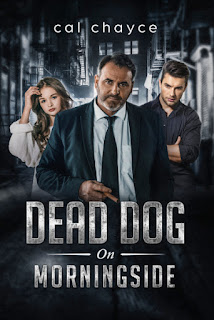
I have a very special post today to take your mind off of all the things: an interview with cal chayce. He is the author of deep, dark novels such as All the Fine Hungers and Dead Dog on Morningside, in addition to being a co-founder (with me) of Forest City Pulp, and a fan of lower-case letters. But enough about cal, here's ... actually, it's more cal. On with the interview:


P.T. Phronk: I feel like every conversation will start with this for a while: how are you holding up in light of COVID-19?

cal chayce: I'm doing okay so far, taking it in stride, I do, however, have a slight concern that this may be the apocalypse and we'll all soon be hunted down by red necked and red capped folks for sport. You know they're out there right now, don't you? Oiling their pieces and giggling silently. Awaiting.

PTP: So you’ve had an interesting life so far. How much of your writing is autobiographical?

cc: None at all. At least, not at the time. After every book has aged a couple of years, though, I find they're all blatantly about me and I'm shocked that I had so completely overlooked the obvious. It just takes me a while to let me know what's really going on.

PTP: I was thinking about Dead Dog on Morningside, which seems like a very intimate portrayal of a family fleeing The Troubles in Northern Ireland to live in Toronto. Now that it’s aged a bit, what’s going on there? What was the inspiration behind that novel?

cc: For that one, I was at least partially cognizant. I knew I was the child narrator while writing. But it was eye-opening later on to find I was also, in part, the cousin, Danno the father – and Farley, the villain. I took no joy in the discovery of that last bit. But maybe he’s just Everyperson. He represents the personal demons that Danno realizes he should try to excise and bury in a deep hole. And maybe those of us who couldn’t make use of a decent spade are few and far between.

Dead Dog on Morningside cover


PTP: Some of your novels, like All the Fine Hungers, also bring up important stuff about the human condition and the current state of the world. How do you go about incorporating deeper themes into your work?

cc: It's the other way 'round, actually; it's the work that gets incorporated into the themes. When I discover interesting, new-to-me, common characteristics in people, those traits grow and intertwine and spread and swirl until a suitable story forms around them, manifesting in the guise of characters and settings. Then I just fill in all the bits that don't look like a book. But yeah, the core is always about the human experience.


PTP: That’s cool. Do you think fiction plays a role in improving the human experience? Especially in times like, you know, these.

cc: Fiction doesn’t just play a role; it’s vital. Who we are as a species has been vastly shaped by The Story Teller. Our hopes, our ability to deal with situations with which we have no experience, our very morals and personal ethics. Our being. From ancient religious stories to Greek mythology to that weird foreign film you saw last week on Netflix, all play their part. 

Someone should write a story about a society that developed without story tellers. What could that look like? I’d read that shit. 

PTP: Maybe music plays a part too. Do you listen to music while you write? I ask because I just wrote about that here on Across the Board. Any music you’d recommend people check out?

cc: You mean, some people don't? If anyone can write fiction without music, and not have their characters hop off to god knows where, they have my respect and admiration. The music, for me, is my only chance to keep the unruly bastards in line. If it's music that feels like the character I want to write, they just might stay in their designated lane. Many still break free, of course, but with music, there is hope. 

And no, I have nothing to recommend. What I listen to is what cuddles up to my lived experience and allows me to be the little spoon for a while. Everyone else's experiences have been different than mine. What cuddles up and spoons with me, might make another flee in terror when it pokes them in the back.

PTP: What’s next for you? Planning on spending any more time writing while you’re stuck inside?

cc: I stay inside all the time anyway, so there's been no difference. If it's a beautiful, warm day, I might admire it from the kitchen window for a few minutes before retreating back to the deepest recesses of my cave.

What's next for me is a kiss-ass commercial endeavour. I've never tried that, and to be honest, I'm not certain I can keep inspired to the end. It’s an experiment. Things blow up and men punch each other. Sometimes they punch each other while in the midst of blowing up. Because that's what the people like. That, and a little naughtiness, because they’re all pervs.

Thursday, October 10, 2019

Interview with Alison Grey: a Savvy Southern Writer

Greetings ATB readers! You are in for a treat. Please welcome to the blog my dear friend Alison Grey, one of the most diligent--and generous--writers in indie publishing. She writes crime fiction of all flavors--domestic suspense, psych thrillers, and atmospheric mysteries.

If you're interested in self-publishing or floundering with your own titles, pay attention. She doles out great advice.
 
Welcome, Alison!

How long have you been self-publishing? What is your biggest takeaway when it comes to indie publishing and trying to make a dent in a crowded market?

I’ve been self-publishing for almost 5 years. It’s been quite the ride. The biggest lesson I’ve learned is that nothing stays the same in indie publishing. You have to constantly pivot to keep up with the changes in the market. A year in this business is like 7 years outside of it. Almost anything becomes dated (as far as marketing goes) within 6 months. So making a dent in the market is becoming increasingly more difficult because every genre is just saturated now. So I focus on what I can control— I try to write the best story I can and give it the best cover and blurb I can to make it stand out. So learn to adapt. That’s the most important skill in this business.


What three pieces of advice would you give an author looking to self-publish for the first time?


— Be prepared to do a lot of things that won’t be writing. You’re a publisher, and that’s an entirely different job. If you can accept that and embrace it, you’ll be ahead of the game.
— Do not make your own cover or use any cover that isn’t as great as the covers on the bestsellers’ lists. This does not necessarily have to be expensive. I don’t think people realize you can get amazing covers for less than $100. Even so, do not skimp on this. And be honest with yourself. “Acceptable” is not going to work. Not in this market. The cover has to be great. It has to tell the reader immediately what genre it is and what they can expect from the story or they will scroll (or stroll) on by.
— Nothing matters more than writing. If you’re not getting words in, you’re wasting time. Yes, you have to do plenty of non-writing stuff. But nothing should ever come before words. Don’t get distracted by anything else. There’s no course or marketing plan that can make up for not having words to sell. Writing is king.


What are the biggest misconceptions people have when it comes to the indie book market? 


I don’t know if people still think this, but it used to be that people considered anything self-published as being crap. And sometimes it is, but those books don’t sell. It’s not like it was in 2013 when it seemed anything would sell. Today, indie books (the ones that sell and the ones on the bestsellers lists) are indistinguishable from any other book on the market. That’s the great thing about it becoming a competitive market, in order to do well you have to be good. You have to have a professional product. Indie publishing is no longer the slush pile in ePub form.
Tell us about your latest crime series--Murder on the Redneck Riviera.  
My Murder On the Redneck Riviera series is about the Beckett sisters, Dee and Meg. The sisters are estranged and haven’t spoken in years due to a dark secret they share. When their dad dies,  Meg is put in charge of the dilapidated panhandle beach (the Redneck Riviera is the nickname for the beaches on the Florida panhandle) motel their family has owned since the 1950s. Dee is forced to come home for mysterious reasons and begs Meg for a job and a place to crash. Despite Meg not wanting anything to do with her sister, she agrees and that’s when the trouble begins. Dee’s first night working the front desk of the motel she finds a dead body in one of the rooms… and she knows the guy. Except she thought she killed him ten years ago. 

It’s a very Florida story. I was inspired by other Florida series I love by Carl Hiassen and Dawn Lee McKenna. There’s eccentric characters, murder, family secrets, and nothing is quite as it seems. Much like Florida!
(You can preorder it now.) 


You live in South Carolina and really embrace the setting in your thrillers. What is it about the South that lends itself to crime fiction? 


I think what’s great about the south are the people. I mean the south is full of eccentric characters. What’s the old saying? Something about in the south we don’t hide our crazy people. We show them off in the living room and offer them a cocktail. No one asks if you have crazy people in your family, they just ask you what side they’re on. I absolutely LOVE southerners. They aren’t afraid to tell you who they are and they tend to have complicated pasts. They also live in this very haunting place with a dark and Gothic history. I love the Spanish moss, the confederate jasmine that creeps up its antebellum homes, and I absolutely love the food and unwillingness to part with certain traditions. There’s a bizarre sort of social hierarchy that still exists in the south today and I think it’s the perfect recipe for a good crime story. 


Who are your favorite authors? Who are you reading right now?


My favorite author of all time is Pat Conroy. I love Fannie Flagg, Carl Hiassen, Liane Moriarty. Shirley Jackson and Flannery O’Connor are up there with Conroy for me. I love the darkness in their stories. Right now I am reading a lot of domestic suspense, I just read a great book by Anna Pitoniak called Necessary People that was very good.


What TV shows are you binge watching?


I mean, sadly, I watch a lot of reality TV. I really love studying the women on the shows, their desires and their motivations. It’s also just a shallow escape. As far as actual television shows, I am obsessed with The Crown. I love the show Bloodline which is a Florida suspense series. Veronica Mars. Breaking Bad. I’m very into Succession right now.
Can't Let Go, a psychological suspense about Charleston's well-to-do, is available now.

Alison lives in Charleston with her husband and kids. You can connect with her via Instagram to find out more about her work and her life.

And buy her books! You won't be disappointed.


Monday, July 23, 2018

INTERVIEW: Brave New Girls Authors Talk Inspiration!

A post by Mary Fan
Hi everyone! Mary here, and it's my turn to do an interview! Instead of a tradition Q&A with one person, I decided to ask some of the BRAVE NEW GIRLS authors about their inspirations. What's BRAVE NEW GIRLS? Well, I'm glad you asked! ;-)

Back in 2014, sci-fi author Paige Daniels and I were bemoaning the lack of tech-savvy heroines in fiction. Oh, you'd see the odd glasses-wearing sidekick working the lab while the real (male) hero beat bad guys. Or the impossibly sexy babe who somehow had five PhDs at 22 so she could be the (male) hero's love interest and ostensibly have a role in the plot. But there was a distinct lack of stories about the
girls in the lab, the girls behind the keyboards, the girls who loved science for its own sake.

So we ran a crowd-funding campaign to launch the Brave New Girls YA sci-fi anthologies in which every story featured a brainy girl who was the hero of her own story. No big strong men stealing the spotlight -- the smart girl would be the main character for a change. While the original campaign was for one anthology, Brave New Girls: Tales of Girls and Gadgets (2015), it wound up being successful enough for us to put out two more: Brave New Girls: Stories of Girls Who Science and Scheme (2017) and Brave New Girls: Tales of Heroines Who Hack (just released July 5!).


Each volume contains multiple short stories, with illustrations for every story acting as a cover within the cover. I asked some of the authors to talk about what inspired theirs. Here are their answers:

Art by Jennifer L. Lopez
Author:
Jeanne Kramer Smyth

Story:
"The 17th Quadrennial Intergalactic Neo-Cultural Expo and Science Fair"
Brave New Girls: Stories of Girls Who Science and Scheme
My story, 'The 17th Quadrennial Intergalactic Neo-Cultural Expo and Science Fair', in the 2nd BRAVE NEW GIRLS anthology, was inspired by a combination of things:
- my participation in a science fair in 10th grade
- my desire to set something in space (and the awesome conversations I had with my friend who works at NASA about what might go wrong, both on a space station and with science projects)
- the name of a show my father directed years ago ('Banjo Dancing, or The 48th Annual Squitters Mountain Song Dance Folklore Convention and Banjo Contest, and Why I Lost ...')
Art by Jennifer Stolzer
(both illustrations)
Author: 
Jamie Krakover

Story:
"Arch Nemesis"
Brave New Girls: Stories of Girls Who Science and Scheme

"Pyramid Scheme"
Brave New Girls: Tales of Heroines Who Hack
My first Brave New Girls story was inspired by the fact that I always wanted to write a St. Louis centered story. I focused on the Arch because it's such an iconic landmark in the city. But I wanted that landmark to have secrets than no one knew about. As a female engineer I saw the need for strong female characters with science and engineering minds. So I crafted Valerie, who had experienced loss but also had something to prove and a need to thwart the activities there.
From there I decided to throw in math and science references and puns centered around Arches and thus Arch Nemesis was born. After completing Arch Nemesis I realized that my main character had more adventures to take and since I left things a little open ended, I took a similar approach with Pyramid Scheme. I built on the strong character and explored an adventure within the great pyramid, once again incorporating science and math as well as puns. I wanted the main character to have learned from her previous experiences, developed her engineering skills further and gave her a sidekick to help in her adventure (even though she thought she didn't need one). Overall I've just had a blast utilizing my engineering knowledge and sneaking in fun, nerdy references wherever I could.
Art by Sharon Emmitt
Author: 
Jennifer Lee Rossman

Story: 
"Login"
Brave New Girls: Tales of Heroines Who Hack
I love fairy tale retellings (my first-ever publication was in an anthology of sci-fi fairy tales), and the idea of a Rumplestiltskin retelling really interested me. It seemed to lend itself well to a futuristic setting since the girl gets three chances to guess his name, and that's how many chances you usually get to guess a login name on the computer. 
The rest of the plot - the war machines, the factory, the gold wiring - fell into place around that premise, and I decided to make the main character a wheelchair-user like me because we need more positive disability rep in stories.
Art by Lyssa Chiavari
Author: 
Lyssa Chiavari

Story: 
"Sea-Stars and Sand Dollars",
Brave New Girls: Tales of Heroines Who Hack
I've always been really interested in the concept of seasteading, and one of my favorite TV series is SeaQuest DSV. I wanted to do something that combined those things together and also tied into my ongoing sci-fi series, so I decided to do a fun adventure story about one of the adult side characters from the series back when she was a teenager. It worked out so well that several elements from the story got built into the second book!

Author: 
Me! (I'm also the co-editor) (What? Couldn't resist!)

Story: 
"Takes A Hacker"
Brave New Girls: Tales of Girls and Gadgets

"The Case of the Missing Sherlock"
Brave New Girls: Stories of Girls Who Science and Scheme

"The Altered Avatar"
Brave New Girls: Tales of Heroines Who Hack 

Art by Mary Fan
I've always loved stories about virtual reality, and so for "Takes a Hacker," I wanted to use that as a setting. The heroine is a teen Jane Colt, who's also the heroine of the space adventure trilogy named after her. I thought it would be fun to explore the character at an earlier stage in her life. I also thought it'd be fun to center the story around a science fair of some kind. I'd participated in Science Olympiad as a high-schooler, and while the story ended up being much more... adventurous... than my own experiences, I thought it was a nice nod. Also, I wanted to reject the idea that girls in tech could only be awkward nerds (nothing wrong with that, but there's more than one way to be a girl) or babelicious bimbos (okay, there is something wrong with that). The backstory I'd established for Jane was that she'd always been something of a belle -- good-looking and charming enough when she felt like it. Not to mention the daughter of one of the richest men on her planet. At the same time, I didn't want romance to define her. Besides, for continuity's sake, her love interest in the series couldn't be present in the prequel short. So I made the story an anti-romance... the story of a break-up. Because that's part of being a teen too, and Jane doesn't need no man telling her what to do! 
Art by Jennifer L. Lopez
"The Case of the Missing Sherlock" and "The Altered Avatar" both feature a crime-solving duo inspired by Sherlock Holmes and John Watson -- except now, they're an AI called Sherlock (built to look like a teen girl despite being named after a male character) and a teen engineer named Chevonne Watson. Both are whip-smart and love their sciences. Sherlock gets herself into all sorts of trouble with her whackadoo experiments -- which she swears will help her solve crimes someday -- and Chevonne is an apprentice biomedical engineer. 
"The Case of the Missing Sherlock" thrusts Chevonne into the role of detective. I'd written two stories starring these two characters already, and while she had an active part in both of them, it was still Sherlock doing the heavy lifting. I wanted Chevonne to solve the mystery, and so I got rid of Sherlock altogether -- and had Chevonne show off her smarts by figuring out what happened. 
Art by MunkyWrench
"The Altered Avatar" is told from Sherlock's perspective and featured a futuristic riff on augmented reality. Once again, the girls' science smarts are what save the day.
The thing about all three of these stories is that it's not a big deal that these girls are into tech. It's just part of their reality, and no one questions it. Hopefully, that will be true in the real world someday too. There won't be any of this "ooo you're a girl and you do science/tech/engineering/math!" nonsense. It'll just be "oh, another girl in STEM -- lots and lots and lots of those these days." Because when you're fighting for equality, normalcy, even mundanity, is the goal.

Oof, I did not mea to make my segment so long! Anyway, all three anthologies are available in paperback and e-book on Amazon, Barnes & Noble, and more! Check 'em out!


Thursday, June 21, 2018

It's the End of the World! Interview with Ryan Casey

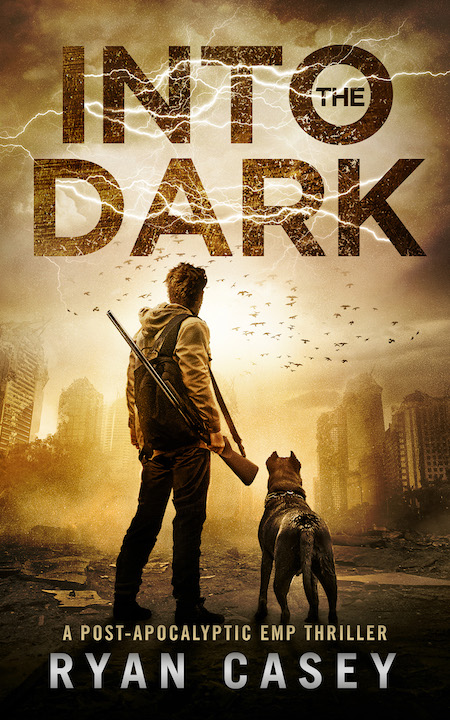
Grab your freeze-dried food and settle into your bunker and let's give a warm welcome to Ryan Casey, indie author of post-apocalyptic and dystopian fiction. He stopped by ATB to discuss his work, offer advice on how to survive Armageddon, and recommend excellent film and television shows in case we can still get Netflix when the world ends. 

Welcome Ryan!


I'll go first.

What do you think it is about dystopian and post-apocalyptic fiction that engages readers so much? Because I’ve got to be honest, it’s feeling awfully close to reality these days. Is it still escapism?

Good question. It’s something I think about a lot. I’ve always enjoyed apocalyptic fiction myself in varying forms. 28 Days Later was a life-changing movie when I was younger, and I Am Legend is a book that has always resonated with me.

There’s an argument that deep down, a lot of people kind of crave an apocalypse—without that sounding too weird. Apocalyptic fiction, I feel, allows them to experience that world vicariously and in a safe environment. Just like horror allows people to scare themselves to death in a safe environment, and likewise with other genres.

Or maybe that’s totally wrong. But there’s definitely something to the uncanny of an apocalyptic world that I think draws readers in, because it lets them ask all kind of moral questions that are very much present in their lives today without having to actually face up to the answers.

I’ve done a lot of research on how people would react to an event like some of the ones described in my books. The answers aren’t always as uplifting as you’d like to believe.

But again, we’ll never know for definite.

Hopefully.
Ryan Casey


What skill(s) should we learn in order to survive an apocalypse? Or should we simply be hoarding items and buying a 12-month supply of freeze dried food that’s advertised at Costco (do you have Costco in the UK)? 

You’ve put me on the spot now! It’s in the books, honest!

I went into writing Blackout, my first EMP survival book, back in 2016, with actual limited knowledge about how to survive an apocalyptic event. I had to bury myself in a lot of research. Honestly, it’s fascinating. There’s so many people way more qualified than me that spend their lives dedicated to thinking about this kind of thing, and it’s honestly very admirable.

I know a lot more now than I did in 2016. There’s a few essentials I’d start with. Making sure you’re stocked up is important, however if you live in a suburban area, you want to get away from there and into the countryside as soon as possible.

So knowing things like how to collect water and make sure it’s safe to drink, how to cook in the wild, how to stay warm and clean, how to hunt and trap… those things are the most important things, actually.
Which hurts me ethically, as a vegetarian of three years.

And yeah, we have Costco too. There’s been a few of those places in my books. Tl;dr: things usually get messy.


You pride your work on its rapid pacing. How you balance the story action with the emotional stakes? Do you find that you need to slow it down at certain points so readers can catch their breath?

Yeah, it’s a fine line to walk. Pacing is something I’ve always been conscious of. That said, like you point out, it can’t be constant action every scene.

I actually prefer writing the quieter scenes, believe it or not. I just find the introspective stuff and character building flows a lot more easily for me than the mechanics of action scenes.

I try to have a rule of thumb that works for me that’s kind of a cause and effect sort of thing. If there’s an action scene, there has to be a reaction to it. Even if it’s pretty full-on on the action front, reaction is just as important.

Otherwise it’s just one long slog of action scenes and no emotional investment, which isn’t fun for anyone—as much as it might sound fun.


What’s currently the biggest challenge to your writing? 

The fear that one day this amazing publishing journey is going to come to an end.

I’ve had ups and downs since I started publishing in 2012. I’ve learned things the hard way. I’ve followed false prophets and hampered my own progress, only to fall in with some great, inspirational communities and make some really good friends.

The fear is that one day, Amazon or someone is just going to turn around and close the door, or change the publishing landscape all over again.

I’d have to learn to adapt… much like one of my novels. I guess it’d be my own autobiographical, real-life post apocalypse event.


What are three tips you can give fledgling indie authors writing in your genre?

Just three? :(

Firstly, do your research. I know, I know, it sounds boring, but fans of this genre are wonderful and when you get things right, they love you for it. So it pays to just know a bit about the genre you’re writing in before you throw yourself into it headfirst. Same applies for any genre, I’m sure. Do that and people will love you for it.

Secondly, get yourself an amazing cover. Seriously, I know we’re not supposed to judge books by their covers, but we do, and that’s always going to be the case. You want a cover that absolutely screams of your genre. You can be original in your prose. Make sure that cover looks like your genre.

Thirdly, maybe most importantly, don’t be afraid to get creative. I know, by its nature, writing is creative. But there’s a myth that you have to write cookie-cutter fiction in order to make it in the indie publishing world. It’s not true. You hit some genre tropes, sure. You give yourself a well-defined cover, absolutely. But follow your instincts. Don’t be afraid to do something daring. This is what gives you personality. This is what keeps people coming back.

Just don’t kill the dog.


What actor would you want to play your main protagonist(s)?

Weirdly, I’ve never done this before on any of my books. I’ve had side characters that look like actors in my imagination, but never for the protagonists.

But hey, I’ll take anyone. I’ll do it myself if they make a movie out of my stuff, if budget’s an issue. Get Netflix on the phone ASAP.


Who are you currently reading?

I’m reading Annihilation by Jeff VanderMeer. I saw the film by Alex Garland and found it absolutely spine-tinglingly haunting and original, and the book is just as good. It’s so mysterious, leaves a lot of questions unanswered, but it’s probably one of the best things I’ve ever read.

I’m also reading Siddhartha’s Brian by James Kingland, which is all about the neuroscientific studies into ancient Buddhist practices. Secular Buddhism is an area I’m really interested in, so this is right up my street.


Recommend a movie or TV show for fans of post-apocalyptic/dystopian fiction. Or throw out any recommendation. (I, for one, love British crime dramas.)

TV-wise, I would say The Walking Dead but I feel like it’s gone off ever since that cliffhanger at the end of Season Six. Westworld is really good, and I’m a fan of an older British show by the Black Mirror creator called Dead Set. Give it a try if you fancy a different take on the zombie genre.

Movie-wise, other than Annihilation, I really really loved A Quiet Place. I found it absolutely visceral experience in the cinema. There was a guy crunching popcorn in the seat in front of me and driving everyone mad. I went out of it whispering. Really tense cinema.

You can follow Ryan on Twitter. Or check out his website here and there's an offer for a free book.
Thanks for stopping by!


Blogger Template by Designer Blogs