Showing posts with label dystopian fiction. Show all posts

Monday, December 7, 2020

Rethinking Dystopia in the Age of Conspiracy Theories

A post by Mary Fan

Hey everyone! Mary here, and I've been rethinking dystopia lately. This was triggered by, of all things, a TikTok that made the rounds on Twitter that I wish I could unsee... More on that later...

Dystopia has been around for decades, but in the YA world it really saw a boom around the early 2010s, thanks to the popularity of The Hunger Games. For a few wild years, dystopia was so trendy among YA readers - tweens, teens, and adult alike - that it felt like every popular book in the YA category was about (almost always white, usually female) teen freedom fighters in speculative, vaguely sci-fi worlds.

And then, almost as quickly as it arrived, it fizzled out. The market became oversaturated, and any manuscript so much as suggesting a dystopian flavor was considered treated like poison by traditional publishing. Only recently have a few dystopian titles popped up again, though they're usually packaged as just "sci-fi" or "fantasy."

In the world of adult spec fic, the stream was a lot steadier. Using all-powerful, controlling, ultimately pretty evil governments or corporations or other large institutions as a villain has always been pretty popular.

I get the appeal. After all, I've written plenty of it. I can't speak for the rest of the world, but at least when it comes to American audiences, we've always had a rebellious streak. It's baked into the founding myth of our country - the scrappy revolutionaries taking on the mighty British and winning freedom and independence. We love our underdogs, and a lot of our most popular sci-fi/fantasy franchises reflect this - Star Wars, Harry Potter, Lord of the Rings.  

A lot of that is because we like to think of ourselves as the underdogs. I mean, whose life isn't tough? No matter who or where you are, always some kind of uphill battle to fight. And no matter your privilege, there's always someone who has it easier than you, some obstacle standing in your way. 

Which brings me back to dystopia. It's a genre like any other. Sometimes, it can serve as insightful social commentary. Other times, it's just an excuse to follow a scrappy underdog on a hero's journey against an all-powerful enemy. All in good fun, right?

Well, lately I've been thinking it's not so cute anymore. Not necessarily because of the stories themselves, but rather what the preference for them reflects.

The TikTok I can't unsee featured what could have been a dystopian heroine. I won't link to it because I don't want to feed it any more views. In it, a young, attractive, blond woman acts out a skit in which she first plays someone who accepts a COVID-19 vaccine because she doesn't want to die, only to be implanted with a chip when she receives the injection. The second scene has her playing a woman who refuses, and a faceless voice tells her she will die if she refuses. She then cries prettily as she says she knows, imitating a gazillion movie and TV characters who've made noble sacrifices. Cut to her (in terribly done effects make up) all bloody as, it's implied, she's abused and killed for refusing a COVID-19 vaccine. Final shot has her playing an angel in heaven because apparently her refusal to take the vaccine (and receive a chip) has made her a martyr.

W.T.F. I was so confused.

Except... it all felt familiar.

I've literally read a book in which an evil government wants to implant all its citizens with chips, and when a small population refuses, they create a plague and then put chips in the vaccines (I won't name the book because this would spoil it for anyone who might stumble upon it).

The original premise of my own YA dystopia, Starswept, was that an evil corporation created a fake alien disease to keep a population of teenagers under its control. I changed the premise at the advice of an editor - now said evil corporation uses impossibly high student loans to keep these kids in indentured servitude (heh) - and damn, am I glad I did. The third and final book came out this year, and if I'd kept my original premise, it would have been about the teens exposing a fake plague and freeing the population from government lies... aaaaawkwaaaaard...

In fact, given the direction that series could have gone, I could very well have written a scene similar to that atrocious TikTok. Super aaaaawkwaaaard...

The aforementioned "chip" book came out around 2012. I wrote the original, fake-plague version of Starswept in 2013. Back then, the idea of a plague or pandemic felt as far-fetched as an alien invasion. An exciting, escapist way to raise the stakes. Now... 

We don't often think about the subconscious politics of sci-fi/fantasy. But the fact is politics are buried in every story, whether intentionally or not. In a lot of ways, The Hunger Games can be read as a right-wing conspiracy theorist's ultimate fantasy. You have your evil government run by urban elitists - many queer-coded - oppressing your honest, rural, blue-collar white folks (there are a few Black characters too, but the main character and her closest allies are white). People of color barely exist, and when they do, nobody sees race. The evil, urban-based government will do anything to control the honest, rural folks, who must take up arms to fight back. Urban elites with fancy technology, bad. Rural, blue-collar folks who are physically tough, good. Sound familiar?

As far as I'm aware, that's not the message Suzanne Collins meant to send with The Hunger Games, which was supposed to be more about the impact of war on children. But it's a message baked into the story nonetheless.

Just as there are messages, often subconscious and unintentional, baked into every story. Because all stories are written by people, and people inevitably have beliefs. Sometimes, we don't think too hard about them. Sometimes, we're just playing on tropes and assumptions that have been around forever... after all, The Lord of the Rings also features evil, industrialist, technology-wielding elites versus rural, scrappy, blue-collar types.

For this reason, all fiction is political - indeed, all writing is political. Everything we think of as "neutral" or "the default" was the result of political actions. And as for those who say they "keep politics out of it", well, what they mean is that they keep politics they disagree with or that make them uncomfortable.

Thursday, June 21, 2018

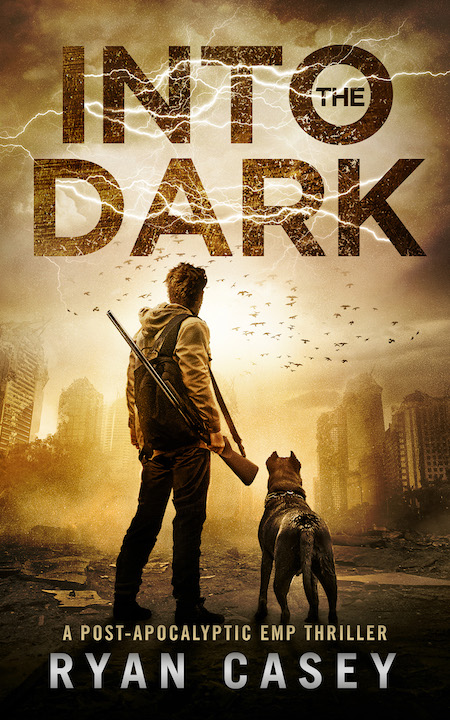
It's the End of the World! Interview with Ryan Casey

Grab your freeze-dried food and settle into your bunker and let's give a warm welcome to Ryan Casey, indie author of post-apocalyptic and dystopian fiction. He stopped by ATB to discuss his work, offer advice on how to survive Armageddon, and recommend excellent film and television shows in case we can still get Netflix when the world ends. 

Welcome Ryan!


I'll go first.

What do you think it is about dystopian and post-apocalyptic fiction that engages readers so much? Because I’ve got to be honest, it’s feeling awfully close to reality these days. Is it still escapism?

Good question. It’s something I think about a lot. I’ve always enjoyed apocalyptic fiction myself in varying forms. 28 Days Later was a life-changing movie when I was younger, and I Am Legend is a book that has always resonated with me.

There’s an argument that deep down, a lot of people kind of crave an apocalypse—without that sounding too weird. Apocalyptic fiction, I feel, allows them to experience that world vicariously and in a safe environment. Just like horror allows people to scare themselves to death in a safe environment, and likewise with other genres.

Or maybe that’s totally wrong. But there’s definitely something to the uncanny of an apocalyptic world that I think draws readers in, because it lets them ask all kind of moral questions that are very much present in their lives today without having to actually face up to the answers.

I’ve done a lot of research on how people would react to an event like some of the ones described in my books. The answers aren’t always as uplifting as you’d like to believe.

But again, we’ll never know for definite.

Hopefully.
Ryan Casey


What skill(s) should we learn in order to survive an apocalypse? Or should we simply be hoarding items and buying a 12-month supply of freeze dried food that’s advertised at Costco (do you have Costco in the UK)? 

You’ve put me on the spot now! It’s in the books, honest!

I went into writing Blackout, my first EMP survival book, back in 2016, with actual limited knowledge about how to survive an apocalyptic event. I had to bury myself in a lot of research. Honestly, it’s fascinating. There’s so many people way more qualified than me that spend their lives dedicated to thinking about this kind of thing, and it’s honestly very admirable.

I know a lot more now than I did in 2016. There’s a few essentials I’d start with. Making sure you’re stocked up is important, however if you live in a suburban area, you want to get away from there and into the countryside as soon as possible.

So knowing things like how to collect water and make sure it’s safe to drink, how to cook in the wild, how to stay warm and clean, how to hunt and trap… those things are the most important things, actually.
Which hurts me ethically, as a vegetarian of three years.

And yeah, we have Costco too. There’s been a few of those places in my books. Tl;dr: things usually get messy.


You pride your work on its rapid pacing. How you balance the story action with the emotional stakes? Do you find that you need to slow it down at certain points so readers can catch their breath?

Yeah, it’s a fine line to walk. Pacing is something I’ve always been conscious of. That said, like you point out, it can’t be constant action every scene.

I actually prefer writing the quieter scenes, believe it or not. I just find the introspective stuff and character building flows a lot more easily for me than the mechanics of action scenes.

I try to have a rule of thumb that works for me that’s kind of a cause and effect sort of thing. If there’s an action scene, there has to be a reaction to it. Even if it’s pretty full-on on the action front, reaction is just as important.

Otherwise it’s just one long slog of action scenes and no emotional investment, which isn’t fun for anyone—as much as it might sound fun.


What’s currently the biggest challenge to your writing? 

The fear that one day this amazing publishing journey is going to come to an end.

I’ve had ups and downs since I started publishing in 2012. I’ve learned things the hard way. I’ve followed false prophets and hampered my own progress, only to fall in with some great, inspirational communities and make some really good friends.

The fear is that one day, Amazon or someone is just going to turn around and close the door, or change the publishing landscape all over again.

I’d have to learn to adapt… much like one of my novels. I guess it’d be my own autobiographical, real-life post apocalypse event.


What are three tips you can give fledgling indie authors writing in your genre?

Just three? :(

Firstly, do your research. I know, I know, it sounds boring, but fans of this genre are wonderful and when you get things right, they love you for it. So it pays to just know a bit about the genre you’re writing in before you throw yourself into it headfirst. Same applies for any genre, I’m sure. Do that and people will love you for it.

Secondly, get yourself an amazing cover. Seriously, I know we’re not supposed to judge books by their covers, but we do, and that’s always going to be the case. You want a cover that absolutely screams of your genre. You can be original in your prose. Make sure that cover looks like your genre.

Thirdly, maybe most importantly, don’t be afraid to get creative. I know, by its nature, writing is creative. But there’s a myth that you have to write cookie-cutter fiction in order to make it in the indie publishing world. It’s not true. You hit some genre tropes, sure. You give yourself a well-defined cover, absolutely. But follow your instincts. Don’t be afraid to do something daring. This is what gives you personality. This is what keeps people coming back.

Just don’t kill the dog.


What actor would you want to play your main protagonist(s)?

Weirdly, I’ve never done this before on any of my books. I’ve had side characters that look like actors in my imagination, but never for the protagonists.

But hey, I’ll take anyone. I’ll do it myself if they make a movie out of my stuff, if budget’s an issue. Get Netflix on the phone ASAP.


Who are you currently reading?

I’m reading Annihilation by Jeff VanderMeer. I saw the film by Alex Garland and found it absolutely spine-tinglingly haunting and original, and the book is just as good. It’s so mysterious, leaves a lot of questions unanswered, but it’s probably one of the best things I’ve ever read.

I’m also reading Siddhartha’s Brian by James Kingland, which is all about the neuroscientific studies into ancient Buddhist practices. Secular Buddhism is an area I’m really interested in, so this is right up my street.


Recommend a movie or TV show for fans of post-apocalyptic/dystopian fiction. Or throw out any recommendation. (I, for one, love British crime dramas.)

TV-wise, I would say The Walking Dead but I feel like it’s gone off ever since that cliffhanger at the end of Season Six. Westworld is really good, and I’m a fan of an older British show by the Black Mirror creator called Dead Set. Give it a try if you fancy a different take on the zombie genre.

Movie-wise, other than Annihilation, I really really loved A Quiet Place. I found it absolutely visceral experience in the cinema. There was a guy crunching popcorn in the seat in front of me and driving everyone mad. I went out of it whispering. Really tense cinema.

You can follow Ryan on Twitter. Or check out his website here and there's an offer for a free book.
Thanks for stopping by!


Blogger Template by Designer Blogs