Okay, so in case you missed it, I have a new book out. If you're into horror and crime, please check out Coyote Songs. Now, like most indie writers, I have no machine behind me. I don't have an agent, a PR person, or a big press with money to spend on marketing. What I do have is Twitter. Yeah, I know it doesn't sound like much, but if you pay attention and put the time in, Twitter can be an excellent tool that could help you put your work in front of readers. Here are a few things you should do and/or keep in mind:
1. Twitter is unique
Twitter's timeline is faster than any other. Things fly by and it's easy to miss a lot of things. That said, this also works in your favor because sharing a link twice per day on Facebook is different than sharing it four times on Twitter. The platforms operate differently, and that means that content on Twitter can be repeated without making people angry of boring them with the same content.
2. Retweets > shares
I won't write a dissertation here on how Facebook strangles Amazon links unless you're paying to have them in front of users. What I will say is that Twitter doesn't seem to do that. Also, I don't have exact numbers, but if you compare the number of times people share a post of yours on other social media platforms and then look at the number of retweets you regularly get, the power of Twitter will become obvious. A single click. That's all it takes. In fact, I offer retweets every single week. I love doing it. You have a new book out? Let me retweet it. It takes less than a second and it lets me put books in front of eyes. If those people dig what they see and decided to do the same...well, that leads to number three.
3. The potential for organic growth is amazing
I'm not saying you will go viral every week, but tweets have a tendency to get around more than posts on other platforms. Be witty, be funny, be engaging. Hell, in my case, I'm even political and inappropriate most of the time. Go ahead and call it pat of my brand if you're into that sort of thing. The point is that the ease with which folks can share your content on Twitter is almost unparalleled. Once something takes off, it grows exponentially and feeds on every retweet. There is no secret to this or a magic trick you can do, but the potential is there. Furthermore, content that has nothing to do with your book is the type of content that will get shared the most. That's just the nature of the beast. However, this gets you in front of people's eyes. This gets you seen and known. You get new followers. Users click on your name and go see your timeline. And the best part of it? It costs you absolutely nothing.
4. It's fun, not work
Writers with new books out are encouraged to write blog posts and do interviews, but at times (especially if you have one of two days jobs, kids, deadlines, and other responsibilities) this can feel like work. Twitter doesn't. It's right there on your phone and you can share words, links, photos, videos, and content from whoever you want throughout the day. It's fun, very interactive if you want it to be that way, and easy to do.
5. It helps you build community
Twitter is about community. It's about following others and sharing content yourself. It's about strengthening the writers around you and helping others because, although Dagon doesn't care about such small matters, a rising tide lifts all boats.
6. It's free
Yes, I know I mentioned it already, but it needs to be said again: it's free. There are too many predatory "review" sites charging authors for reviews (note: NEVER pay for a review). You can get on podcasts and blogs and websites, but you probably won't be able to do that every day. On the other hand, you can probably find scattered minutes throughout your day to be active on Twitter. Talk to people. Interact. Build your platform. Share a wide array of content. The time you will invest will feel like nothing compared to the benefits of learning how to use this tool. Now go and do it!
Tuesday, November 20, 2018

Thursday, November 15, 2018
NaNo Halfway Mark, FOMO and Why I Don't Join In

(In case you've stumbled across this blog and have no idea what NaNo is - the basic premise is that you write 50K of your novel in a month. 50K isn't necessarily a full novel, but it's usually a really solid start and decent length for a first draft.)
If you are participating, in theory you're halfway through your novel. You've outlined it, of course, and this may be the time when it's veering from the outline and you're not sure where the story's going all of a sudden. If you're in the US, Thanksgiving next week looms large and even if you just plan on getting a turkey sandwich from Subway, you've still got Black Friday and/or Cyber Monday to distract you.
In other words, unless you're committed, this is when you falter.
Which is one of the reasons why I don't participate.
For me, starting NaNo at the beginning of November is never the problem. It's keeping going through the end of the moth - through Thanksgiving and the start of Christmas preparation. Stockpiling those words in anticipation of days off never seems to happen and then suddenly it's the Sunday after Thanksgiving and I'm 6K behind.
And about that daily word count goal. To reach 50K words in November, participants need to write 1667 words per day. That's about 6 pages, give or take. Not a lot. Not even a whole chapter in most cases. But Every. Single. Day.
Which is reason #2 I don't participate.
I normally don't write on the weekends. Could I do it for a month? Sure. But do I want to? That's the harder question and, based on the times I tried to NaNo in the past, the answer was a resounding no. I tried to stockpile words during the week but it seemed like the more I stressed about making my word count goal, the less the words would flow.
Which is reason #3 - and the biggest reason - I don't participate.
For me, having a daily word count goal works the exact opposite way it's supposed to. I look at the number of words I'm "supposed to" write and...I freeze. I'm lucky if I get 1/10th of those words in. And they're not good words. They're words to get something down on the page. Writing my last book I discovered sprints and THAT was magic for me. But daily word count goals, not so much.
That's not to say I don't look at the communities on social media talking about NaNo and not feel like I'm missing out. I do! I am! There are many amazing people who do NaNo every year and the peer cheerleading is so supportive. The FOMO is real!
But I've also been writing long enough that I have a pretty good idea of what works for me and what doesn't. For me, NaNo is like trying to fit a square peg into a round hole. If this is your first NaNo and you're feeling that way, too, don't despair. It could be that you're not a NaNo type of person. But - and this is an important but - it doesn't make you any less of a writer. Not one little bit.
Monday, November 12, 2018
Sequel Jitters
 |
| A post by Mary Fan |
Last month, I put the finishing touches on WAYWARD STARS,
the sequel to my YA sci-fi novel STARSWEPT, and sent advance copies off to
bloggers and reviewers. And I’ve been spinning like a top ever since. One might
think that sending out a sequel would be less nervousness-inducing, since the
people who requested it presumably read and liked the first book (enough to
want to find out what happens next, at least), and they’re already familiar
with the world and the characters. So you’re basically giving your book to a
crowd that’s already primed to like it.
On the other hand, the ghost of expectations is a terrifying
thing. When I sent out the first book, it was a whole new thing for readers to
discover, and though I was somewhat jittery, it felt different. It was “will
they like this new thing I created?” With the sequel, on the other hand, I felt
like I owed the people who’d stuck with me. And the nervousness became, “Is
this good enough compared to the first book?”
 A big part of the nervousness was due to the fact that WAYWARD STARS has a dramatically different tone from STARSWEPT. I like to think of it
as being similar to how the bright optimism of the first STAR WARS movie, A NEW
HOPE, gave way to the somber contemplation of its sequel, EMPIRE STRIKES BACK.
But of course, EMPIRE is legendary for a reason—not every sequel can pull it
off. And I’ve been disappointed by enough crappy sequels to know how when they
go wrong, they go REALLY wrong. Not only are they bad continuations, but they
can actually ruin the first installment in one’s mind.
A big part of the nervousness was due to the fact that WAYWARD STARS has a dramatically different tone from STARSWEPT. I like to think of it
as being similar to how the bright optimism of the first STAR WARS movie, A NEW
HOPE, gave way to the somber contemplation of its sequel, EMPIRE STRIKES BACK.
But of course, EMPIRE is legendary for a reason—not every sequel can pull it
off. And I’ve been disappointed by enough crappy sequels to know how when they
go wrong, they go REALLY wrong. Not only are they bad continuations, but they
can actually ruin the first installment in one’s mind.
I didn’t mean to take my sequel in a more somber direction.
Actually, when I conceived it, I was determined not to do that. When it comes
to YA speculative fiction, the tone and general directions of series tend to
follow a certain trajectory. Book 1: Clueless main character in a fascinating
new world, discovering its (often dark, terrible) secrets alongside the reader,
gets some fluffy, fun scenes but is slowly disillusioned. Book 2: Deal with the
fallout from said (dark, terrible) secrets. No more fluffy fun. Book 3: Rise up
and win the day, usually at great cost.
 This isn’t a formula;
this is basic story structure at play. It’s what we, at least in the Western
storytelling culture, are primed to expect.
This isn’t a formula;
this is basic story structure at play. It’s what we, at least in the Western
storytelling culture, are primed to expect.
As a reader, I’m sometimes bummed out by Book 2 because I
miss the fluffy fun of Book 1. So I was hoping, with WAYWARD STARS, to keep the
fluff of STARSWEPT—with a focus on the competitive performing arts school
stuff, as opposed to the sci-fi dystopia stuff. I had this whole concept for
how I was going to do that, how I was going to spare my characters the gloom of
a somber sequel. And… it didn’t work. Not at all. Not even a little bit.
Because the fact is, this was a sci-fi dystopia against the backdrop of a
performing arts school, not the other way around.
I had a lot of trouble writing WAYWARD STARS—so much that I
wound up pantsing the entire second half because every time I tried to outline
it, things just didn’t come together. I think it was because I kept trying to
force it in one direction when the story wanted to go in another, and by
pantsing, I was just going with the flow instead of trying to plan out
contrived storylines.
Would readers accept the direction this sequel went in? Or
would they be disappointed that it’s so different from the first book? Jitter,
jitter, jitter.

It probably didn’t help that WAYWARD STARS is only the
second Book 2 I’ve written, and, in a way, the first true continuation (with my
Jane Colt space adventure trilogy, the books are more episodic). Though come to
think of it, with the second Jane Colt book, I had a similar problem where I
tried to force the sequel in one direction (even getting 30k words into 2
separate drafts) before realizing that the real story started in what was Chapter
15 or so in the outline. Maybe the lesson here is that I’ve got to stop trying
to force my sequels.
Anyway, I’m happy with the version of WAYWARD STARS that
eventually emerged, even though it wasn’t the book I originally imagined. And
that’s good enough for me.
Have you written a sequel? Was it a continuation, or an
episode? And were you jittery about it, or did it feel easier because it wasn't completely new?
Thursday, November 8, 2018
The 'Write' Fit: Writers, personality, and process
Eek! I screwed up, hence why this post is coming to you late. It's two days post Election Day and my brain is entirely elsewhere. So I apologize. Also we had another mass shooting and my anxiety is through the roof, but I'm here. Because if it's one thing I hate, it's not showing up when I'm supposed to.
 So Carrie's bullet journal post reminded me of something I wanted to write about. In Carrie's post she discussed how list-making helps her stay on track. It keeps her organized and focused. And I admire Carrie greatly because I always wanted to be the person who was organized. But you know what doesn't help me in the slightest? List making. Clearly, Carrie and I have two different personality types.
A year ago, hell, six months ago, I would've read about bullet journals and I'd have gone online to buy a fancy journal. I would've gotten excited about making lists, assuming that this system of organization would change my whole life. And then, I'd make a list only to freaking forget about it the very next day. And then I'd feel like garbage. Because as I've learned, I'm not a detail-oriented list maker. Carrie is. Kim is not.
You see over the summer, on the recommendation of several author friends, I took a class called Writer Better Faster. And despite the pithy title, this class is way more than simply learning one process to write better faster. This class, taught by the smart AF Becca Syme, doesn't instruct authors in some one-size-fits-all writing process. It teaches authors about themselves through personality and strength assessments to see what writing strategies will help them specifically. It is an eye-opener.
Most people have heard of the Myers-Briggs personality test. I don't want to get into the science on it, because I get overwhelmed with the details, but it basically boils us down into 16 personality types. (If you want to take a free test, you can google it, or you can click here). I took this test as part of the class, and I'm an ENFP. To be succinct, I'm an Extrovert, Intuitive, Feeling, Perceiving.
So what does that have to do with writing? For example, I'm an extrovert (big surprise to anyone who knows me). I need to talk. And when I get stuck on a plot problem, I need to talk about it aloud with either another person, or to the wall. But either way, I need to verbalize my thought process. A mystery plot that I've brought to a convoluted halt? I need to tell my dog about it. Whereas an introvert needs quiet time to work it out internally, I need to break down things out loud.
I also discovered that one of my greatest strengths is adaptability. I can go with the flow. Plotting mysteries isn't something best left to pantsing, but as long as I know the killer and crime, I can find feel my way there. For so long, I have beaten myself up over having to rewrite my books at the 50K-word mark. Except this is something I've learned to accept is part of my process. It's not always efficient, but I get a better book when I've felt out the story.
Other things I've learned about myself:
I am not detail-oriented. I am a big picture kinda girl. This means that when I plot a mystery, I can nail down big plot turns, but small clues go by the wayside. On revision, I then need to insert those clues into the manuscript. A far easier task when the story is already done.
I work better in the morning. The early morning. When no one is awake and the coffee is all mine.
I can't do spreadsheets, and there is no point in keeping track of word counts.
And....I can't have the internet up while working. It has to be off. I can focus for chunks at a time if I'm in the zone. I often work at the library and don't request internet usage.
Also, I need quiet. Like a monastery quiet.
Perhaps you're thinking why would someone need a class to learn these things about themselves? Granted, I am oversimplifying a very nuanced approach to writing. But we assume so much about ourselves and then we read all these craft books that tell us, 'this is how you do it.' What works for some, doesn't work for others.
Anyway, if you can't afford to take a class, I suggest trying some of these online tests. See what they say. Then determine if you're setting yourself up for failure by trying to conform to a process that won't work for your brain.
Carrie's bullet journal keeps her focused. A 5am wake-up writing time works for me. What might work for you?

A year ago, hell, six months ago, I would've read about bullet journals and I'd have gone online to buy a fancy journal. I would've gotten excited about making lists, assuming that this system of organization would change my whole life. And then, I'd make a list only to freaking forget about it the very next day. And then I'd feel like garbage. Because as I've learned, I'm not a detail-oriented list maker. Carrie is. Kim is not.
You see over the summer, on the recommendation of several author friends, I took a class called Writer Better Faster. And despite the pithy title, this class is way more than simply learning one process to write better faster. This class, taught by the smart AF Becca Syme, doesn't instruct authors in some one-size-fits-all writing process. It teaches authors about themselves through personality and strength assessments to see what writing strategies will help them specifically. It is an eye-opener.
Most people have heard of the Myers-Briggs personality test. I don't want to get into the science on it, because I get overwhelmed with the details, but it basically boils us down into 16 personality types. (If you want to take a free test, you can google it, or you can click here). I took this test as part of the class, and I'm an ENFP. To be succinct, I'm an Extrovert, Intuitive, Feeling, Perceiving.
So what does that have to do with writing? For example, I'm an extrovert (big surprise to anyone who knows me). I need to talk. And when I get stuck on a plot problem, I need to talk about it aloud with either another person, or to the wall. But either way, I need to verbalize my thought process. A mystery plot that I've brought to a convoluted halt? I need to tell my dog about it. Whereas an introvert needs quiet time to work it out internally, I need to break down things out loud.
I also discovered that one of my greatest strengths is adaptability. I can go with the flow. Plotting mysteries isn't something best left to pantsing, but as long as I know the killer and crime, I can find feel my way there. For so long, I have beaten myself up over having to rewrite my books at the 50K-word mark. Except this is something I've learned to accept is part of my process. It's not always efficient, but I get a better book when I've felt out the story.
Other things I've learned about myself:
I am not detail-oriented. I am a big picture kinda girl. This means that when I plot a mystery, I can nail down big plot turns, but small clues go by the wayside. On revision, I then need to insert those clues into the manuscript. A far easier task when the story is already done.
I work better in the morning. The early morning. When no one is awake and the coffee is all mine.
I can't do spreadsheets, and there is no point in keeping track of word counts.
And....I can't have the internet up while working. It has to be off. I can focus for chunks at a time if I'm in the zone. I often work at the library and don't request internet usage.
Also, I need quiet. Like a monastery quiet.
Perhaps you're thinking why would someone need a class to learn these things about themselves? Granted, I am oversimplifying a very nuanced approach to writing. But we assume so much about ourselves and then we read all these craft books that tell us, 'this is how you do it.' What works for some, doesn't work for others.
Anyway, if you can't afford to take a class, I suggest trying some of these online tests. See what they say. Then determine if you're setting yourself up for failure by trying to conform to a process that won't work for your brain.
Carrie's bullet journal keeps her focused. A 5am wake-up writing time works for me. What might work for you?
Monday, November 5, 2018
Getting Organized

Remember this post back in April? The one where I said I’d be done with my current WIP by the end of May? You may not be surprised to hear I didn’t make that goal. And exactly what I feared would happen did—we’re almost to the end of the year and I’m still not done.
Sigh.
There’s a whole host of reasons it’s still hanging over me, but the bottom line is I haven’t made it a priority. In fact, I haven’t made my writing a priority. Outside of my regular posts here on Across the Board, I can’t remember the last time I posted to my personal blog. And that’s okay because I quit my very well paid, secure job to spend time with my daughter and run our household. Writing was supposed to be the thing that kept me busy when I had nothing else to do. Well, the last few years I’ve had a lot of other things to focus on. Writing got pushed to the background.
Now I’m ready to bring it back to the front. I was ready in April, but what I quickly learned was that it had been so long since writing was my focus I didn’t know how to get organized around it.
Recently, my daughter started talking about bullet journals. She was annoying me with trying to find her a very specific kind of journal, so I finally Googled what this bullet journaling was all about. Here’s a link to the basic concept if you’re not familiar.
During my research, I got to thinking I could use this system for my writing, so I narrowed my research. The result was lots and lots of links out there with suggestions and tips on how to use bullet journals specifically for writing. There’s a short list at the bottom of this post, but if you’re interested I encourage you to do some of your own research. For example, you might want to research bullet journals for your specific genre. And for those of you doing NaNoWriMo, there are even layouts to help you organize your month of frenzied writing.
Over the weekend I ordered our journals (her’s will be a Christmas gift) and I started to brainstorm what I’d put in my writing journal. Below is what I’ve come up with so far. This may change once I get into the journal, but I like having an idea of where I’m going to start.
- 2019 Goals
- 2019 Memory Bank
- Habit Tracker (writing/editing/exercise)
- Word Counts
- Reading Challenges (yearly/quarterly)
- To Be Read (monthly)
- Book Ideas
- Blogging (dates/topics)
- Collections: one for each book to include plot outline, characters, setting, beta/critique group feedback, plot holes, ideas, titles, cover ideas, etc.
- Book Promotion
- Querying and Submissions
I’m already tracking some of this, but it’s all in separate locations such as Word files, printouts, Excel files, and notebooks. One of the standard items in a bullet journal I don’t plan to incorporate is the monthly/weekly calendar. I have another calendar I use that I’ll keep. That calendar gets bogged down with all my mom/home responsibilities and I don't want to mix all that in with my writing life. That’s how I let it get to the back burner in the first place.
I’m hoping that having a specific bullet journal for my writing will keep it in front of me and help me make it a priority. And besides, I’m addicted to journals (remember this post?), so I loved having a reason to buy yet another one. I’m planning now so I can be ready to hit 2019 running. I’ll update you in a later post once I’ve been using it for a while. I should note that if you do some research on bullet journals you’ll find that some can be really creative and involved. I plan to start simple. I don’t need this to be yet another distraction to my writing by spending all my time creating ornate pages...
Oh—and I’m getting a new laptop soon. I really will have NO excuses for not getting back to a regular writing schedule. It’s time to make it my job again, and not just my hobby.
Have any of you used a bullet journal for your writing? If so, what has worked for you? Any tips or advice?
Helpful links:
~ Carrie
Thursday, November 1, 2018
A Dystopian Reminder of the Importance of Voting
 |
| www.karissalaurel.com |
I'll confess that internally, I'm probably smug about a lot of the things I do, but I have the sense to keep my smugness to myself. But in this instance, I'm going to let my self-satisfaction shine brightly.
I voted early last week and I'm proud of it.
I think all Americans should vote early too. But if you're a procrastinator (which I usually am) then at least get out and vote on Tuesday, November 6th, which is the official and final day to vote in these mid-term elections.
Voting, if you can't tell, is something I'm passionate about. I think it's a right too many people take for granted. So in that line of thought, I put together my top ten list of dystopian novels to remind us of what the world looks like when democracy ceases to exist. Miriam Webster's definition of dystopia is:
an imaginary place where people are unhappy and usually afraid because they are not treated fairly
It's not such a stretch, anymore, to think of a dystopia being real and not so "imaginary". We don't want to live in that world, and one of the best, easiest, and cheapest ways to fight against that reality is to get out and vote.
#10 Fahrenheit 451 by Ray Bradbury

Guy Montag is a fireman. In his world, where television rules
and literature is on the brink of extinction, firemen start fires rather than
put them out. His job is to destroy the most illegal of commodities, the
printed book, along with the houses in which they are hidden.
Montag never questions the destruction and ruin his actions
produce, returning each day to his bland life and wife, Mildred, who spends all
day with her television “family.” But then he meets an eccentric young
neighbor, Clarisse, who introduces him to a past where people didn’t live in fear
and to a present where one sees the world through the ideas in books instead of
the mindless chatter of television.
When Mildred attempts suicide and Clarisse suddenly
disappears, Montag begins to question everything he has ever known. He starts
hiding books in his home, and when his pilfering is discovered, the fireman has
to run for his life.
#9 Brave New World by Aldous Huxley

Hundreds of years in the future, the World Controllers have
created an ideal civilization. Its members, shaped by genetic engineering and
behavioral conditioning, are productive and content in roles they have been
assigned at conception. Government-sanctioned drugs and recreational sex ensure
that everyone is a happy, unquestioning consumer; messy emotions have been
anesthetized and private attachments are considered obscene. Only Bernard Marx
is discontented, developing an unnatural desire for solitude and a distaste for
compulsory promiscuity. When he brings back a young man from one of the few
remaining Savage Reservations, where the old unenlightened ways still continue,
he unleashes a dramatic clash of cultures that will force him to consider
whether freedom, dignity, and individuality are worth suffering for.
#8 Player Piano by Kurt Vonnegut

Player Piano is set in the near future, after a third world
war. While most Americans were fighting overseas, the nation's managers and
engineers faced a depleted workforce and responded by developing ingenious
automated systems that allowed the factories to operate with only a few
workers. The widespread mechanization creates conflict between the wealthy
upper class, the engineers and managers, who keep society running, and the
lower class, whose skills and purpose in society have been replaced by
machines.
The bifurcation of the population is represented by the
division of Ilium, New York into "The Homestead," where every person
not a manager or an engineer lives, and the other side of the river, where all
the engineers and the managers live.
#7 We by Yevgeny Zamyatin

We is set into the far-flung future well after a war that had lasted two-hundred years.
D-503 lives in the One State, a lone city constructed almost entirely of glass so that the State can keep an eye on the citizens at all times.
Life is organized by the hour in order to maximum proficiency and maximum output from every inhabitant. People walk in step with each other and wear identical clothing with badges with their numbers/names for easy identification by the States agents.
'I' is not allowed. Only 'We' exists.
People do not have names, they have a serial number.
A permit is needed for times to have intimate relationships in order to lower the shades on the glass buildings the city is composed of.
There is total surveillance of every person.
While the final work to put the One State not only as an Earthbound government but to make it an interstellar one as well, D-503 begins to live a life of rebellion and secrets.
He is in a fight against time as the One State has developed a procedure to eliminate Imagination in order to make all the people of the One State more efficient and less distracted.
#6 When she Woke by Hillary Jordan

When She Woke,
tells the story of a stigmatized woman struggling to navigate an America of a
not-too-distant future, where the line between church and state has been
eradicated and convicted felons are no longer imprisoned and rehabilitated but
chromed—their skin color is genetically altered to match the class of their
crimes—and then released back into the population to survive as best they can.
Hannah is a Red; her crime is murder.
In seeking a path to safety in an alien and hostile world,
Hannah unknowingly embarks on a path of self-discovery that forces her to
question the values she once held true and the righteousness of a country that
politicizes faith.
#5 The Hunger Games by Suzanne Collins

In the ruins of a place once known as North America lies the
nation of Panem, a shining Capitol surrounded by twelve outlying districts. The
Capitol is harsh and cruel and keeps the districts in line by forcing them all
to send one boy and one girl between the ages of twelve and eighteen to
participate in the annual Hunger Games, a fight to the death on live TV.
Sixteen-year-old Katniss Everdeen regards it as a death
sentence when she steps forward to take her sister's place in the Games. But
Katniss has been close to dead before-and survival, for her, is second nature.
Without really meaning to, she becomes a contender. But if she is to win, she
will have to start making choices that weigh survival against humanity and life
against love.
#4 Never Let Me Go by Kazo Ishiguro

Human
clones are created so that they can donate their organs as young adults. The
novel follows the life story of Kathy, a clone who is raised at a boarding
school for future “donors.”
#3 Parable of the Sower by Octavia Butler

Lauren Olamina and her family live in one of the only safe
neighborhoods remaining on the outskirts of Los Angeles. Behind the walls of
their defended enclave, Lauren’s father, a preacher, and a handful of other
citizens try to salvage what remains of a culture that has been destroyed by
drugs, war, and chronic shortages of water, gasoline, and more. While her
father tries to lead people on the righteous path, Lauren struggles with
hyperempathy, a condition that makes her extraordinarily sensitive to the pain
of others.
When fire destroys their compound, Lauren’s family is killed
and she is forced out into a world that is facing apocalypse. With a handful of
other refugees, Lauren must make her way north to safety, along the way
conceiving a revolutionary idea that may mean salvation for all mankind.
#2 Handmaid's Tale by Margaret Atwood
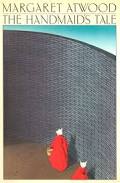
Offred is a Handmaid in the Republic of Gilead. She may
leave the home of the Commander and his wife once a day to walk to food markets
whose signs are now pictures instead of words because women are no longer
allowed to read. She must lie on her back once a month and pray that the
Commander makes her pregnant, because in an age of declining births, Offred and
the other Handmaids are valued only if their ovaries are viable. Offred can
remember the years before, when she lived and made love with her husband, Luke;
when she played with and protected her daughter; when she had a job, money of
her own, and access to knowledge. But all of that is gone now...
#1 1984 by George Orwell

"The novel is set in an imaginary future world that is
dominated by three perpetually warring totalitarian police states. The book's
hero, Winston Smith, is a minor party functionary in one of these states. His
longing for truth and decency leads him to secretly rebel against the
government. Smith has a love affair with a like-minded woman, but they are both
arrested by the Thought Police. The ensuing imprisonment, torture, and
reeducation of Smith are intended not merely to break him physically or make
him submit but to root out his independent mental existence and his spiritual
dignity. Orwell's warning of the dangers of totalitarianism made a deep
impression on his contemporaries and upon subsequent readers, and the book's
title and many of its coinages, such as NEWSPEAK, became bywords for modern
political abuses." -- The Merriam-Webster Encyclopedia of Literature
Monday, October 29, 2018
Making a Murderer (Writer Abouter)
Another quality post brought to you by Steve!
 Happy (Almost) Horror Christmas, everybody!
Sometimes it's funny to think about myself being a horror author. Like most people I grew up being taught that horror had a certain disreputable sheen, maybe one step above porn and one step below country music. Horror was simply "understood" to consist of bargain bin dregs with titles like "Freddy III," "Leprechaun in the Hood," and "Jason Goes to Space."
I recall one weekend as a young boy staying at my aunt's house. As was customary at the time, my sister and I were each allowed to pick out one video at the video store. (Am I dating myself with that reference, kids? A video store is what Netflix was before Netflix mailed you DVDs, which is what Netflix was before it was what Netflix is now.) Anyway, my sister picked out "Drop Dead Fred" and I tried to pick up "Critters." My sister said I knew my mother would never let me pick out a "slasher movie" and to pick out something else, so I settled on "Godzilla vs. Biollante" with her grudging acceptance.
Over the course of the weekend we watched "Drop Dead Fred" not less than one dozen times, and I tried, with some desperation, to watch my movie as well, but only managed to see about half an hour before our mother picked us up Sunday evening. My sister later bragged that "I had tried to pick up some slasher movie at the video store" but she had successfully prevented me from watching it. And then I got in trouble for the attempt at "deception."
This is a silly little story, of no real consequence really, but I'm reminded of it because it's illustrative. "Critters" and "Godzilla" were horror movies, and therefore indistinguishable from slasher movies, and therefore utter trash, and not only that, but banned in our household. It was a very simplistic perspective that my parents held, but one that I know was common at the time, and I suspect is common among parents of today as well.
Well, I discovered Johnny Cash in college, and learned that while Billy Ray Cyrus and Big & Rich aren't exactly the finest artists on the planet, they don't represent the depth and breadth of all country music. And as for porn, well you grow up and find out there's really nothing wrong with sex work performed by consenting adults it's just our cultural hangups that make it seem illicit. It wasn't terribly long ago TROPIC OF CANCER, PORTNOY'S COMPLAINT, LOLITA, and, hell, MADAME BOVARY were banned as pornography. It turns out that reducing entire genres to "obscene" or "lowbrow" is reductive and not just a little bit ignorant.
And the funny thing is, we watched "The Exorcist" and "Aliens" and "The Birds" in our household, not to mention "Jaws" and "Psycho." My mother, of the "no horror movies" rule was a huge Alfred Hitchcock fan. In fact, I was allowed to watch "Alfred Hitchcock Presents" on Nick at Nite every night during the summer. And "The Twilight Zone" and "The Outer Limits" every day. My sister of the "slasher movies are trash" outlook read Christopher Pike and "Goosebumps" and "Scary Stories to Tell in the Dark" and, oh yeah, Dean Koontz and Clive Barker, and introduced me to all of the same.
We just didn't call any of that "horror."
"Horror," you see, was demonstrably bad. Therefore, if we were reading and watching stuff that was good, it wasn't, by definition, "horror."
Strangely (and somewhat to my detriment in my present occupation) Stephen King was an absolute no-no. Stephen King, you see, was known to write horror, and therefore his books were not allowed in the house.
Ten years ago when I started trying to get published, I had always thought of myself as a science fiction author. But the first novel I had banged into shape to be published was a story about a zombie detective. Not really science fiction, maybe a mystery, but I could market it as horror.
And once I became a horror author I realized how much horror was still considered obscene. Lowbrow. Many book reviewers explicitly state "no horror or erotica."
But in the last decade something strange started happening. "Get Out" and "The Shape of Water" were up for Oscars, something once all but explicitly prohibited for horror films. "The Walking Dead," "Stranger Things," and "American Horror Story" turned out to be smash hits, while shows like "Black Mirror" and "The Terror" aspired to award worthiness.
Horror is gradually becoming acceptable, even commendable. And Stephen King, the guy who was banned in my childhood house? Well, he got a National Medal of the Arts. I'm glad to be where I am and do what I do, because it feels like I'm on the cutting edge of a new era in terror. Even if I never expected to end up here growing up.
Happy Halloween, everybody! Enjoy the month when everybody loves fear. Soon there will be twelve of them.
Subscribe to:
Posts (Atom)