Showing posts with label horror. Show all posts

Monday, October 4, 2021

Back Jacket Hack Job: House of Leaves

P.T. Phronk
A post by P.T. Phronk,
of Forest City Pulp fame
It’s my turn to do a back jacket hack job, in which I emerge from my shack to whack at a back jacket to give it flack until it cracks.
 
I finally finished reading House of Leaves recently. As a novel, it’s very … challenging. You can read my review on Goodreads to see what I thought. The description on the cover could go something like this:


House of Leaves, by Mark Z. Danielewski


WARNING: do not open this book unless it appeared mysteriously on your doorstep in the rain. This isn’t a horror novel, it’s an experience. The book should be absolutely filthy, waterlogged, almost impossible to read. If you bought this in a book store, you are not getting the full meta experience. This is Mark speaking. Also: fuck you.1


What you are about to critically engage with is a story about a person discovering a transcription of an analysis of a movie about a house that’s a metaphor for a relationship. You lost already? For an explanatory prologue, please search your local pawn shop for the out-of-print references in Appendix D. I don’t want to see you read one page before you put in the work to understand the nuances of academic texts, have listened to the compact disc of my sister’s album, and are prepared to sit down and over-analyze every sentence of this 700-page manuscript.


As Natsume Sōseki remarked, after watching you read this back jacket from the impossible crawl space beneath your second-floor office: “Your addiction to thinking will come back to haunt you.”2


There is one final message to understand before you open this book and begin. As I write this, I’m on a rollercoaster that appeared in my bathroom (long story), so this important message is upside-down and backwards. Stand on your head and look in a mirror or something:


ɟnɔʞ ʎon


1 Psst, hey, it’s me, the guy who left the book on your doorstep. Don’t worry about that Mark guy. Nice lawn. It reminds me of this time I was in Shrewbury, woozy on shrooms and crushing hard on a stripper who was also an assassin who called herself Jiminy Cricket, and we lay in the grass, which was the shade of my mother’s jade necklace, so let me tell you about [sentence continues for nine pages]


 Hey, it’s the editor. There is no Appendix D. Fuck you.


2 Natsume Sōseki, Light and Darkness (1917, Putnam Publishing Group), as quoted by therandomvibez.com


Is this a real book? I don’t know, but I guarantee you’ll put down House of Leaves to descend into a dark rabbit hole of Googling it, then find yourself in another room three hours later swiping through historical documents on your phone with no recollection of what led you there. It will take you five years to get through this book. Anyway, as I was saying about my mother and strippers, [twenty pages written in wingding font]


Hey it’s me, P.T. Phronk. I’m done. I’ll be back in a month, when I reveal the one tool that can double your writing output. It’s not what you think, so you’ll have to return to ATB in a month to find out what it is. How’s that for a cliffhanger? #marketing

Monday, June 14, 2021

All Stories are Horror Stories

P.T. Phronk
A post by P.T. Phronk,
of Forest City Pulp fame
I'm reading a book on writing: The Successful Novelist, by David Morrell, the guy who wrote First Blood and thus created Rambo. In it, he describes asking aspiring novelists "why do you want to be writers?" After getting the usual unobtainable goals out of the way (e.g., money and fame—yeah right!), he gets deeper into why writers write, and part of it is because we have terrifying ideas intruding on our thoughts that we need to get out.
 
"The difference between fiction writers and civilians," writes Morrell, "is that we make it our life’s work to put our daydreams and day-nightmares on paper."
 
He doesn't even mention the horror genre, but he describes how his process, and indeed the process for all writers, involves capturing vivid waking nightmares, each uniquely traumatic to a particular author.
 
No wonder writers don't like being asked where their ideas come from.


It's a thought that leads to an interesting conclusion: every great story is a horror store at its core. In order for a story to have the necessary conflict and personal meaning to make it a unique work from a unique voice, it needs to address a writer's greatest fears. Morrell even describes how the idea for his first short story came about while having a sudden waking vision of being stalked in a forest and feeling certain someone was going to kill him. Even when Morrell is not writing horror, his story ideas start with horror, and at their core are about overcoming fear and other types of trauma.

If every story is really a horror story, then what sets the actual horror genre apart? I suppose it's that, while all stories have some terrifying, hungry thing lurking below the surface, the horror genre lures that thing above the surface and lets it take a few nibbles. In the horror genre, fear is the point, not only a driving force.
 
I need to apply these lessons to my own writing. My writing has been stagnating, partly because of that pandemic thing, but I think also because I've been screwing around with stories that aren't deeply, intentionally personal, and if I'm going to take it to the next level, I need something more traumatic. The past year has uncovered a lot of fears in all of us, me included. Fear of isolation, fear of other people, fear of death, fear of losing people, fear of losing time, wasting the limited days we have on Earth pretending the universe is anything other than indifferent to the fleeting lives we spend chasing after little pieces of paper that we can trade for shelter and Starbucks. What a mess. I need to write some of this stuff down, and/or get therapy!
 
All writers in all genres, from action to romance to children's stories, should look for the horror underneath their stories. If there is no fear being addressed, some waking nightmare that the author and the reader can really identify with, then is the story's conflict compelling enough to drive the plot forward?
 
Maybe there are exceptions though. Let me know what you think. 
 

Monday, October 5, 2020

Do You Recognize This Sasquatch?

P.T. Phronk
A post by P.T. Phronk,
of Forest City Pulp fame

Listen! Do you smell something? October is in the air, in the odour of rotting leaves and the increasingly cool wind.

This is my favourite time of year. It makes me think of death. Fall is about the end of traditionally pleasant things like sunshine, holidays, and green forests, gradually getting replaced with weather that hurts a bit, spooky darkness, and isolation (especially in a year when being an extrovert is deadly). But we’re humans, we’re resilient, and not only can we get through tougher times, but we can make those endings into beginnings. We can start bundling up in comfy sweaters. We can start to turn spooky things into fun costumes and gorge ourselves on mini chocolate bars, or embrace the fear with an all-night horror movie marathon. We can embrace the isolation and stay in to read a good book.

Seeing Karissa’s post here on ATB that kicked off the Halloween season with some scary book recommendations, it got me thinking: what books have really scared me?

Not many! I think as a horror fan, and now a horror author, I got desensitized pretty early on. There is one book that I read when I was very young, and it scared the crap out of me, and also the bejesus out of me. Crap-covered bejesus everywhere! It scared me so much that I couldn’t sleep, so I stayed up all night to finish it, reading by the light of a tiny lamp when the rest of the family was asleep like a stereotypical nerdy kid in a movie.

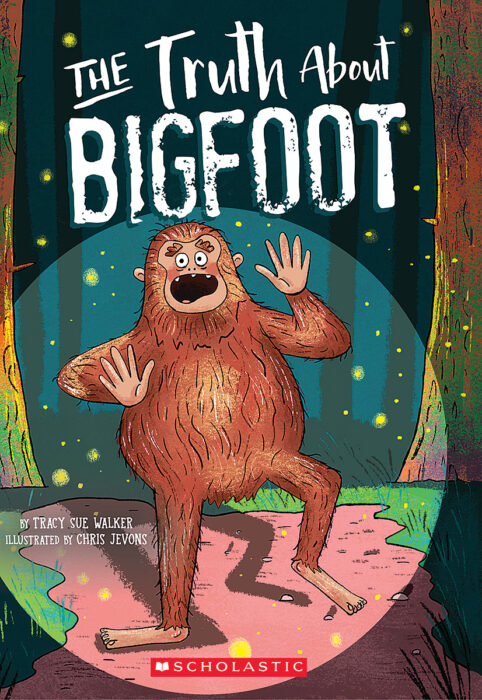
I’d recommend this book to you, but I have no memory of what it was called or who wrote it.

Maybe you’ll know it if I describe it? It was about people camping in the woods, maybe a Scout troop. They were stalked by a monster, which may have been a Sasquatch, or maybe I just thought it was a Sasquatch and it turned out to be something else. The cover may have had a campfire, and big bold yellow letters proclaiming the title, which I can’t even take a guess at. It may have been sold through those Scholastic book cart things. This book probably came out in the 80s. I’m that old.

You’d think with the magic of the Internet, I could do some Googling and find out what this book was, but all I get is stuff like this:


And I was a wimpy kid, but I don’t think that was the book I lost sleep over.


So that book remains not so much a memory as a vague feeling. In my mind, it’s the same feeling of autumn, isolation, and being scared in a good way. If I actually found the book, it probably wouldn’t invoke that same feeling for my adult self, and it could even be embarrassingly tame. Like how by late November, the cold will just be cold, and autumn will be miserable-miserable instead of fun-miserable. Maybe it’s better for some things to remain as a feeling.


P.S. Last year I finally met Sasquatch IRL:


Monday, September 7, 2020

Finding the Modern Cabin in the Woods

P.T. Phronk
A post by P.T. Phronk,
of Forest City Pulp fame

I'm currently on vacation in a cabin in the woods. The other night, the power went out for a few hours, and there's no cell service here, so I was literally in the setup for a horror movie. There was no light except flashlights, no Wi-Fi, no calling for help—if a tall, silent dude with a blade was running after me, I couldn't even Google the best way to get rid of him.

It got me thinking about how the horror genre is heavily reliant on lack of technology. For me the other night, it was slightly scary to suddenly not have instant communication with any person in the world, or at least access to the entirety of human knowledge.

Cabin in the woods
Cozy getaway or the place you will most certainly die?

Twenty five years ago, that would be a normal day. Merely walking out of the house was the setup for a modern horror movie. No need to cut the phone lines or slash the tires or summon a storm to block out the LTE; in the 80s and 90s, if I wandered a few blocks from home, I might as well have been in a cabin the woods. Yet, I didn't feel unsafe. 

The feeling of safety changes from decade to decade. That makes horror as dependent on technology and culture as genres that more explicitly need to keep up with modern times, such as science fiction. More and more, horror set in the present day requires tearing down the layers of safety we've built up with technology before any character can be in danger. That can be done in various ways: isolation, sabotage, the technology itself turning insidious, or threats so powerful—or so subtle—that not even Google can save us.

What will happen when technology is even more advanced, and thus even more capable of keeping us safe in any location at any time? The electricity can only go out so many times. We horror authors will have to get more and more creative to set up an atmosphere of danger. We'll have to do our research to keep up with science and technology, and find clever ways of scaring people who may have grown up in a world where it's just not realistic to be scared of anything, because anything scary is taken care of by some android or nanobot or brain upload or whatever.

Alternatively, we can just set every horror story in the 80s. That would work too.

Monday, August 10, 2020

To Write Something Memorable, Remember That People Forget

P.T. Phronk
A post by P.T. Phronk,
of Forest City Pulp fame

Can you remember the ending of the book you were reading this time last year?


I can’t. Maybe you can’t either. But I’m putting my neuroscientist hat on again to emphasize a fundamental fact about the human brain: it is normal to forget pretty much everything.


That applies doubly to non-essential reading. This article in The Atlantic describes some of the reasons why we forget a book we just read, or a series we just binge-watched, especially in a time when we offload much of our memorizing to smartphones like friggin’ cyborgs. It comes down to a lack of rehearsal. Our brains aren’t video cameras recording everything they see. Instead, they only retain information that is rehearsed multiple times, which is pretty smart, because why waste storage space on things that weren’t even important enough to come up more than once? But it’s also pretty dumb, because I wish I could remember what happened in the first season of The Umbrella Academy as I’m starting the second one. Why’s the knife guy so angry? Something to do with a monkey on the moon? Who knows.


Let’s not be too hard on our memories, though. Even on a sentence-by-sentence level, our brains are performing some pretty amazing feats every time we read—just think of how you accurately keep the beginning part of this long, m-dash-bloated sentence in your short-term memory the entire time you’re reading it, just to understand the point I’m trying to emphasize, which is that yes, your memory capabilities are pretty amazing.


Plus, we always remember something about every book we read. For me, and I suspect most people, it’s largely emotional. Even if I don’t remember a single character’s name, I can tell you if I liked a book or not. I can conjure up a muted facsimile of how it made me feel, whether it’s the existential dread of the best cosmic horror, or the frustration of a really bad ending—even if I don’t remember what actually happened in that ending.


I try to apply this to my writing. The particularities of every little description, character, and plot point don’t really matter as much as how they come together to invoke emotion. If something does need to be remembered, then I’d better repeat it a few times, and ideally that’s in service of a climactic collision between the current chapter and the memory of past chapters that delivers an emotional gut-punch. 


There’s a great Maya Angelou quote that sums this up better than my rambling blog post:


“I’ve learned that people will forget what you said, people will forget what you did, but people will never forget how you made them feel.”


In writing, in reading, and in life, we forget pretty much everything, but emotions will stick around for the long haul.

Monday, February 24, 2020

Why Write With Background Music?

I got a dog a few weeks ago. It’s cool to see the world through a puppy’s eyes, wondering how she’ll react to any new thing for the first time—music, for example.

I constantly listen to music, but I hesitated the first time I went to stream some tunes while the dog chomped on a toy beside me. Would it distract her from the important task of beheading her plush pig? Would she like the new Ozzy Osborne album, or prefer his older material (perhaps Bark at the Moon)?

This entire post is an excuse to post this picture of my dog, who lies here while I write. LOOK AT HER.

It turns out that, as with most things, it depends.

Most dogs just ignore music, which says something about their tolerance for our noisy and confusing human antics. There’s a tendency for some dogs to react angrily to metal, be soothed by classical, and have a “meh” reaction to pop—which says something about how dogs aren’t all that different from humans after all.

My dog seemed momentarily confused by Ozzy’s voice magically emanating from the bookshelf, but soon she was back to having a snooze.

That got me thinking about another type of creature that likes naps, is easily distracted, and has mixed reactions to music: the writer.

I know some writers need silence while they’re writing. Others are distracted by words more than the music itself, so it’s instrumental songs only.

Personally, I have music on whenever I’m writing. During the scientific writing of my day job, I’m not picky; usually it’s that meh pop music, or whatever the algorithms decide to deliver to my ears today. When writing novels, it’s different. I like to match the mood of the music to the mood of the story. For example, someone on Spotify created a 20-hour playlist inspired by David Lynch that has been a good fit for my recent writing. My novel Stars and Other Monsters was explicitly influenced by listening to Lady Gaga’s The Fame Monster over and over; it’s a very vampire-y album.


Lyrics are fine for me. Occasionally a line in a song will provide inspiration for a line in the novel, the same way passing strangers can provide inspiration for characters while writing at a coffee shop.

I know others (like friend of the blog Nilah) go so far as to create specific playlists for specific projects, and Mary Fan even wrote a song to include in her novel Windborn! I can’t help but think that a clarity of vision cutting across various media must help the end result feel like its own thing.

What about you? Do you (or your dog) write with music, or let only the tappy-tap of your keyboard accompany your writing?

P.T. Phronk
A post by P.T. Phronk,
of Forest City Pulp fame

Monday, April 1, 2019

Unpacking Jordan Peele's "Us"

A post by Mary Fan
Hey y’all! It’s my turn on the blog again, but what I have to talk about today has nothing to do with books or my usual genres of sci-fi/fantasy – though I would argue that it’s tangentially related to both. I’m here to talk about Jordan Peele’s latest horror flick, Us. Mostly because I watched it recently and have spent way too much time overthinking and overanalyzing everything about it, and really it’s taken up so much brain space that I don’t know what else I could possibly write about. But from a broader cultural perspective, it’s also an interesting study in storytelling, allegory, and genre.

Also, it's April Fool's Day, so... hey, I'm not one of the resident horror writers, but I'm going to pretend to be one? Ah, whatever.

Now, if you haven’t seen Us yet and don’t want spoilers, STOP READING. RIGHT NOW. HERE THERE BE SPOILERS. SPOILERSPOILERSPOILERS. LOTS AND LOTS OF SPOILERS. MAJOR SPOILERS THAT WILL TOTALLY SPOIL EVERY SPOILABLE THING. YOU HAVE BEEN WARNED.

ONCE MORE JUST FOR GOOD MEASURE: SPOILERS.

Theatrical release poster
Alrighty, let’s get into it, then. In the simplest terms, Us is a story about doubles. Jordan Peele came right out and said that the movie was about how we are our own worst enemies. And then there’s the title of the movie – Us. As in Us vs. Them. Except in this move, Them is a version of Us, and then things get really gnarly when it turns out that Adelaide (Lupita Nyong’o) had switched placed with her double as a child. Now, as someone who’s always consuming stories with wicked twists, I mentally called it from the moment little Adelaide encountered her double. But that’s not to say the movie’s predictable in any way – that was just me trying from the get-go to make sense of a movie packed with allegories, symbols, references, etc. etc. etc.

Interestingly, the Tethered, as the doubles are called, are not supernatural monsters. The movie emphasizes over and over that they are, in fact, human. They possess no special abilities (no super strength, no mystical powers, no ability to come back from the dead, nada). They die like humans – no garlic or divine powers required. What makes them, well, Them, is their behavior. They have creepy smiles, they don’t speak with words (other than Adelaide’s double), and they move in unusual ways. The one possibly supernatural element they possess is shared with their above-world counterparts – the tether that binds them. According to the movie, the Tethered were created to control people, but the experiment failed, and they were abandoned underground, forced to mimic the actions of those above, who lived blissfully unaware of their actions. Yet the mirroring isn’t absolute. Tethereds are implied to be capable of behaving separately from their counterparts. With the Adelaide switcharoo, it also seems that the control could go both ways, even though, for the most part, it hasn’t.

The last time I watched a movie about doubles, it was Black Swan (which I believe counts as horror). And of course, Swan Lake was referenced in Us as well. Tween Adelaide is revealed to have been a talented ballerina, dancing the white swan’s role beautifully while Red, as her double is called, is forced to dance a grotesque imitation. However, while Swan Lake depicts the black swan as the white swan’s evil doppelganger, in the dance scene, both Adelaides are dressed as the white swan, which I found interesting. It seems to be a deliberate rejection of the good/evil dichotomy. Both Adelaides are good, both are evil.

Original Adelaide (which I’m calling her for simplicity, even though both presumably came into existence at the same time) was innocent – just a little girl in a funhouse. But so was her double – just a little girl who had the misfortune of being born into a dark, twisted world. Then Tethered Adelaide attacked Original Adelaide and took her place. She went on to live as just Adelaide for the next 30+ years. Meanwhile, Original Adelaide evolved into Red, who organized the mass uprising in which the Tethereds brutally murder their unsuspecting counterparts. These were acts of villainy, sure, but were they evil? Tethered Adelaide, a child born into bondage and living a horrifying life, wanted freedom and privileges and took it at the expense of another child. Red, a woman in bondage and living a horrifying life, wanted the same things – and also was willing to take them at the expense of others. Double, double, toil and trouble.

Now, I wouldn’t think too hard about the mechanics of Us’s world-building, as some professional critics have (side-eye). Worrying about the logistics of a horror movie completely misses the point – this is horror, not hard sci-fi. In fact, it might not even be sci-fi. People have assumed it is because of the familiar imagery of the underground tunnels, which put in mind a million nefarious and dystopian “institutes” and because of the reference to the Tethereds being created. But nowhere does the movie explain how the Tethereds came into existence (and really, they don’t need to). No one said they were genetic clones or results of some kind of Star Trek-esque dimensional accident. For all we know, whoever created the Tethereds were a cabal of modern-day sorcerers, putting the world in the fantasy camp. Who. Cares. I know I’m not one of our resident horror experts, but even I know that the genre is about the emotional impact on the audience, not the logistics of how that impact is achieved.

I found it interesting that the Tethered were (according to Red) originally created to control “us”, but the dynamic seems to have been reversed, with “us” living our lives as we do and the Tethereds being forced to mimic them. Then Tethered Adelaide reverses the dynamic again when she kidnaps Original Adelaide and takes her place aboveground. Meanwhile, Jason is able to force his double, Pluto, to self-immolate – the only instance after the uprising of such mirroring (that I noticed).

What does it all mean? What do the Tethereds represent?

After reading a million thinkpieces and mentally turning it over, I’ve come to the conclusion that they’re meant to represent a deliberately vague underclass (I mean, they’re literally underground). Marginalization, in contemporary American society, occurs on many axes -- rich/poor, white/non-white, male/female, cishet/queer, abled/disabled, etc. etc. ad infinitum (I could go on about intersectionality, but that would be a whole ‘nother blog post). And the movie makes it pretty obvious that it’s specifically about Americans – when asked who she and her family are, Red literally says “We’re Americans” (also – Us, U.S., duh). My take is that this is ultimately a movie about privilege vs. marginalization – in their many forms.

The privileged, the above-ground “us,” go about their lives blissfully unaware of the horrors belowground. They have no idea that their actions directly impact the marginalized Tethereds, the movie’s “them”. But just being unaware doesn’t exonerate them. One of the movie’s most horrifying implications is that Adelaide’s courtship with and marriage to her husband, Gabe, led to Red’s rape by Gabe’s double, Abraham. Some theorize that Adelaide repressed memories of her belowground origins, which makes sense given her apparent confusion when the Tethered family attacks. If that’s true, then Adelaide had no way of knowing that sleeping with her husband was leading to Red’s rape. Adelaide can’t be blamed. But that doesn’t mean Red didn’t suffer. (If Adelaide actually remembered that she was born a Tethered, then things become even more horrifying.)

Viewed through this lens, it’s a powerful message about how unware the privileged are of their own advantages. For most people, privilege is an invisible thing bestowed upon us by chance. Someone who’s born, say, able-bodied and poor doesn’t think about the former as being an advantage of any kind. The focus is on how the latter is a disadvantage. The characters in Us demonstrate this behavior, most apparently through Adelaide’s bougie white friend Katie, who is unsatisfied with her life despite being very well off. Meanwhile, despite their ignorance, the actions of the privileged directly affect the lives of the marginalized. The aboveground “us” makes a move, the Tethered is forced to make the same move. The CEO makes a business decision to save money by closing unprofitable stores. The worker making minimum wage loses their livelihood, their stability, and possibly their health.

Meanwhile, the Tethered, the marginalized, don’t seem aware of their own potential power until Red leads them in an uprising to kill and replace their counterparts. It’s an act of desperation, and it comes at great cost to both sides – as with any revolution. All that red imagery, from the Tethereds’ outfits to the bloodshed to the Adelaide’s candy apple, is both ominous because of its association with blood and horror and telling because it’s the color of rebellion.

Toward the beginning of the movie, a red-and-gold Frisbee lands on Adelaide’s beach towel, perfectly aligning with one of the blue dots and literally replacing it – foreshadowing of events to come as Tethereds attempt to replace their counterparts. All the talk about replacement brought to mind the white supremacist chant of “You will not replace us” during the 2017 Charlottesville demonstration, with “you” being the marginalized people of color and “us” being white people (especially white men). Horror has always served allegory for societal fears of its time. Us seems to be a statement about how the privileged fear losing their status and being replaced, representing the worst nightmare of those born to power.

One part that seemed particularly poignant was when Red, confronting Adelaide about their encounter as children, said, “You could have taken me with you.” Adelaide chose to save only herself – at the expense of Red – which she was able to do purely because of chance. Then she abandoned and/or forgot all her peers still trapped below, entrenching herself in her new privileged life. She’s a self-made woman, and her actions are reminiscent of many-a “self-made” person who never acknowledge the lucky circumstances that allowed them to rise above, and indeed look down upon others like them who weren’t blessed by some twist of fate. Yes, she seized the opportunity when presented to her, but she didn’t create that opportunity to begin with. Events didn’t have to unfold as they did – when she encountered Original Adelaide, she could have tried to escape with her, instead of chaining her below.

Red, meanwhile, doesn’t only seek her own revenge, but is determined to bring freedom to all the Tethereds.

All this seems also to be a statement about forgotten American history. This is a nation built on genocide and enslavement, but the privileged like to forget that part and talk only about exploration and triumph. But just because you forget or abandon something doesn’t mean it goes away. The Tethered were the results of a forgotten and abandoned experiment. Long after their creators forgot and abandoned them, they remained and continued suffering.

The movie both embraces and challenges slasher-film tropes. You could watch it as a fun, gory home-invasion flick about creeps that stab people with scissors. Yet by the end, if you’re paying attention, you’re left thinking about your assumptions. Imagine if the Tethereds, instead of displaying disturbing behavior, were relatable and well spoken, and the aboveground people, instead of being normal middle-class Americans, were depicted with the excessive opulence. And Red was the POV character. The Tethereds still rise up, and they still kill those with power. You wouldn’t have a horror movie. You’d have a dystopia in the vein of The Hunger Games. Us challenges the audience to consider who they find sympathetic.

Are the Tethereds evil? The film primes the audience to think so -- they're out for blood, after all. But so were the French revolutionaries who beheaded aristocrats for the crime of being rich. When it comes to actual body count, Adelaide and her family seem to rack up more than their Tethereds. One side is fighting for freedom. The other for survival and status quo. Which is... how any revolution works, really.

Anyway, there’s far more that could be discussed in a movie as rich as Us, but I’ve already gone on for far too long. This is a film that was created to be talked about, to be analyzed, and to send a message. As for what that message is – we can only speculate at this point. My take is above. If you have any thoughts, I’d love to hear about your take in the comments.

Thursday, October 29, 2015

Wimps Can Enjoy Scary Books Too!

If you're like me and scared of pretty much anything that goes bump-in-the-night, then Halloween might not be your favorite holiday. (But the fact that there's free candy and dressing up saves this holiday from being ranked dead last for me.) I hate being scared, I'm not a fan of horror movies, and I'm terrified of the dark and of spiders (both of which are pretty much synonymous with All Hallows Eve). And yet, I love books that are able to put me on edge. I haven't read many "traditional" horror books, but I have read a fair amount of creepy, thrilling, dark books that make you want to look over your shoulder or check under your bed. I'll call them horror-esque. And while some of them aren't considered horror, they still have that element of gore or scare, or "oh my gosh turn around it's right behind you TURN AROUND!" element to them. So here's a short list of books that I've read and liked (but aren't too scary for those wimps out there like me) that you might want to give a try:


The 5th Wave by Rick Yancey (Aliens invade! But they look like humans.)
The Andromeda Strain by Michael Crichton (People suddenly die from a mysterious cause.)
Annihilation by Jeff Vandermeer (An environmental anomaly consumes all who enter.)
Dark Places by Gillian Flynn (The only survivor of a mass killing tries to find the real killer.)
Day Four by Sarah Lotz (Cruise ship stops dead in the water. Very strange events begin to happen.)
Fiend by Peter Stenson (The only way to stave off the zombie apocalypse is with... drugs?)
Fragment by Warren Fahy (Jurrasic Park + Reality TV show)
The Girl with All the Gifts by M.R. Carey (Young girl wonders why she's hated and why people suddenly smell so tasty.)
The Hot Zone by Richard Preston (Based on real-life events of a close encounter with Ebola in the US.)
House of Leaves by Mark Z. Danielewski (Family buys house. House reveals terrifying secrets.)
Let the Right One In by John Ajvide Lindqvist (Scandanavian child vampire seeks a friend.)
One Second After by William R. Forstchen (Scary-real account of what could happen after an EMP detonation.)
The Passage by Justin Cronin (Epic tale of how an immortality experiment turned most of the population into blood-thirsty killers.)
Robopocalypse by Daniel H. Wilson (Exactly what the title sounds like. AI becomes self-aware. Decides to take over.)
The Three by Sarah Lotz (Three children survive unsurvivable plane crashes. That happen at the exact same time in different parts of the world.)
World War Z by Max Brooks (A "first-hand" account of the survivors of the zombie apocalypse.)


Out of these, I'd have to say that House of Leaves is the scariest one for me. If you've never heard of it, I urge you to go to your nearest bookstore and just take a look at it. It's unique in that there are stories within stories, footnotes that go on for pages, passages that are written in spirals (literally) and more. It takes commitment to read and is certainly not for everyone. It can be very confusing at times and gives the sense of what "going mad" must feel like. It's a book that stays with the reader (I'm getting goosebumps as I think about it) and has a cult following intent on breaking a supposed code that is written within the stories. It may not sound like a horror book from my description, but it leaves you feeling extremely uneasy every time you put it down.

Have you read any of these? What are some of your favorite horror books and why? What is the scariest book you've ever read?
 
Blogger Template by Designer Blogs